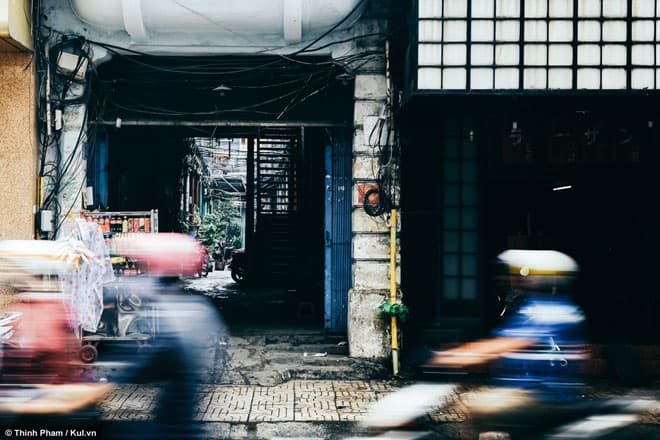
Hao Si Phuong Alley (206 Tran Hung Dao B Street, District 5) is a 100+ year old heritage apartment complex featuring distinctive Chinese architecture, dubbed ‘Mini Hong Kong beside Cho Lon’. As of 2025, visitors CAN STILL explore and take photos on the ground floor if respectful and quiet – floor 2 remains strictly prohibited. Best visiting times: 9-11am or 3-5pm. Critical notes: ask permission, maintain cleanliness, respect residents’ privacy and daily life.
Essential Information About Hao Si Phuong Alley
Location & Access
Full Address: Alley 206, Tran Hung Dao Street B, Ward 11, District 5, Ho Chi Minh City
Located in the heart of District 5’s historic Chinatown area, Hao Si Phuong is easily accessible from downtown HCMC. The alley sits near the intersection of Tran Hung Dao and Ngo Quyen Streets, surrounded by Chinese temples, traditional markets, and heritage buildings that define this culturally rich neighborhood.
Historical Background
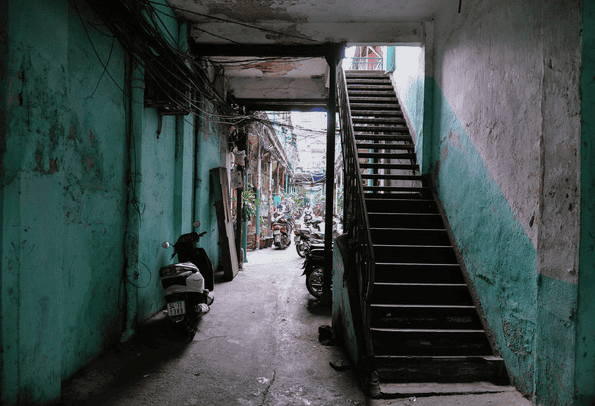
Hao Si Phuong dates back over 100 years to 1910 when wealthy businessman Hua Bon Hoa (known as “Uncle Fire”) constructed this residential complex for Chinese workers. The name “Hao Si Phuong” has multiple interpretations:
- Traditional interpretation: “Hao” (heroic/generous), “Si” (scholar), “Phuong” (trade guild) – reflecting the values of early Chinese immigrants
- Alternative theory: Named after the landlord “Hao Si” who employed soap factory workers living here
The complex originally housed workers from Teochew and Hainan communities, though over the decades Vietnamese families have also moved in, creating a unique multicultural residential environment.
Architectural Significance
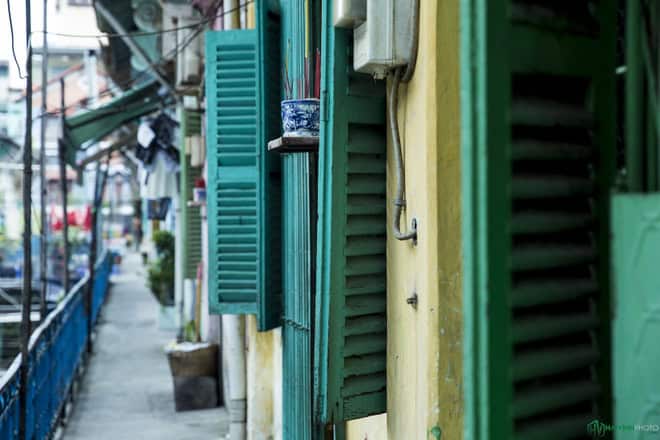
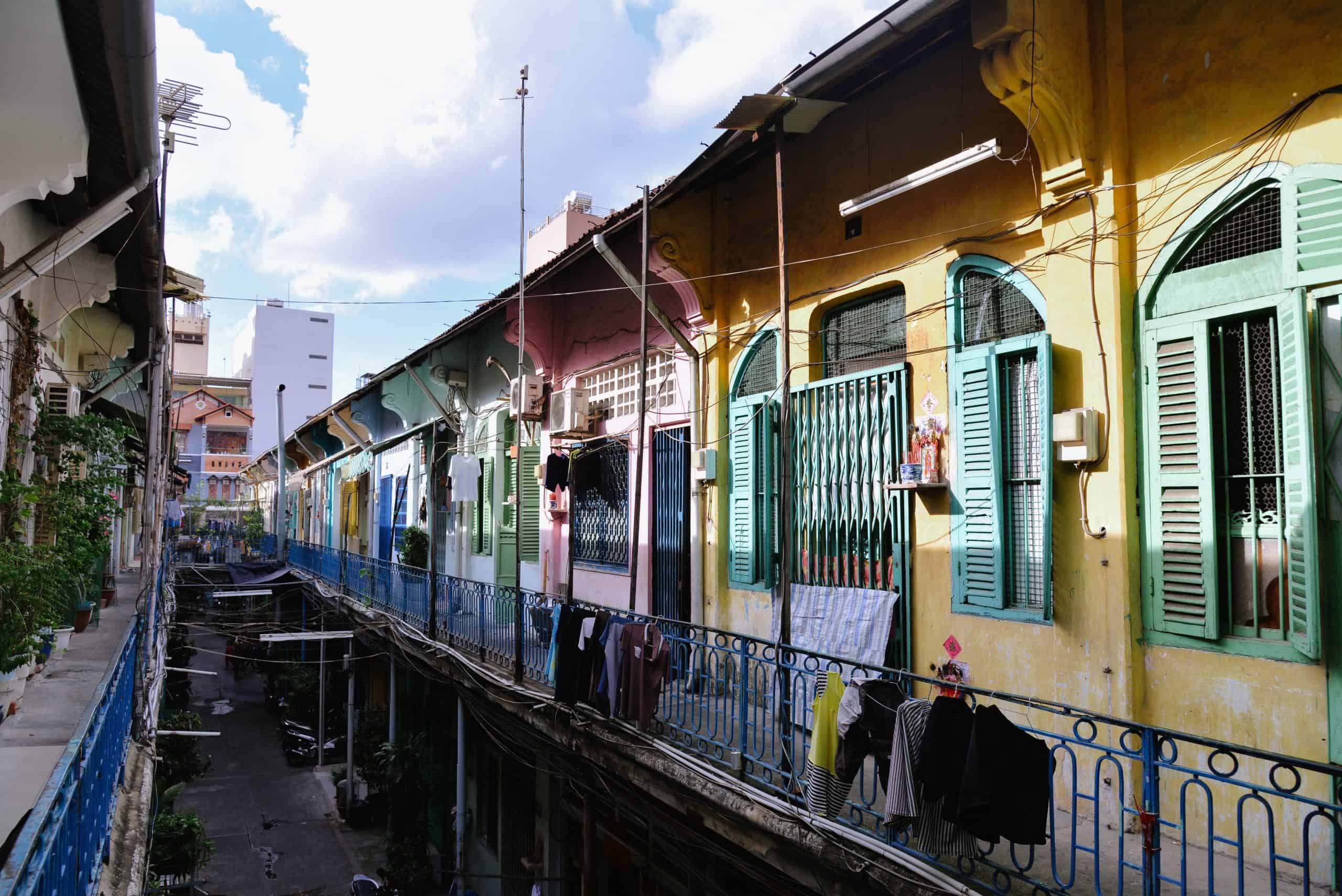
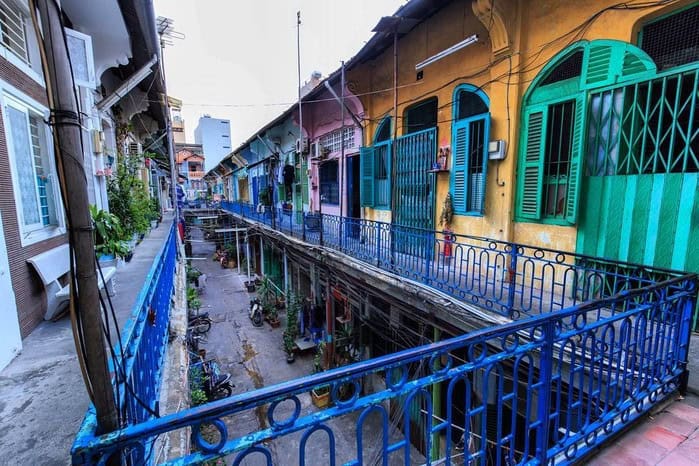
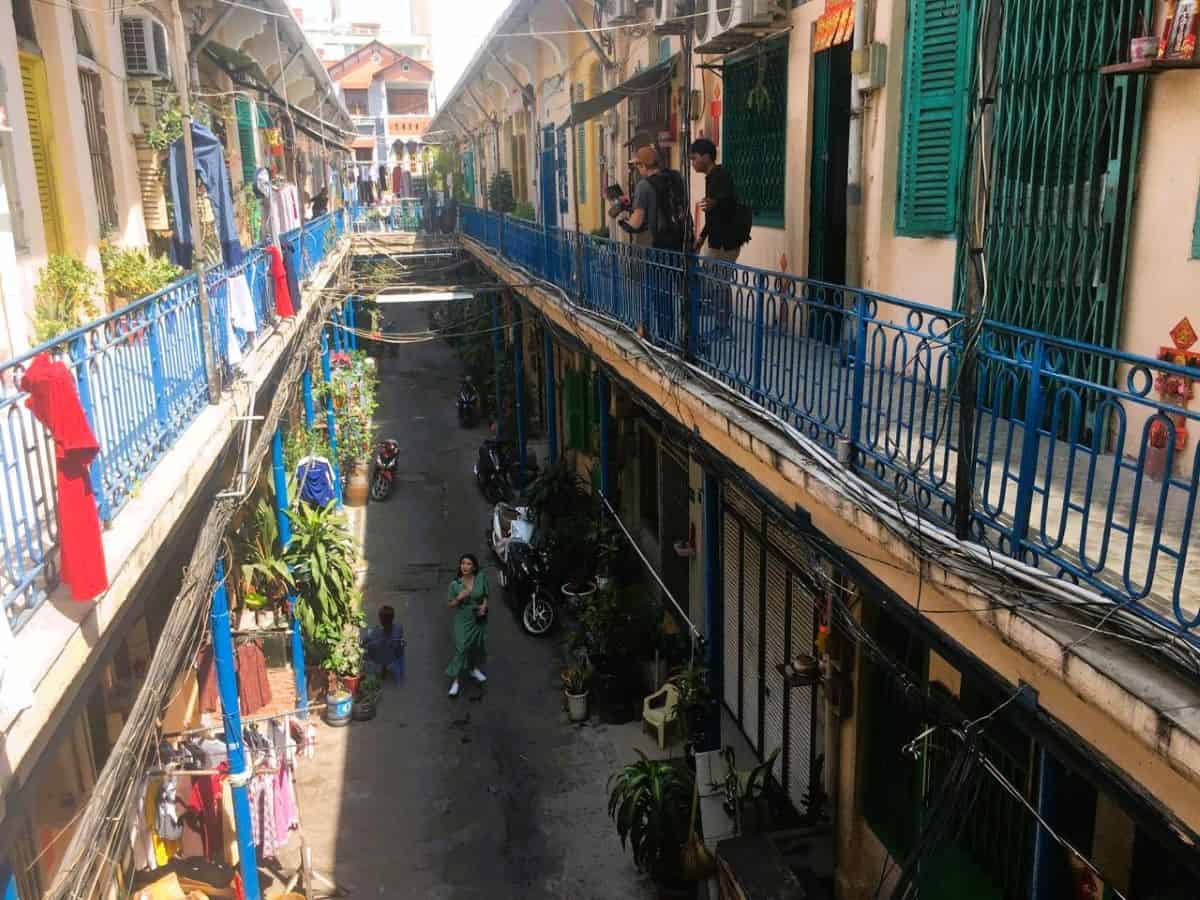
The complex consists of 67-68 two-story units arranged around a central courtyard, following traditional Cantonese “light well” (giếng trời) design principles. This architectural style was specifically adapted for tropical climates:
- Central courtyard provides natural ventilation and light
- Shared corridors promote community interaction
- Two-story height balances population density with livability
- Layout incorporates traditional Chinese feng shui principles
- Colorful painted walls (yellow, blue, green) create distinctive aesthetic
Hao Si Phuong is architecturally significant as one of the few remaining examples of early 20th-century Chinese residential architecture in Saigon. While many similar structures have been demolished for modern development, this alley preserves authentic heritage that tells the story of HCMC’s multicultural past.
Official Recognition
In 2023, HCMC Tourism Department recognized Hao Si Phuong as one of the “Top 10 Interesting Check-in Spots” in the city’s “100 Interesting Things About HCMC” program, acknowledging its cultural and architectural value.
2025 Photography Rules – Latest Update
⚠️ CRITICAL INFORMATION – Photography Policy Clarification
The photography situation at Hao Si Phuong has evolved significantly since 2020. Understanding this history helps visitors appreciate current rules.
Photography Ban History (2020-2022)
In August 2020, frustrated residents posted “No Photography/Filming” signs throughout the alley. The ban resulted from serious disruptions:
- 6-7 film crews daily causing constant noise and chaos
- Tourists littering, loud behavior, and inappropriate clothing choices
- Visitors taking residents’ belongings without permission for “prop photos”
- Film crews blocking entrances, preventing residents from accessing their own homes
- Constant disturbance to elderly residents’ peaceful living environment
- Disrespectful behavior treating the residential space as a free film set
The ban was legally supported by local authorities, who confirmed residents’ right to privacy in their own community.
Current Status (2025)
Based on recent visitor reports and resident interviews from late 2022-2024, the situation has softened:
✅ Ground Floor (Tầng 1) – Generally Permitted IF:
- You politely ask permission from residents
- You’re quiet and respectful, not causing disturbance
- You clean up after yourself, don’t litter
- You avoid touching or moving residents’ belongings
- You visit during reasonable hours (9-11am, 3-5pm)
- You’re taking personal photos only, not commercial filming
⚠️ Second Floor (Tầng 2) – Strictly Prohibited:
- Warning signs still actively posted
- Residents enforce ban more strictly
- More private living spaces, less tolerance for visitors
Practical Photography Guidelines
Before Taking Any Photos:
- Ask First: Greet residents politely and ask “Xin phép chụp ảnh được không?” (May I take photos?) or use hand gestures if language is a barrier
- Be Quick: Don’t linger too long or block narrow pathways
- Small Groups: Maximum 2-3 people to avoid overwhelming the space
- No Props: Don’t bring extensive photography equipment, costumes, or props
- Respect Privacy: Never photograph residents without their explicit permission
- No Commercial Use: Professional shoots, fashion photography, or commercial filming require official permits from local authorities
Reality Check from Recent Visitors
According to visitor accounts from 2022-2024, ground floor residents have become more relaxed about polite, respectful photography. One resident stated: “If you come quietly and ask nicely, it’s okay. Just don’t make a mess or disturb people.”
However, attitudes can vary by individual resident and time of day. Always prioritize respect over getting photos. If anyone asks you to stop or leave, comply immediately and graciously.
Architectural Highlights & Visual Appeal
“Mini Hong Kong” Aesthetic
Hao Si Phuong earned its “Hong Kong beside Cho Lon” nickname from distinctive features that create an authentic Chinese urban atmosphere:
- Narrow corridors with colorful painted walls creating dramatic perspectives
- Weathered facades showing the character and patina of time
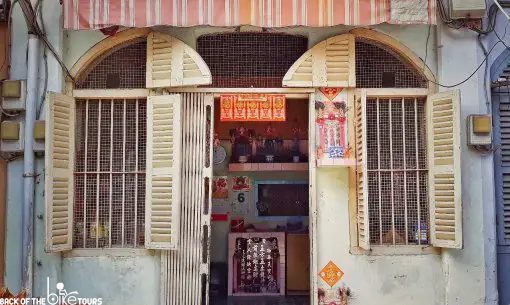
- Traditional Chinese decorative elements including red couplets, lucky banners, and auspicious characters
- Overhead clotheslines and tangled electrical wires creating authentic urban texture
- Second-floor walkways connecting both rows of units with vintage railings
- Central courtyard serving as the community’s heart with motorcycle parking
Color Palette & Character
Originally painted uniform yellow, individual units have been repainted over decades in various colors while maintaining the Chinese architectural style. This creates a unique patchwork effect:
- Weathered yellow walls showing original paint
- Fresh blue and green sections from recent renovations
- Peeling paint revealing layers of history
- Contrast between maintained and aged surfaces
The mix of weathered and fresh paint, combined with tropical humidity effects, creates visual interest that photographers particularly appreciate.
Distinctive Architectural Elements
Traditional Features:
- Altar tables outside each unit entrance – active religious spaces, not decorations
- Chinese New Year decorations particularly visible January-February
- “Ngu Phuc Lam Mon” (Five Blessings Enter Gate) banners over doorways
- Red lanterns during festival periods
- Traditional shopfronts at ground level with vintage signage
Everyday Details:
- Vintage wooden doors with peeling paint
- Original tile flooring in corridors
- Metal railings with decorative patterns
- Natural aging creating photogenic textures
- Residents’ daily life visible through open doors
Photography Tips (IF Permission Granted)
Best Times for Light:
- Morning (9-10am): Soft natural light, cooler temperatures
- Late afternoon (4-5pm): Golden hour lighting, longer shadows
- Avoid midday: Harsh overhead light, very hot
Interesting Compositions:
- Weathered walls and colorful doors as backgrounds
- Architectural details: balconies, stairs, corridors
- Natural framing through doorways and windows
- Play of light and shadow in narrow passages
- Vintage elements: old tiles, worn paint, traditional decorations
Important Reminder: Always ask permission before photographing, and never include residents in your photos without their explicit consent.
Food & Beverage Within the Alley
Ba Lu Coffee Shop
This legendary coffee shop has operated for 60+ years within Hao Si Phuong, representing authentic local culture rather than tourist-oriented dining.
Location & Atmosphere:
- Located under one of the staircases on the ground floor
- Traditional setup with glass display case on wooden table
- Simple plastic tables and chairs
- Local elderly residents as regular customers
- No-frills Vietnamese coffee experience
What to Expect:
- Black Coffee (Cà Phê Đen): Traditional Vietnamese drip coffee, the specialty here
- Very basic setup – authentic local experience, not Instagram-friendly café
- Minimal or no English spoken
- Cash only payments
- Prices typically budget-friendly for local standards
Cultural Note: Ba Lu Coffee represents genuine neighborhood culture. Visit to experience authentic local life, not for modern café amenities.
Chinese Noodle Soup (Hủ Tiếu Tàu)
At the end of the alley, a small family-run noodle shop serves traditional Cantonese-style noodle soup.
Characteristics:
- Primarily frequented by alley residents, not tourists
- Authentic Cantonese flavors and preparation
- Simple seating area
- Limited menu focused on noodle specialties
- Language barrier likely – pointing and gestures work
Small Refreshment Stalls
Several residents operate informal beverage stalls:
- Soft drinks and bottled water
- Traditional Vietnamese snacks
- Basic refreshments
- Very casual, neighborhood-style service
⚠️ Important Food & Beverage Disclaimers
No Confirmed Pricing Information: This guide cannot provide specific prices as:
- Prices change frequently
- Vendors may adjust prices
- We cannot verify current rates
Operating Hours Not Verified: Shops operate on informal schedules:
- Generally follow residents’ daily rhythms
- May close during traditional rest hours
- Weekend hours may vary
- No guaranteed opening times
Set Appropriate Expectations:
- Very basic facilities – no modern restrooms, air conditioning, or tourist amenities
- Limited English – basic Vietnamese phrases helpful
- Cash only – no card payments or mobile payment apps
- Authentic local experience – not curated for tourists
Recommendation: Treat these food options as opportunities to support the local community and experience authentic neighborhood life, not as destinations for gourmet dining or comfortable tourist facilities.
How to Get There
From District 1 (Downtown HCMC)
Option 1: Taxi/Grab (Recommended for First-Time Visitors)
- Distance: Approximately 3-4km from Ben Thanh Market
- Duration: 10-15 minutes depending on traffic
- Estimated Cost: 30,000-50,000 VND ($1.20-$2 USD)
- Drop-off Point: Tell driver “206 Tran Hung Dao Street B, District 5” or show address in Vietnamese
- Advantage: Direct, air-conditioned, easy navigation
Option 2: Motorbike/Scooter
- Can navigate easily through District 5’s streets
- Parking: Limited space inside alley entrance
- Alternative parking on Tran Hung Dao Street or nearby side streets
- Watch belongings when parked on street
- Advantage: Flexible, can explore surrounding area easily
Option 3: Walking (From Nearby District 5 Attractions)
- From Cho Lon Bus Station: 15-minute walk
- From Binh Tay Market: 10-minute walk
- From Ba Thien Hau Pagoda: 5-minute walk
- Advantage: Free, can explore neighborhood along the way
Navigation Tips
Finding the Entrance:
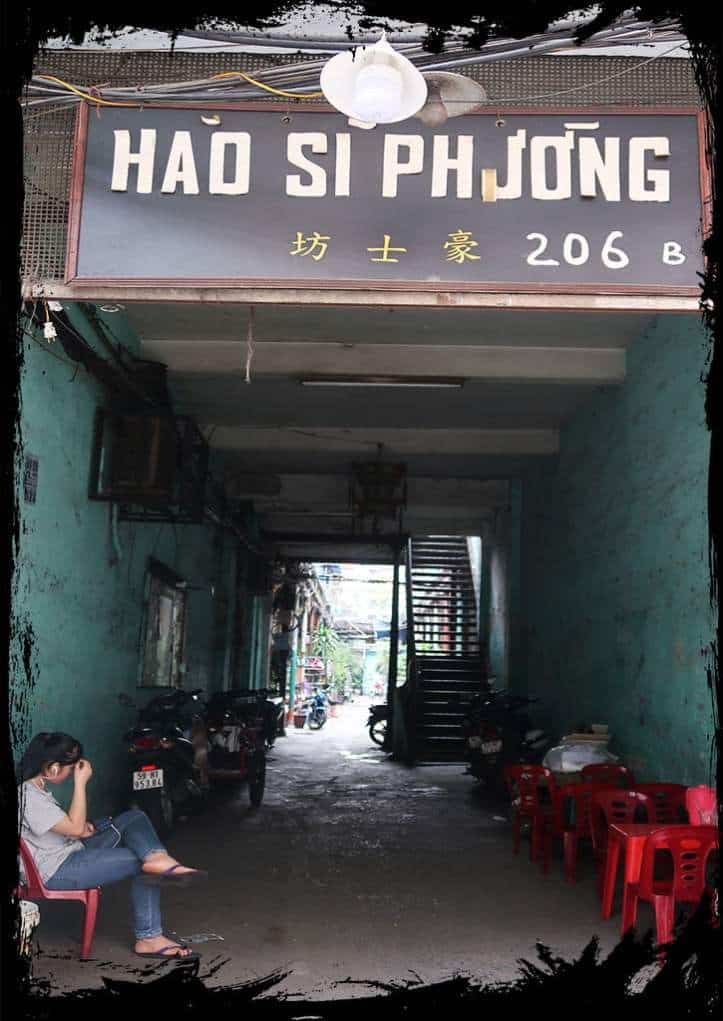
- Look for house number 206 on Tran Hung Dao B Street
- The alley entrance is marked but easy to miss among shopfronts
- You’ll pass through a dim corridor with turquoise/blue wall paint – this is correct
- The entrance is narrow and accommodates only motorcycles and pedestrians
- Cars cannot enter the alley
Landmarks for Reference:
- Near intersection of Tran Hung Dao and Ngo Quyen Streets
- In District 5’s historic Chinatown area
- Close to multiple Chinese temples and pagodas
- If you reach Binh Tay Market, you’ve gone slightly too far
Parking Considerations
⚠️ Important Parking Information:
Cars:
- Cannot enter the alley – opening too narrow
- Street parking available on Tran Hung Dao Street
- Paid parking lots in the area (ask locals)
- Be aware of parking restrictions and time limits
Motorcycles/Scooters:
- Limited spaces inside alley entrance (first-come basis)
- Street parking on Tran Hung Dao or side streets
- Watch your belongings – standard urban precautions
- One-way traffic patterns – be aware of entry/exit routes
Bicycles:
- Can bring inside alley if needed
- Keep close and don’t block pathways
Suggested Visit Itinerary
Recommended Duration: 30-45 Minutes
Hao Si Phuong is a small residential alley, not a large attraction. A brief, respectful visit is appropriate.
Ideal Visiting Schedule
9:00-9:30am: Arrival & Initial Exploration
- Morning light provides best photography conditions
- Cooler temperatures more comfortable
- Residents less busy with daily activities
- Coffee shops opening for the day
- Greet residents politely as you enter
9:30-10:00am: Detailed Observation
- Walk through ground floor corridor slowly
- Observe architectural details and daily life
- Ask permission for photos if desired
- Visit Ba Lu Coffee if interested in authentic local experience
- Chat briefly with friendly residents (if they initiate)
10:00-10:30am: Transition to Nearby Attractions
- Avoid overstaying in residential area
- Move on to other District 5 heritage sites
- Allow residents to continue their normal day
Combine With Nearby Attractions
Within 5-Minute Walk:
Ba Thien Hau Pagoda (Chùa Bà Thiên Hậu)
- 18th-century Chinese temple dedicated to sea goddess
- Stunning architecture and religious art
- Active worship site
- Free entry (donations appreciated)
Ong Bon Pagoda (Chùa Ông Bổn)
- Late 17th-century Cantonese congregation hall
- Worships Ong Bon (guardian deity)
- Beautiful traditional architecture
- Peaceful atmosphere
Within 10-Minute Walk:
Binh Tay Market (Chợ Bình Tây)
- Historic wholesale market with stunning architecture
- Authentic local shopping experience
- Traditional goods, food, textiles
- Best visited in morning
Cha Tam Church
- French colonial architecture
- Active Catholic church
- Beautiful facade and interior
Various Smaller Chinese Temples
- Numerous heritage buildings throughout District 5
- Each with unique history and architecture
Sample Half-Day District 5 Heritage Tour
Morning Itinerary (4 hours):
- 8:30am: Start at Binh Tay Market for breakfast and shopping (1 hour)
- 9:30am: Walk to Hao Si Phuong Alley (30-45 minutes)
- 10:15am: Visit Ba Thien Hau Pagoda (30 minutes)
- 11:00am: Lunch at local Cantonese restaurant
- 12:00pm: Ong Bon Pagoda (20 minutes)
- 12:30pm: Return to District 1 or continue exploring
This itinerary provides cultural variety while respecting each site’s residential or religious nature.
Important Notes & Etiquette
⚠️ CRITICAL REMINDERS
1. Respect Residents – HIGHEST PRIORITY
Remember the Fundamental Reality:
- This is people’s HOME, not a purpose-built tourist attraction
- Residents did not choose to live in a tourist spot
- Your visit is a privilege, not a right
- If asked to leave, comply immediately and politely – no arguments
Many residents are elderly people who have lived here for decades. They value peace, privacy, and maintaining their traditional lifestyle. Tourism creates unwanted disruption to their daily routines.
2. Cleanliness & Hygiene
Zero Tolerance for Littering:
- Carry all trash with you – no exceptions
- No food wrappers, bottles, or any waste
- If you bring it in, take it out
Don’t Touch or Move Belongings:
- Residents’ items on display are not props
- Don’t rearrange anything for “better photos”
- Don’t sit on residents’ furniture or doorsteps
- Respect all private property
3. Noise Levels
Maintain Quiet:
- Keep conversations at low volume
- No loud music, videos, or phone calls
- Turn phone ringers to silent or vibrate
- Be especially quiet during rest hours (12-2pm)
- Groups should disperse to avoid crowding and noise
4. Photography Etiquette
Strict Photography Rules:
- ALWAYS ask permission before photographing anything
- Never photograph residents without explicit consent
- Respect “No Photo” signs wherever posted
- Don’t use flash if it might disturb people
- Commercial filming requires official permits – don’t attempt without authorization
What Constitutes Commercial Use:
- Fashion photography shoots
- Product photography
- Professional portfolios requiring releases
- Any photography for business purposes
- Large-scale photography projects
5. Appropriate Behavior
Dress and Conduct:
- Dress modestly and respectfully (covered shoulders and knees recommended)
- No inappropriate poses, costumes, or theatrical behavior
- Don’t block narrow pathways – step aside when residents need to pass
- Be patient and courteous
- Smile and greet people politely (“Xin chào”)
Inappropriate Behaviors to Avoid:
- Treating residents as “exotic photo subjects”
- Posing provocatively or disrespectfully
- Bringing costumes, props, or excessive equipment
- Acting entitled to access or photos
6. Peak Hours to Avoid
Times to Stay Away:
- Before 8am: Residents’ private morning routine
- 12-2pm: Traditional rest/lunch time
- After 6pm: Family dinner and evening time
- Weekend mornings: Family time, less tolerance for visitors
Best Visiting Windows:
- 9-11am weekdays: Good light, residents less busy
- 3-5pm weekdays: Afternoon light, moderate activity
7. Group Size Limitations
Keep Groups Small:
- Maximum 4-5 people per group
- Large tour groups should coordinate with local authorities in advance
- Split larger groups to avoid overwhelming narrow corridors
- Don’t create bottlenecks or block passages
For Tour Operators:
- Obtain proper permissions
- Brief clients on etiquette beforehand
- Enforce strict behavioral standards
- Consider impact on residents
8. Cultural Sensitivity
Respect Chinese Cultural Elements:
- Altar tables are active religious spaces, not decorations
- Don’t touch offerings, incense, or religious items
- Be respectful during prayer or religious activities
- Understand cultural significance of decorations
Religious Considerations:
- Some residents maintain traditional worship practices
- Religious items should not be photographed without permission
- Show reverence in areas of worship
What Absolutely NOT to Do
❌ Banned Behaviors:
- Bring professional lighting, tripods, or extensive equipment without permission
- Rearrange residents’ belongings for “staged” photos
- Shout, laugh loudly, or make excessive noise
- Litter or leave any trash behind
- Block entrances, doorways, or fire exits
- Disrespect or argue with residents who object to your presence
- Film or photograph anyone without consent
- Treat residents as “local color” or photo props
- Enter floor 2 under any circumstances
- Bring large tour groups without coordination
- Stay longer than 30-45 minutes
- Visit during inappropriate hours
Consequences of Bad Behavior:
- You may be asked to leave immediately
- Police may be called for serious violations
- Your actions damage accessibility for future visitors
- Contributes to stricter bans on all photography
Frequently Asked Questions
Q1: Can I take photos at Hao Si Phuong in 2025?
A: Yes, with significant restrictions and caveats:
Ground floor (Tầng 1): Generally tolerated if you:
- Ask permission politely from residents
- Keep quiet and don’t cause disturbance
- Avoid floor 2 entirely (strictly prohibited)
- Keep visits brief (30-45 minutes maximum)
- Show genuine respect for residents
Floor 2 (Tầng 2): Absolutely prohibited – residents actively enforce this.
The situation has relaxed somewhat since the strict 2020 ban, but respect and discretion are essential. Many residents remain wary of photographers due to past negative experiences. Always prioritize being a respectful guest over getting photos.
Q2: What’s the best time to visit?
A: 9-11am or 3-5pm on weekdays are optimal.
Avoid These Times:
- Early mornings (before 8am): Residents’ private time
- Lunch time (12-2pm): Traditional rest period
- Evenings after 6pm: Family dinner time
- Weekend mornings: Family time, less welcoming to visitors
Best Conditions:
- Weekday mornings offer best light and cooler temperatures
- Late afternoons provide golden hour photography (if permitted)
- Dry season (December-April) more comfortable than rainy season
Q3: Is there an entrance fee?
A: No entrance fee – this is a residential area, not a ticketed attraction.
However, it’s courteous to:
- Buy coffee from Ba Lu Coffee Shop if you visit
- Support local vendors if purchasing anything
- Consider this supporting the community, not paying for access
- Never expect free entertainment – you’re visiting someone’s home
Q4: How do I get there from District 1?
A: Multiple options depending on your preference:
Easiest: Taxi/Grab
- Cost: 30,000-50,000 VND ($1.20-$2)
- Duration: 10-15 minutes
- Address to show driver: “206 Trần Hưng Đạo B, Quận 5”
Most Flexible: Motorbike/scooter rental
- Can explore District 5 freely
- Parking available on street
Most Economical: Walk from nearby attractions
- 5-15 minutes from other District 5 sites
The alley entrance is narrow – look for house number 206 with a dim corridor entrance.
Q5: Where can I park?
A: Parking is limited and challenging:
Motorcycles/Scooters:
- Very limited space inside alley entrance (few spots)
- Street parking on Tran Hung Dao Street
- Watch belongings – standard urban precautions apply
Cars:
- Cannot enter the alley – opening too narrow for vehicles
- Park on nearby streets (look for legal parking areas)
- Paid parking lots available in the area
Recommendation: Use taxi/Grab to avoid parking hassles entirely.
Q6: Can I bring a film crew or professional photography equipment?
A: No, not without official permission from local authorities.
Residents specifically banned professional shoots due to:
- Past disruptions from film crews
- Excessive equipment blocking narrow spaces
- Commercial exploitation without community benefit
- Noise and chaos from production activities
Personal cameras/smartphones only, and always ask permission first.
For Professional/Commercial Needs:
- Contact District 5 People’s Committee for permits
- Coordinate with local neighborhood leadership
- Expect fees and restrictions
- May still be denied depending on project scope
Q7: Are there bathrooms or facilities?
A: No public facilities whatsoever.
This is a private residential area with:
- No public restrooms
- No tourist information center
- No designated waiting areas
- No emergency facilities
Plan Accordingly:
- Use facilities before arriving
- Don’t expect any tourist infrastructure
- Nearby restaurants/cafes may allow restroom use for customers
Q8: Is it safe?
A: Generally yes – it’s a residential neighborhood with elderly residents.
Standard Urban Safety Precautions:
- Watch your belongings (phones, cameras, bags)
- Don’t flash expensive equipment unnecessarily
- Visit during daylight hours only
- Stay in well-populated ground floor areas
- Be aware of your surroundings
Low Crime Area: District 5 Chinatown is generally safe, but:
- Petty theft can occur anywhere in HCMC
- Use common sense with valuables
- Don’t leave bags unattended
- Keep cameras secure when not actively using
Not Recommended:
- Solo visits at night
- Leaving valuables in plain sight
- Wandering into unmarked private areas
Q9: Can I visit the second floor?
A: Absolutely not – floor 2 is strictly off-limits to all visitors.
Reasons:
- More private living spaces
- Residents actively enforce the ban
- Warning signs clearly posted
- Strong local sentiment against visitors upstairs
Respect This Boundary:
- Don’t attempt to “sneak up” for photos
- Don’t ask residents for exceptions
- Violating this rule may result in police involvement
- Your compliance helps maintain any access at all
Q10: What if a resident asks me to leave?
A: Comply immediately and politely – no exceptions, no arguments.
Appropriate Response:
- Stop all activities immediately
- Apologize sincerely: “Xin lỗi” (I’m sorry)
- Thank them for their patience: “Cảm ơn”
- Leave promptly without taking additional photos
- Don’t argue, explain, or try to negotiate
Remember:
- You’re in their home
- They have every right to refuse access or photography
- Previous bad experiences make some residents less tolerant
- Gracious compliance shows respect
Don’t:
- Try to justify your presence
- Take “one more photo” while leaving
- Become defensive or upset
- Post complaints on social media
Q11: What makes Hao Si Phuong special?
A: Hao Si Phuong is architecturally and culturally significant as:
Historical Heritage:
- One of few remaining examples of early 20th-century Chinese residential architecture in HCMC
- Over 100 years of continuous occupation
- Preserved traditional Cantonese design principles
- Living testament to Chinese-Vietnamese immigration history
Architectural Uniqueness:
- Authentic “light well” (giếng trời) tropical adaptation
- Colorful weathered aesthetic from decades of organic development
- Mix of original and renovated structures showing evolution
- Compact urban design adapted for community living
Cultural Significance:
- Active Chinese-Vietnamese community maintaining traditions
- Cantonese language still spoken by many elderly residents
- Traditional customs and festivals observed
- Represents multicultural heritage of Saigon/HCMC
Contrast:
- Peaceful residential enclave in bustling urban environment
- Stark difference from surrounding modern development
- Authentic daily life versus commercialized tourist areas
Q12: Is it worth visiting if I can’t take many photos?
A: Yes, if you appreciate:
Cultural & Historical Value:
- Authentic architecture and preserved heritage
- Understanding HCMC’s Chinese immigrant history
- Observing traditional community lifestyle
- Educational experience about urban heritage preservation
Realistic Expectations:
- You’re experiencing a living neighborhood, not a museum
- The value is in observation and understanding
- Brief visit (30-45 minutes) provides sufficient exposure
- Combines well with other District 5 heritage sites
Maybe Not Worth It If:
- Your only goal is Instagram photos
- You can’t respect residential boundaries
- You need tourist facilities and comfort
- You’re uncomfortable with basic, authentic environments
Bottom Line: Visit for cultural education and architectural appreciation. Don’t visit solely for photography opportunities, as these are limited and conditional.
Q13: Do residents speak English?
A: Minimal to no English among most residents.
Language Reality:
- Many elderly residents speak primarily Cantonese
- Vietnamese is common language with younger residents
- Very limited English proficiency
- Communication may require gestures and patience
Useful Vietnamese Phrases:
- “Xin chào” (sin chow) = Hello
- “Xin phép chụp ảnh được không?” = May I take photos?
- “Cảm ơn” (gahm uhn) = Thank you
- “Xin lỗi” (sin loy) = Sorry/Excuse me
- “Không sao” (khome sow) = It’s okay/no problem
Tips:
- Smile and friendly gestures are universal
- Google Translate app can help
- Pointing and simple gestures usually work
- Don’t assume English will be understood
Q14: What should I wear?
A: Dress modestly and respectfully:
Recommended:
- Covered shoulders (t-shirts, blouses, not tank tops)
- Pants or skirts below knee length
- Comfortable closed-toe shoes for uneven surfaces
- Light, breathable fabrics (HCMC is hot and humid)
Avoid:
- Revealing clothing (short shorts, crop tops, low-cut tops)
- Beachwear or athletic wear
- High heels (impractical for uneven surfaces)
- Overly flashy or attention-seeking outfits
Practical Considerations:
- HCMC averages 25-35°C (77-95°F) year-round
- Humidity is high – dress for comfort
- Ground can be dirty – light colors may stain
- You’ll be walking through residential areas
Q15: Can I buy anything in the alley?
A: Very limited commercial options:
Available:
- Coffee and basic drinks from Ba Lu Coffee Shop
- Noodle soup from the small shop at end of alley
- Occasional refreshment stalls (soft drinks, water)
- Nothing designed for tourists – all for residents
Not Available:
- Souvenirs or tourist merchandise
- Handicrafts or traditional goods
- Organized shopping experiences
- English menus or tourist-friendly service
Nearby Shopping:
- Binh Tay Market (10-minute walk) for authentic local shopping
- Various shops along Tran Hung Dao Street
- Traditional Chinese medicine shops in District 5
Practical Tips for Visitors
What to Bring
✅ Essential Items:
- Small camera or smartphone – no large professional gear
- Cash (20,000-100,000 VND / $1-4 USD) for coffee, snacks, tips
- Comfortable walking shoes with good grip
- Bottle of water – stay hydrated in tropical heat
- Basic Vietnamese phrases (written down or on phone)
- Tissues/wet wipes – limited facilities
- Small bag to carry your trash until you find a bin
✅ Helpful Items:
- Sunscreen and hat (sun can be intense)
- Small umbrella (sun protection or unexpected rain)
- Fully charged phone (for photos, maps, translation)
- Modest covering (light scarf) if wearing tank top
What NOT to Bring
❌ Leave These Behind:
- Professional lighting, tripods, or extensive camera equipment
- Large backpacks or luggage
- Costumes, props, or theatrical items
- Unrealistic expectations of tourist facilities
- Entitled attitude or demands
- Drone equipment (illegal in residential areas)
Language Tips
Essential Vietnamese Phrases:
Greetings:
- “Xin chào” (sin chow) = Hello
- “Chào ông/bà” (chow ohm/bah) = Hello sir/madam (more formal)
Permission & Thanks:
- “Xin phép” (sin fep) = Excuse me/May I
- “Được không?” (durok khome) = Is it okay?
- “Cảm ơn” (gahm uhn) = Thank you
- “Cảm ơn nhiều” (gahm uhn nyew) = Thank you very much
Apologies:
- “Xin lỗi” (sin loy) = Sorry/Excuse me
- “Tôi không hiểu” (toy khome hyew) = I don’t understand
Photography:
- “Chụp ảnh” (choop ahn) = Take photo
- “Không được chụp ảnh” = No photography allowed
Basic Courtesy:
- Combine phrases: “Xin chào. Xin phép chụp ảnh được không?” = Hello. May I take photos?
- Smile and use respectful body language
- “Cảm ơn” goes a long way even with limited Vietnamese
Weather Considerations
HCMC Climate:
- Temperature: 25-35°C (77-95°F) year-round
- Humidity: High (70-90%) – feels hotter than temperature suggests
- Rainy Season: May-November (afternoon downpours common)
- Dry Season: December-April (best visiting weather)
Best Months:
- December-February: Coolest, driest, most comfortable
- March-April: Warming up but still relatively dry
- May-November: Hot, humid, frequent rain (but less crowded)
Daily Timing:
- Morning (before 11am) cooler than afternoon
- Afternoon heat peaks 12-3pm
- Late afternoon (4-6pm) cools slightly
What to Expect:
- Always hot – dress for heat and humidity
- Sudden rain possible during wet season
- Bring water and stay hydrated
- Seek shade during hottest hours
Accessibility Considerations
⚠️ Limited Accessibility:
Mobility Challenges:
- Not wheelchair accessible – stairs, narrow passages, uneven surfaces
- Not suitable for those with significant mobility limitations
- Steps throughout ground floor
- No ramps or elevators
- Narrow corridors difficult for walkers or canes
Physical Requirements:
- Ability to navigate stairs
- Walk on uneven tile surfaces
- Maneuver through narrow spaces (60-80cm width in places)
- Stand for 30-45 minutes
Sensory Considerations:
- Dim lighting in entrance corridor
- Uneven surfaces can be tripping hazards
- Narrow spaces may feel claustrophobic
- Ambient noise from residents’ activities
Alternative Options: If Hao Si Phuong isn’t accessible for you:
- Ba Thien Hau Pagoda has better accessibility
- Binh Tay Market has ground floor accessibility
- Other District 5 attractions may be more suitable
Health & Safety
General Health Precautions:
Heat-Related:
- Stay hydrated – drink water frequently
- Take breaks in shade if feeling overheated
- Watch for heat exhaustion symptoms
- Don’t overexert in tropical heat
Food & Water:
- Bottled water only (don’t drink tap water)
- Street food from reputable vendors only
- Hand sanitizer recommended
- Be cautious with ice in drinks
Medical Preparedness:
- Bring any personal medications
- Know your hotel/accommodation address for emergency
- Travel insurance recommended
- Nearest hospitals in District 5 or District 1
Environmental Hazards:
- Uneven surfaces – watch your step
- Overhead hazards (low doorways, hanging objects)
- Motorcycle traffic on nearby streets
- Tropical insects (mosquitoes) – repellent advised
Cultural Awareness
Chinese-Vietnamese Community: Understanding the cultural context enriches your visit:
Demographics:
- Primarily elderly Cantonese-speaking residents
- Mix of original Chinese immigrant families and Vietnamese residents
- Strong community bonds and traditional values
- Religious practices (Buddhism, Taoism, ancestor worship) active
Cultural Practices You May Observe:
- Incense burning at household altars
- Religious offerings outside doors
- Traditional Chinese festivals (especially Tet/Lunar New Year)
- Cantonese conversations among elderly residents
- Multi-generational families living together
Respectful Behavior:
- Don’t touch religious items or offerings
- Be quiet near prayer or worship activities
- Understand cultural differences in communication style
- Respect elders (traditionally highly valued)
- Don’t criticize or mock traditions you don’t understand
Cultural Sensitivity Notes:
- This community maintains traditions despite modernization pressure
- Tourism creates tension with traditional lifestyle
- Your respect helps preserve this cultural heritage
- Consider yourself a privileged observer, not entitled visitor
Cultural Context & Significance
Historical Importance
Hao Si Phuong represents a crucial chapter in Ho Chi Minh City’s multicultural history. Understanding this context adds depth to your visit.
Chinese Immigration to Saigon: During French colonial rule (late 19th – mid 20th century), thousands of Chinese immigrants settled in Saigon, establishing distinct communities. These immigrants:
- Came primarily from Guangdong and Fujian provinces
- Established trade networks and businesses
- Built temples, schools, and residential communities
- Created Cho Lon (literally “Big Market”) as Chinatown
- Preserved Chinese language, customs, and architecture
Hao Si Phuong’s Role: Built in 1910 by wealthy businessman Hua Bon Hoa, this complex served as:
- Affordable housing for Chinese workers (soap factory, dock workers, merchants)
- Community center where residents shared language and culture
- Safe enclave maintaining Chinese traditions
- Economic hub for small businesses and trades
Post-1975 Changes: After Vietnam’s reunification (1975):
- Some Chinese-Vietnamese families emigrated
- Remaining communities faced economic challenges
- Gradual mixing with Vietnamese residents
- Younger generations assimilated while elders maintained traditions
Today, Hao Si Phuong stands as one of few remaining authentic examples of this historical Chinese residential architecture in HCMC.
Architectural Heritage
Cantonese “Light Well” Design (Giếng Trời):
This traditional architectural style was specifically adapted for tropical climates:
Functional Benefits:
- Central courtyard provides natural ventilation, drawing hot air up and out
- Two-story height balances population density with air circulation
- Shared corridors create community space while maximizing efficiency
- Open layout allows cross-breeze in individual units
- Light wells bring natural light deep into interior spaces
Cultural Elements:
- Layout reflects traditional Chinese feng shui principles
- North-south orientation for energy flow
- Balance of public (courtyard) and private (units) spaces
- Community-focused design promoting interaction
Construction Details:
- Original materials: brick, tile, wood, plaster
- Colonial-era building techniques
- Mix of Chinese and French colonial influences
- Organic evolution through repairs and renovations
Preservation Challenges:
- Aging infrastructure requires constant maintenance
- Modern materials replace original elements over time
- Economic pressure to demolish for redevelopment
- Balancing residents’ needs with heritage preservation
Contemporary Challenges
Hao Si Phuong faces complex challenges:
Tourism vs. Residential Needs:
- Residents want peace and privacy
- Tourists want access and photographs
- Finding sustainable balance difficult
- Past negative experiences create wariness
Economic Pressures:
- Surrounding land values increasing
- Pressure to sell for redevelopment
- Limited resources for proper maintenance
- Uncertain long-term viability
Generational Shifts:
- Younger generations moving to modern housing
- Elderly residents aging without family support
- Loss of traditional language and customs
- Changing neighborhood demographics
Infrastructure Aging:
- 100+ year old buildings need repairs
- Plumbing, electrical systems outdated
- No modern amenities (elevators, air conditioning)
- Maintenance costs increasing
Preservation Efforts:
- 2023 Tourism Department recognition helps
- Growing awareness of heritage value
- Need for sustainable preservation funding
- Balance development with conservation
Community Perspective
Understanding Residents’ Reality:
Daily Life: Current residents (mostly elderly Chinese-Vietnamese) maintain traditional lifestyles:
- Cantonese remains primary language for many elderly
- Traditional festivals and customs observed (Tet, Mid-Autumn, etc.)
- Close-knit community bonds spanning decades
- Simple, modest living without modern conveniences
Tourism Impact: From residents’ perspective, tourism brings:
- Negative: Noise, disruption, privacy invasion, disrespect, littering
- Minimal Positive: Occasional small purchases, limited economic benefit
- Net Effect: Generally more burden than benefit
Why Some Residents Tolerate Visitors:
- Recognition brings attention to preservation needs
- Some younger residents see cultural/economic value
- Polite visitors less problematic than past film crews
- Acceptance varies widely among individual residents
What Residents Want:
- Peace and quiet in their homes
- Respect for privacy and daily routines
- Visitors who genuinely appreciate culture, not just photos
- Economic benefits if tourism continues (not current reality)
- Preservation of community character
Visitor Responsibility: Understanding this context, visitors should:
- Minimize impact on daily life
- Express genuine interest and respect
- Support local businesses when possible
- Advocate for sustainable tourism and preservation
- Leave only positive impressions
This cultural understanding transforms your visit from casual tourism to meaningful cultural exchange.
Final Recommendations
Who Should Visit
✅ Hao Si Phuong is Ideal For:
Architecture & Heritage Enthusiasts:
- Appreciate authentic preservation vs. restored/reconstructed sites
- Interested in Chinese-Vietnamese architectural history
- Value seeing lived-in heritage vs. museum displays
- Enjoy observing organic urban evolution
Cultural Travelers:
- Seek authentic local experiences over tourist attractions
- Interested in HCMC’s multicultural history
- Respectful of different customs and lifestyles
- Patient with language barriers and basic conditions
Thoughtful Photographers:
- Willing to prioritize respect over getting perfect shots
- Comfortable asking permission and accepting “no”
- Appreciate authentic environments vs. staged scenarios
- Understand photography is secondary to cultural experience
District 5 Explorers:
- Combining with other Chinatown heritage sites
- Half-day or full-day District 5 itinerary
- Interested in comprehensive neighborhood understanding
- Enjoy walking and discovering less-touristy areas
Educational Visitors:
- Students of architecture, urban planning, cultural studies
- Researchers interested in heritage preservation
- Those seeking to understand Vietnamese diversity
- Anyone willing to learn and observe respectfully
Who Might Not Enjoy
❌ Hao Si Phuong May Disappoint:
Comfort-Focused Tourists:
- Expecting modern facilities, restrooms, air conditioning
- Need accessible pathways and infrastructure
- Uncomfortable with heat, humidity, basic conditions
- Prefer curated, predictable tourist experiences
Photography-Primary Visitors:
- Only interested in Instagram/social media content
- Frustrated by restrictions and need for permission
- Unwilling to respect photography limitations
- Expect unrestricted access for perfect shots
Casual Sightseers:
- Looking for quick, easy attractions
- Not interested in cultural depth or history
- Prefer obvious, well-marked tourist sites
- Uncomfortable with residential neighborhood ambiguity
Large Groups:
- Tour buses or groups of 10+ people
- Without advance coordination with local authorities
- Cannot maintain quiet and respectful behavior
- Looking for group photo opportunities
Those Unable to Show Respect:
- Can’t handle being told “no”
- Uncomfortable with rules and restrictions
- Expect tourist-level service and accommodation
- Unwilling to adapt to local norms and expectations
Setting Appropriate Expectations
✅ Hao Si Phuong OFFERS:
Authentic Cultural Experience:
- Genuine glimpse into Chinese-Vietnamese heritage architecture
- Observation of traditional community lifestyle
- Educational value about HCMC’s multicultural history
- 30-45 minutes of interesting, meaningful exploration
Photographic Opportunities (Limited):
- Conditional access for respectful personal photography
- Unique architectural details and weathered aesthetic
- Authentic urban texture vs. polished tourist scenes
- Meaningful images with cultural context
Integration with District 5 Tour:
- Perfect complement to temples, markets, other heritage sites
- Provides residential perspective vs. religious/commercial sites
- Convenient location near multiple attractions
- Adds depth to understanding of Chinatown evolution
❌ Hao Si Phuong Does NOT Offer:
Tourist Infrastructure:
- No restrooms, visitor centers, or information desks
- No English-speaking guides or explanatory signage
- No gift shops, organized tours, or ticketing
- No climate-controlled comfort or modern amenities
Guaranteed Photography Access:
- Permission varies by resident, time, circumstances
- Floor 2 completely off-limits always
- May be asked to stop or leave at any time
- No “photo-friendly” poses or setups
Polished Tourist Experience:
- No curated displays or restored perfection
- Authentic aging and wear (peeling paint, weathering)
- Unpredictable resident interactions
- Reality of lived-in residential space
Extensive Time Investment:
- 30-45 minutes maximum appropriate duration
- Not a major destination requiring hours
- Best as part of broader District 5 exploration
- Limited activities or things to see/do
The Bottom Line
Visit Hao Si Phuong if you:
- Genuinely appreciate cultural heritage and authentic preservation
- Can be a respectful, gracious guest in someone’s home
- Value educational and cultural experiences
- Accept restrictions and limitations without resentment
- Want to support heritage preservation through awareness
Don’t visit if you:
- Only care about getting photos for social media
- Can’t handle restrictions, limitations, or being told “no”
- Need modern facilities and tourist infrastructure
- Expect guaranteed access and accommodations
- Won’t respect residential boundaries and privacy
The Sustainable Future: Hao Si Phuong’s survival as a living heritage site depends on visitors understanding they are guests in people’s homes, not consumers at an attraction. Your respectful behavior directly impacts:
- Whether residents continue tolerating any visitors
- Preservation of this unique cultural heritage
- Access for future respectful travelers
- Sustainable cultural tourism in HCMC
By visiting thoughtfully, you contribute to heritage preservation. By visiting disrespectfully, you contribute to its demise.
Choose wisely, visit respectfully, and help preserve this remarkable piece of HCMC’s multicultural history.
Disclaimer & Important Notes
Information Accuracy
This comprehensive guide is compiled from multiple sources including:
- Vietnamese and international news reports (2017-2025)
- Recent visitor accounts and reviews (2022-2024)
- Local resident interviews and perspectives
- Official HCMC Tourism Department recognition
- Architectural and heritage documentation
Current as of: Early 2025
Important Limitations:
Photography Rules May Change:
- Resident attitudes vary by individual and circumstances
- Local policies can shift based on visitor behavior
- What’s tolerated today may be prohibited tomorrow
- Always check current conditions before visiting
- Respect any new restrictions immediately
Pricing Information:
- No verified current prices for food/beverages
- Costs change without notice
- Vendors may adjust prices
- Confirm prices before ordering
- Cash payments only
Operating Hours:
- No official business hours (residential area)
- Shops operate on informal schedules
- Hours may vary by day, season, resident availability
- No guaranteed service times
Transportation:
- Traffic conditions in HCMC change constantly
- Taxi/Grab prices fluctuate based on demand
- Road construction may affect routes
- Verify current navigation options
Author Disclaimer
No Personal Expertise Claims: This guide represents compiled guidance from various credible sources, not personal expert knowledge. The author:
- Has researched extensively using verified sources
- Makes no claims to architectural, historical, or cultural expertise
- Presents information as reference material only
- Encourages readers to verify current conditions
- Cannot guarantee accuracy of all details
Not Professional Advice: This guide is for informational purposes only and should not be considered:
- Professional tour guidance
- Authoritative historical documentation
- Guaranteed current information
- Legal or official recommendations
Visitor Responsibility
You Are Responsible For:
- Verifying current conditions before visiting
- Respecting all posted rules and resident requests
- Your own safety and belongings
- Cultural sensitivity and appropriate behavior
- Following local laws and regulations
- Impact of your actions on residents and community
Respect is Non-Negotiable:
- Residents’ rights supersede visitor desires
- Privacy and peace are paramount
- When in doubt, err on side of caution
- Leave if asked – no exceptions
- Your behavior affects future visitor access
Heritage Preservation
Supporting Sustainable Tourism:
If you value Hao Si Phuong’s preservation:
- Visit respectfully with minimal impact
- Support local businesses (coffee shop, food vendors)
- Spread awareness about respectful tourism
- Consider donating to heritage preservation organizations
- Share this guide to educate other visitors
Advocacy:
- Support policies protecting HCMC’s heritage architecture
- Recognize value of living heritage vs. redevelopment
- Understand that some sites need protection from excessive tourism
- Balance tourism benefits with community well-being
Contact & Updates
For Current Information:
- District 5 People’s Committee (official inquiries)
- HCMC Tourism Department (heritage site questions)
- Recent visitor reviews on travel platforms
- Local tour operators familiar with District 5
Reporting Issues: If you witness:
- Disrespectful visitor behavior
- Damage to heritage site
- Harassment of residents
- Violations of local regulations
Contact local authorities or tourist police.