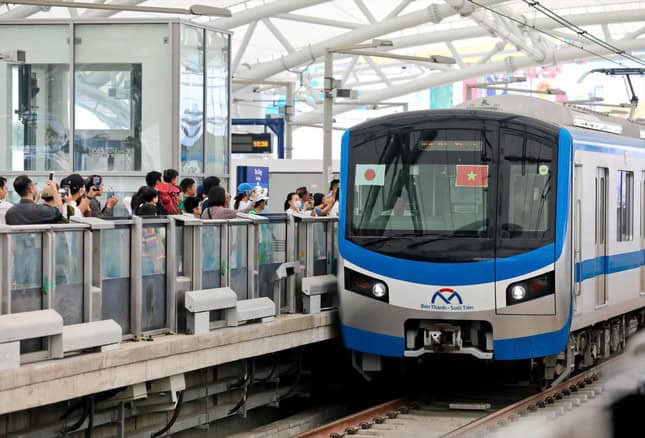
Vietnam currently operates metro systems in two major cities: Ho Chi Minh City and Hanoi. HCMC’s Metro Line 1 (Ben Thanh-Suoi Tien) opened December 22, 2024, spanning 19.7km with 14 stations connecting District 1 to Thu Duc. It runs 5 AM-10 PM with trains every 8-12 minutes, costing VND 6,000-20,000 ($0.24-0.79) per trip after the free trial period ended January 21, 2025. Hanoi operates two lines: Line 2A (Cat Linh-Ha Dong, opened November 2021) and Line 3 elevated section (opened August 2024), with fares ranging VND 9,000-19,000 ($0.35-0.75). Both systems accept contactless payments, mobile apps, and physical tickets, with discounts for students and free travel for seniors, children under 6, and people with disabilities.
Ho Chi Minh City Metro – Complete Guide
HCMC Metro Line 1 Overview
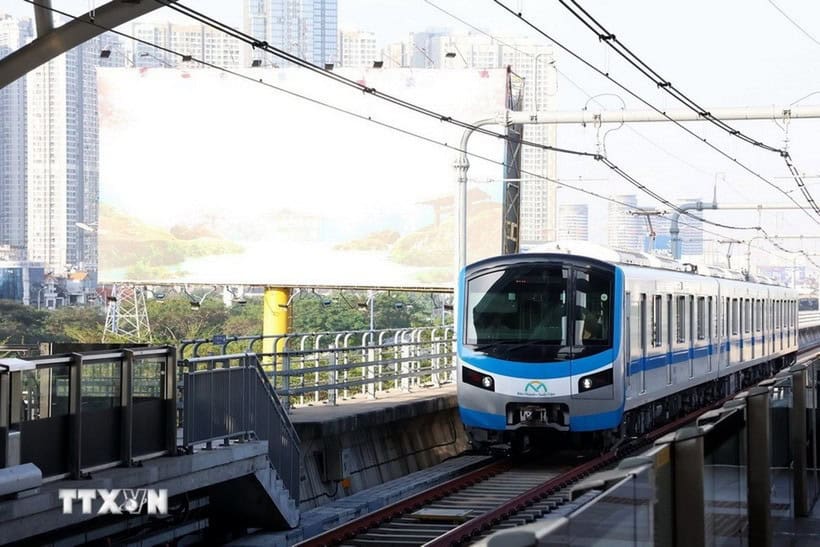
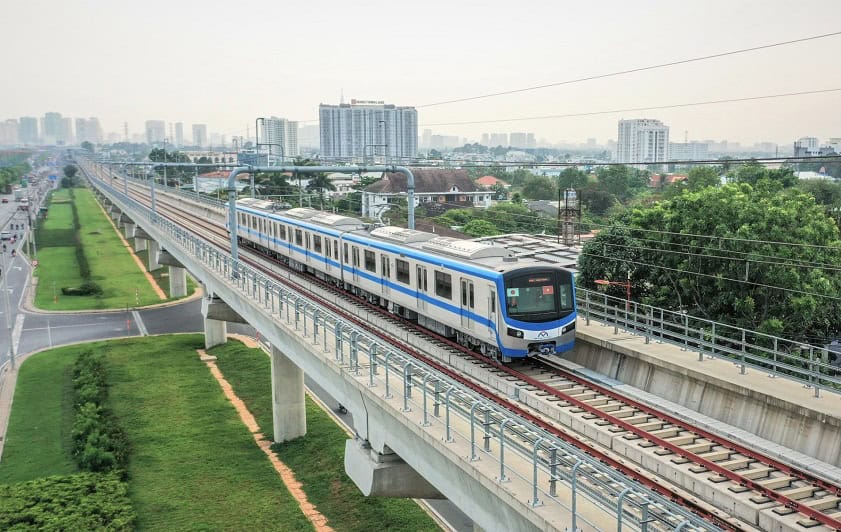
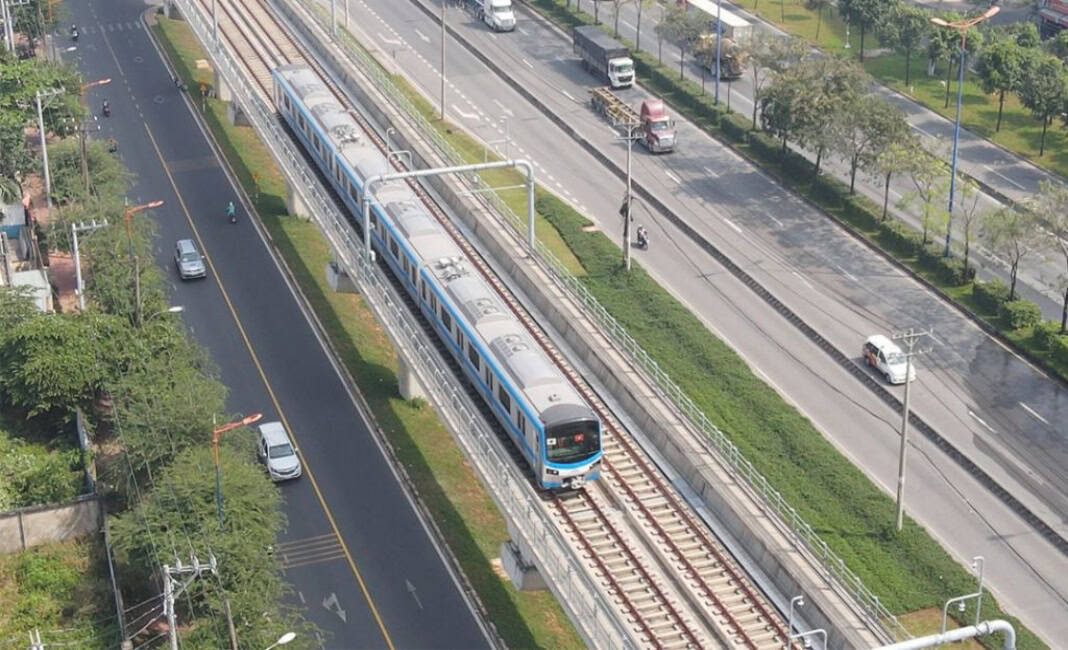
HCMC Metro Line 1 connects Ben Thanh Market in District 1 to Suoi Tien in Thu Duc City, covering a total distance of 19.7 kilometers. The line features 14 stations total: 3 underground stations (Ben Thanh, Opera House, and Ba Son) and 11 elevated stations. These underground stations are Vietnam’s first-ever subway stations, marking a historic milestone in the country’s public transportation development.
The metro system was officially opened to the public on December 22, 2024, after 17 years of planning and 12 years of construction. The project was primarily funded by the Japan International Cooperation Agency (JICA), with trains manufactured by Hitachi and designed to Japanese railway safety standards. Trains reach speeds of up to 110 km/h on elevated sections and 80 km/h in underground tunnels.
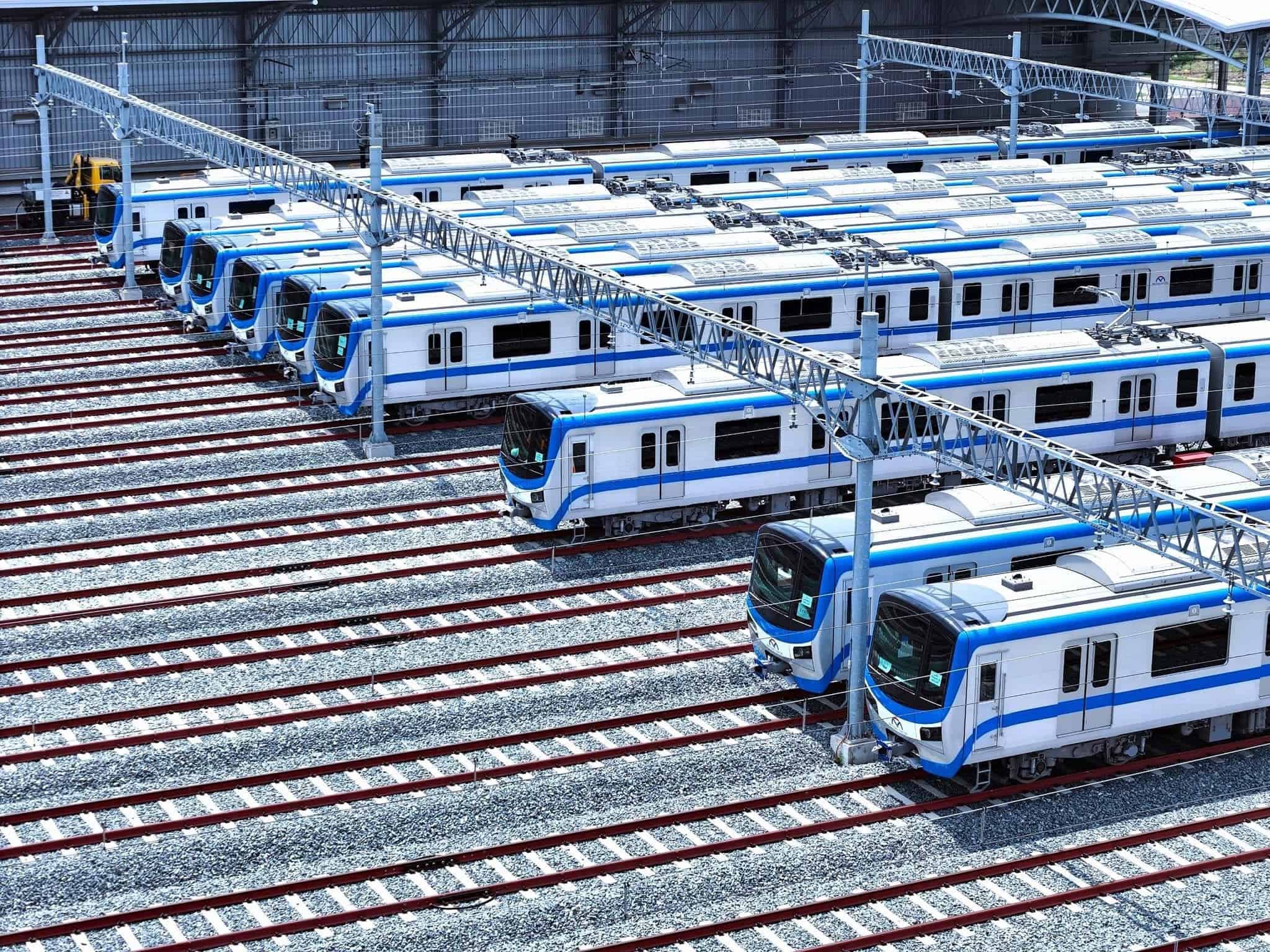
A complete journey from Ben Thanh to Suoi Tien takes approximately 30-32 minutes, with each station stop lasting 1-2 minutes. The system utilizes 17 modern train sets, each consisting of three carriages with a total capacity of 930 passengers (147 seated, 783 standing). During its first week of operation, the metro served over 700,000 passengers, and TIME Magazine named it one of the “World’s Greatest Places 2025.”
Ticket Prices & Payment Methods (2025)
The free trial period ended on January 21, 2025, and the metro now operates with the following fare structure:
Single Journey Tickets:
- Cash payment: VND 7,000 – 20,000 (depending on distance)
- Cashless payment: VND 6,000 – 19,000 (VND 1,000 discount per trip)
Unlimited Ride Passes:
- Day pass (24 hours): VND 40,000
- 3-day pass (72 hours): VND 90,000
- Monthly pass (standard): VND 300,000
- Monthly pass (students): VND 150,000 (50% discount)
Free Travel Categories: The following groups qualify for complimentary metro travel:
- War heroes and people with meritorious service
- People with disabilities
- Senior citizens aged 60 and above
- Children under 6 years old
Free travel requires special cards or valid ID cards presented at entry gates. All ticket prices include passenger accident insurance coverage.
Available Payment Methods:
- HCMC Metro HURC Mobile App (recommended for tourists)
- Download from Google Play Store (Android) or App Store (iOS)
- Select route and purchase ticket
- Receive QR code for gate scanning
- Supports MoMo e-wallet integration
- Available in Vietnamese and English
- Contactless Bank Cards
- Tap at entry and exit gates
- Accepted cards: Visa, Mastercard, JCB, American Express, UnionPay, Napas
- Automatic fare calculation based on distance
- Ticket Vending Machines
- Located at all stations
- Touch screen interface (Vietnamese and English)
- Cash only (accepts bills up to VND 100,000)
- Provides change in bills (coins rarely available)
- Issues IC cards for stored value
- Ticket Office Counters
- Staff assistance available
- Cash and card payments accepted
- Helpful for first-time users or questions
Stored Fare Cards (SFC): Day passes and 3-day passes are issued on red IC cards with a VND 35,000 deposit. The deposit is refundable at vending machines by inserting the card after your final journey. Single journey tickets use blue IC cards that must be returned at exit gates.
Operating Hours & Frequency
The metro operates in two phases with different schedules:
Phase 1 (First 6 Months – Current):
- Operating hours: 5:00 AM – 10:00 PM daily
- Total trips per day: 200
- Trains in operation: 9
Peak Hours (6:00-8:00 AM, 11:00 AM-12:00 PM, 3:30-6:00 PM):
- Train frequency: Every 8 minutes
Off-Peak Hours:
- Train frequency: Every 12 minutes
Phase 2 (After 6 Months):
- Operating hours: 5:00 AM – 11:30 PM daily
- Weekday trips: 276
- Weekend/holiday trips: 226
- Trains in operation: Up to 9 simultaneously
Phase 2 Peak Hours:
- Train frequency: Every 5 minutes
Phase 2 Off-Peak Hours:
- Train frequency: Every 10 minutes
Phase 2 Late Evening:
- Train frequency: Every 15 minutes
Holiday schedules may include occasional adjustments. Check the HCMC Metro HURC app or official website for real-time updates and service announcements.
All 14 Stations Guide
Underground Stations:
- Ben Thanh Station
- Location: Ben Thanh Market area, District 1
- Major hub and terminus
- Connects to 17 electric bus routes
- Nearby: Ben Thanh Market (350m), major shopping and street food area
- Transfer point for future metro lines
- Opera House Station
- Location: Near Saigon Opera House
- Nearby attractions: Ho Chi Minh City Opera House (French colonial building from 1898), Nguyen Hue pedestrian boulevard
- Access to downtown commercial district
- Popular with tourists visiting historic sites
- Ba Son Station
- Location: Riverside area, former shipyard site
- Nearby: Ton Duc Thang Museum (500m), Bach Dang Wharf, Saigon River views
- Restaurants and cafes along waterfront
- Historic significance from 18th-century shipyard
Elevated Stations:
- Van Thanh Park Station
- Nearby: Van Thanh Tourist Area with lawns, lakes, and trees
- Tranquil escape for group outings
- Motorbike parking available
- Tan Cang Station
- Location: Port area transitioning to modern development
- Nearby: Landmark 81 skyscraper (1km walk) – Vietnam’s tallest building
- Shopping, dining, and observation deck at Landmark 81
- Business district access
- Thao Dien Station
- Location: Thao Dien expat neighborhood (500m to main area)
- Trendy cafes, boutique stores, art galleries
- International restaurants and spas
- Popular with foreign residents and visitors
- An Phu Station
- Residential area with growing commercial development
- International schools nearby
- Rach Chiec Station
- Access to Rach Chiec Sports Complex
- Residential neighborhoods
- Phuoc Long Station
- Growing residential area
- Local markets and shops
- Binh Thai Station
- Residential zone in Thu Duc
- Local community services
- Thu Duc Station
- Thu Duc city center access
- Commercial and administrative hub
- Hi-Tech Park Station
- Access to Saigon Hi-Tech Park
- Technology companies and industrial zone
- Employment center
- National University Station
- Vietnam National University campus
- Large student population
- Affordable dining and shopping
- Suoi Tien Bus Station
- Terminal station and major transfer point
- Connections to: Dong Nai Province, Binh Duong Province, intercity buses
- Nearby: Suoi Tien Theme Park
- Long Binh Depot (metro maintenance center)
All elevated stations feature parking facilities underneath for motorbikes and bicycles, with fees ranging from VND 3,000-10,000 per entry.
How to Use HCMC Metro (Step-by-Step)
Before Your First Trip:
- Download the HCMC Metro HURC app (optional but recommended)
- Prepare payment method (cash VND 20,000-50,000 bills, or contactless card)
- Check your route on the app or station maps
At the Station:
- Locate Station Entrance
- Underground stations: Look for metro logo at street level entrances
- Elevated stations: Use stairs or elevators to reach platform level
- Follow bilingual signage (Vietnamese and English)
- Purchase Ticket
- Option A: Use mobile app (generate QR code before arriving)
- Option B: Tap contactless card at entry gate
- Option C: Use vending machine (select destination, insert cash, receive card)
- Option D: Visit ticket counter for staff assistance
- Enter Fare Gates
- Scan QR code at reader, OR
- Tap IC card/bank card on reader
- Wait for barriers to open
- Gates close automatically after passage
- Find Your Platform
- Check overhead signs for train direction
- Line 1 currently has single route (Ben Thanh ↔ Suoi Tien)
- Platform screen doors present for safety
- Board the Train
- Wait behind yellow safety line
- Allow passengers to exit before boarding
- Train doors align with platform screen doors
- Listen for audio announcements (Vietnamese and English)
- During Journey
- Hold handrails when standing
- Keep bags in front of you
- Monitor station announcements
- Each stop announced in advance
- Exit Station
- Scan same QR code or tap same card at exit gate
- Keep ticket until fully exited
- Fare automatically calculated for contactless payments
- Return blue IC cards (single journey) at designated slot
Total time from ticket purchase to boarding: 2-3 minutes for experienced users. Allow 5-10 minutes for first-time users.
Connecting Transportation
17 Electric Bus Routes (Routes 153-169):
The city operates dedicated electric bus routes connecting to Metro Line 1 stations. These buses are easily recognizable by their distinctive blue color, yellow wave patterns, and sunflower motifs.
- Operating hours: 5:00 AM – 10:00 PM (aligned with metro schedule)
- Frequency: 8-22 minutes between buses
- Coverage: District 1 to Thu Duc City
- Fares: VND 5,000-6,000 regular / VND 3,000 students
- Free travel for seniors, children, and people with disabilities
The buses run parallel to the metro line, picking up passengers from nearby streets and bringing them to station entrances. Route numbers are clearly displayed on bus fronts and at bus stops.
43 Public Bicycle Stations:
Ho Chi Minh City features public bicycle stations at strategic locations:
- Le Duan Street
- Ton Duc Thang Street
- Le Thanh Ton Street
- Nguyen Thi Minh Khai Street
- Ben Thanh Market area
- Nguyen Hue pedestrian street
Cyclists can ride to metro stations and use designated bicycle parking areas.
Private Vehicle Parking:
All 11 elevated metro stations include parking facilities underneath:
- Motorbike parking: VND 3,000-10,000 per entry
- Bicycle parking: Usually free or minimal fee
- Security and covered areas
- Convenient for park-and-ride commuters
Taxi and Ride-Hailing:
All metro stations have designated taxi/Grab pickup and drop-off zones. This makes it easy to combine metro travel with door-to-door service for the first or last mile of your journey.
Tourist Attractions Near Stations
Ben Thanh Station:
- Ben Thanh Market (350m): Iconic market for souvenirs, clothes, handicrafts, local specialties, and street food
- Nguyen Hue pedestrian street: Evening entertainment and events
- Central business district within walking distance
Opera House Station:
- Saigon Opera House: French colonial architecture from 1898, major artistic performances
- Dong Khoi Street: High-end shopping and dining
- Saigon Central Post Office: Historic French colonial building
- Notre-Dame Cathedral Basilica: Famous landmark
Ba Son Station:
- Bach Dang Wharf: Scenic Saigon River views, river bus rides, waterfront cafes
- Ton Duc Thang Museum (500m): Presidential history exhibit
- Ba Son Bridge: Historic and modern development symbol
Tan Cang Station:
- Landmark 81 (1km): Vietnam’s tallest skyscraper with shopping mall, restaurants, observation deck
- Vinhomes Central Park: Modern residential and commercial complex
Thao Dien Station:
- Thao Dien neighborhood (500m): International cafes, boutiques, art galleries
- An Phu area: Expat dining scene with diverse cuisines
- Saigon River parks and walking paths
Suoi Tien Station:
- Suoi Tien Theme Park: Cultural theme park with rides and attractions
- Gateway to Dong Nai and Binh Duong provinces
- Grand Park entertainment complex nearby
The metro significantly reduces travel time to these attractions compared to navigating traffic by taxi or motorbike, especially during rush hours.
Rules & Etiquette
To ensure a safe and pleasant journey for all passengers, the following regulations are strictly enforced:
Prohibited Items and Activities:
- Flammable or hazardous materials (strictly forbidden)
- Eating and drinking on trains (no exceptions)
- Smoking anywhere in stations or trains
- Skateboarding and rollerblading in stations
- Playing music or media at high volume
- Loud or disruptive conversations
- Balloons inside stations (safety hazard)
- Leaning on or forcing train doors
- Attempting to open train windows
- Crossing yellow safety lines on platforms
- Extending arms beyond safety barriers at elevated stations
Required Behaviors:
- Strong-smelling food must be sealed in plastic bags to prevent odors
- Keep hands away from door gaps at all times
- Stand clear of platform screen doors
- Hold children’s hands near platform edges
- Allow passengers to exit before boarding
- Stand on right side of escalators (walk on left)
- Keep personal belongings secure and in front of you
- Follow staff instructions during emergencies
Accessibility Guidelines:
- Priority seating for elderly, pregnant women, people with disabilities, and passengers with small children
- Elevators available at all stations for wheelchairs and strollers
- Platform screen doors prevent falls onto tracks
- Audio and visual announcements for passengers with disabilities
- Designated spaces on trains for wheelchairs
- Staff assistance available upon request
Violating these rules may result in warnings or fines. The metro employs security cameras throughout the system and staff monitors to ensure compliance.
Hanoi Metro System Guide
Hanoi Metro Overview
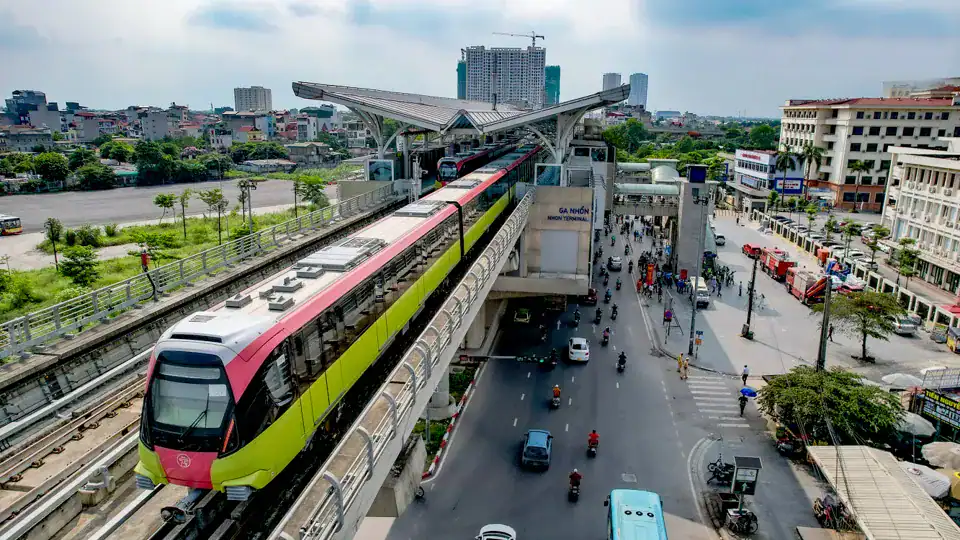
Hanoi operates Vietnam’s first metro system, with two lines currently in service and additional lines under construction. The Hanoi Metro network is owned by the Hanoi People’s Committee and operated by Hanoi Metro Company (HMC).
Currently Operational Lines:
Line 2A (Cat Linh – Ha Dong):
- Opened: November 6, 2021 (Vietnam’s first operational metro line)
- Length: Approximately 13 km
- Stations: 12 stations (all elevated)
- Technology: Chinese-Vietnamese collaboration
- Daily ridership: Growing from initial 12,000 to higher numbers
Line 3 Elevated Section (Nhon – Hanoi Station):
- Opened: August 8, 2024
- Current operational section: Elevated portion only
- Stations: Multiple elevated stations
- Technology: French-Vietnamese collaboration (SYSTRA involvement)
Line 3 Underground Extension:
- Status: Under construction
- Route: Extension to Hanoi Station (main railway hub)
- Expected completion: 2027
- This section will connect the elevated portion to the city’s central transportation hub
Future Network: The master plan includes 8 metro lines totaling 318 kilometers when fully completed. Additional lines are in various stages of planning and design, with the goal of creating a comprehensive rapid transit network serving Hanoi’s 6.9+ million residents.
Hanoi Metro Ticket Prices (2025)
Hanoi metro fares are calculated by distance, with different pricing for each line:
Line 2A (Cat Linh – Ha Dong) Prices:
- Single journey: VND 9,000 – 19,000 ($0.35-0.73)
- Day pass: VND 40,000 ($1.52)
- Monthly pass: VND 280,000 ($10.62)
- Monthly pass (students/industrial workers): VND 140,000 ($5.31)
- Group monthly pass (30+ people): VND 200,000 per person ($7.59)
Line 3 (Nhon – Hanoi Station) Prices:
- Single journey: VND 9,000 – 15,000 ($0.35-0.57)
- Day pass: VND 40,000 ($1.52)
- Monthly pass: Same structure as Line 2A
Important Fare Update: On August 1, 2025, Hanoi metro fares increased by approximately 40% from previous rates. This adjustment brings pricing closer to operating cost recovery while still maintaining government subsidies to encourage public transport use.
Free Travel Categories:
- Children under 6 years old
- Senior citizens over 60 years old
- People with disabilities
- Government-registered low-income individuals
These passengers must present valid ID or special cards for free entry.
Cashless Payment Discount: Passengers using electronic payment methods receive a VND 500 discount per trip compared to cash payments.
Payment Methods (Hanoi)
Currently Available:
- Cash at vending machines
- Debit and credit cards at gates
- VietQR code scanning
Coming September 2025: Hanoi plans to launch an integrated electronic ticketing system that will work across buses and metro lines. The unified system will include:
Bus-Only Tickets:
- Single-trip and time-based (daily, weekly, monthly)
Metro-Only Tickets:
- Single-trip and time-based options
Multi-Modal Tickets (Bus + Metro):
- Day, week, and month passes
- Integrated annual pass: VND 2,820,000 (priority users) / VND 5,640,000 (regular users)
The integrated system will use outsourced IT services for seamless transfers between transportation modes without requiring separate tickets.
Single-Trip Integrated Pricing (from Sept 2025):
- Metro: VND 8,000 base + VND 850/km
- Bus: VND 3,000 base + VND 450/km
Operating Hours & Frequency
Typical Operating Schedule:
- Operating hours: Approximately 5:30 AM – 11:00 PM daily
- Train frequency: 6-10 minutes between trains
- May vary by line and time of day
Peak vs Off-Peak: Unlike some metro systems, Hanoi does not charge different fares for peak and off-peak hours. The same fare applies regardless of travel time.
Service Reliability: The system has established a reputation for punctuality and reliability since opening. Real-time updates are available through station displays and announcements.
How Hanoi Metro Differs from HCMC
Key Operational Differences:
- Platform Configuration:
- Hanoi: Separate platforms for each direction (cannot cross without exiting station)
- HCMC: Center platforms serve both directions in underground sections
- Important: If you reach the wrong platform in Hanoi, you must exit the fare gate and re-enter (costs another fare)
- System Maturity:
- Hanoi: Operating since 2021, more established procedures
- HCMC: New system (2024), still optimizing operations
- Technology Partners:
- Hanoi: Chinese (Line 2A) and French (Line 3) collaboration
- HCMC: Japanese collaboration (JICA, Hitachi)
- Train Design:
- Hanoi: Trains feature Vietnamese cultural elements (dragon fruit colors, Temple of Literature seal)
- HCMC: Modern minimalist design with Japanese safety standards
- Network Coverage:
- Hanoi: 2 operational lines with more established routes
- HCMC: 1 operational line, multiple under construction
- Ticketing Systems:
- Hanoi: More traditional card-based system
- HCMC: Advanced app integration and contactless options from launch
User Experience Insights: First-time visitors to Hanoi metro should be particularly careful about platform direction. The separate platform system means you cannot easily switch sides after passing through fare gates. Always verify your destination direction before entering the ticketed area.
Comparing HCMC vs Hanoi Metro
| Feature | HCMC Metro | Hanoi Metro |
|---|---|---|
| First Line Opened | December 2024 | November 2021 |
| Operational Lines | 1 line (Line 1) | 2 lines (2A & 3 partial) |
| Total Operational Length | 19.7 km | ~25 km combined |
| Underground Stations | 3 stations (Vietnam’s first) | None (coming in Line 3 extension) |
| Price Range (Single Trip) | VND 6,000-20,000 | VND 9,000-19,000 |
| Day Pass | VND 40,000 | VND 40,000 |
| Monthly Pass (Regular) | VND 300,000 | VND 280,000 |
| Monthly Pass (Student) | VND 150,000 | VND 140,000 |
| Technology Partner | Japan (Hitachi, JICA) | China (Line 2A), France (Line 3) |
| Peak Frequency | 5-8 minutes (Phase 2) | 6-10 minutes |
| Operating Hours | 5:00 AM – 11:30 PM (Phase 2) | 5:30 AM – 11:00 PM |
| Mobile App | HCMC Metro HURC (full features) | Basic information available |
| Contactless Payments | Yes (Visa, Mastercard, etc.) | Yes (cards and QR) |
| Platform Type | Center platforms (underground) | Separate directional platforms |
| Train Manufacturer | Hitachi (Japan) | Chinese manufacturers |
| Train Speed | 110 km/h elevated / 80 km/h underground | Similar elevated speeds |
| Integration Plans | Multi-modal system in development | Unified ticket Sept 2025 |
Recommendation for Tourists:
- HCMC metro: Better for first-time visitors due to intuitive design and English app support
- Hanoi metro: More extensive coverage but requires careful attention to platform direction
Future Metro Lines in Vietnam
HCMC Expansion Plans
Ho Chi Minh City has ambitious plans to transform into a modern metro-connected megacity:
Line 2 (Ben Thanh – Tham Luong):
- Construction started: February 2024
- Expected completion: 2030
- Length: Approximately 11 km
- Stations: 11 total (10 underground, 1 elevated)
- Progress: Land clearance 100% complete, technical infrastructure relocation ongoing
- Construction timeline: 57 months (significantly faster than Line 1’s 12 years)
- Status: Groundbreaking scheduled for January 15, 2026
Ben Thanh – Can Gio Line:
- Groundbreaking: December 19, 2024
- Investor: Vingroup (first fully private urban railway in Vietnam)
- Length: 54 km
- Maximum speed: 350 km/h (high-speed rail standard)
- Investment: Nearly $4 billion USD
- Significance: Fastest development timeline in Vietnamese railway history (less than 1 year from concept to groundbreaking)
Additional Planned Lines: The Management Authority for Urban Railways (MAUR) is preparing 9 urban railway projects, including:
- Extensions to Long Thanh International Airport
- Connection from HCMC center to Binh Duong Province
- Multiple lines serving different districts
Timeline Targets:
- 2026-2027: Complete feasibility studies and design for new lines
- 2027-2028: Complete land clearance and compensation
- Next 10 years: Additional 355 km of urban railway (on top of existing 19.7 km)
- Total network: 6 metro lines totaling 510 km when fully complete
Recent Progress Milestone: Metro Line 1 contributed to an 80% reduction in traffic congestion on Hanoi Highway (one of the city’s busiest routes). This success has renewed confidence in the metro expansion timeline.
Hanoi Expansion Plans
Line 3 Underground Extension:
- Current status: Under construction
- Route: Connect elevated section to Hanoi Station
- Expected completion: 2027
- Impact: Will link 6 districts and serve over 20% of Hanoi’s population
- Key milestone: Completed underground section tunneling in late 2024
Additional Planned Lines:
- Total master plan: 8 lines covering 318 km
- Various stages of planning and development
- Focus on connecting major employment centers, universities, and residential areas
Network Goals:
- Expected daily ridership: 200,000 passengers initially
- Goal: Create comprehensive public transport network reducing motorbike dependence
- Integration with bus system and other public transport modes
Other Vietnamese Cities
Phu Quoc: On December 19, 2024, Vietnam simultaneously broke ground on three major urban railway projects, including a metro line in Phu Quoc (popular island resort destination).
Da Nang: Metro planning is in early stages for Vietnam’s third-largest city.
Long Thanh International Airport: Multiple metro connections are planned to serve the new international airport opening in phases (40 km east of Ho Chi Minh City).
This represents Vietnam’s largest coordinated infrastructure development drive, with 234 major projects nationwide totaling over VND 3.4 quadrillion ($129.2 billion) in investment.
Tips for Using Vietnam Metro
For First-Time Users
Before You Travel:
- Download metro apps before arriving at stations (HCMC Metro HURC for HCMC)
- Prepare small denomination bills (VND 20,000, 50,000) for vending machines
- Enable contactless payments on your bank cards or set up local e-wallets
- Study the route map to identify your destination station
- Check operating hours for your planned travel time
At the Station:
- Look for large metro logo signs (usually green or with the metro symbol)
- Underground stations have clear street-level entrance markers
- Elevated stations require using stairs or elevators to reach platform level
- Allow extra time (10-15 minutes) for your first journey to learn the system
On the Platform:
- CRITICAL for Hanoi: Check platform direction carefully before entering fare gates (cannot cross without exiting and re-paying)
- Stand behind yellow safety lines until train arrives
- Platform screen doors will align with train doors for safety
- Listen for announcements in Vietnamese and English
Boarding and Riding:
- Let passengers exit completely before boarding
- Move to the center of the car to allow others to board
- Hold handrails when standing, especially during acceleration and braking
- Monitor station announcements and digital displays for your stop
- Prepare to exit one station before your destination during crowded times
Exiting:
- Keep your ticket or card accessible throughout journey
- Scan or tap at exit gates (same method as entry)
- Fare automatically deducted for stored value cards
- Return single-journey cards at designated collection points
- Follow exit signs for your desired street exit (underground stations have multiple exits)
For Tourists
Getting Maximum Value:
- Ticket Strategy:
- Single trip for testing the system: VND 7,000-20,000
- Day pass if making 3+ trips: VND 40,000 (breaks even at ~2-3 trips)
- 3-day pass for extended sightseeing: VND 90,000 (best value for multi-day stays)
- Avoiding Rush Hours:
- Morning rush: 6:00-8:30 AM (avoid if possible)
- Lunch rush: 11:00 AM-1:00 PM (moderate crowds)
- Evening rush: 4:00-7:00 PM (heaviest crowding)
- Best travel times: 9:00-11:00 AM, 2:00-4:00 PM, after 7:30 PM
- Tourist Route Planning:
- Use metro to reach major attractions, avoiding taxi traffic
- Combine metro with short Grab/taxi rides for last-mile connectivity
- Ben Thanh station ideal starting point for downtown sightseeing
- Thao Dien station for expat dining experiences
- Language Tips:
- All signage includes English translations
- Metro apps available in English
- Station staff increasingly speak basic English
- Download Google Translate for emergency communication
- Safety for Travelers:
- Metro is safer than navigating motorbike traffic
- Keep bags in front and zipped during crowded periods
- Use elevators when carrying luggage
- Metro stations are well-lit and monitored 24/7 by security cameras
Money-Saving Tips
Cashless Discounts:
- Save VND 500-1,000 per trip using contactless payments instead of cash
- Over 10 trips, this adds up to meaningful savings
- No transaction fees for Vietnamese bank cards
Student Discounts:
- International students can inquire about 50% discount on monthly passes
- Requires valid student ID from Vietnamese educational institution
- Monthly pass saves money if taking 15+ trips per month
Day Pass Value Calculation:
- Day pass costs VND 40,000
- Single trips cost VND 6,000-20,000
- Break-even point: Usually 2-3 trips depending on distance
- Unlimited trips in 24 hours means no mental math or ticket queues
Integrated Transport:
- Connecting buses often free or heavily discounted during promotional periods
- Combination bus+metro monthly passes coming in Hanoi (Sept 2025)
- Park-and-ride: Motorbike parking (VND 3,000-10,000) cheaper than fuel and parking downtown
Timing Strategies:
- Travel during free promotional periods when announced
- Watch for holiday specials and discounts
- Sign up for metro company notifications for fare promotions
Safety & Comfort
Platform Safety Features:
- Platform screen doors at all stations prevent falls onto tracks
- Yellow safety lines clearly marked
- Audio warnings when trains approaching
- Emergency stop buttons accessible throughout platforms
Train Comfort:
- Air-conditioned cars maintained at comfortable temperatures
- Smooth acceleration and braking (Japanese/modern train technology)
- Priority seating near doors for elderly and people with disabilities
- Adequate handrails and poles for standing passengers
Accessibility Features:
- Elevators at all stations (no station requires stairs only)
- Tactile paving for visually impaired passengers
- Audio announcements supplement visual displays
- Wheelchair-accessible gates and designated spaces on trains
- Staff assistance available by pressing help buttons
Security Measures:
- Security cameras throughout stations and on trains
- Metro police and security staff on patrol
- Emergency communication intercoms in stations
- Lost and found offices at major stations
- Well-lit stations even during late evening hours
Cleanliness Standards:
- Stations cleaned multiple times daily
- Trains cleaned at depot between service runs
- Restrooms available at major stations (underground stations)
- Trash receptacles throughout stations
Health Considerations:
- Good ventilation in underground stations
- Medical emergency response protocols in place
- First aid stations at major hubs
- Staff trained in basic emergency response
Common Issues & Solutions
Problem: Can’t Find Station Entrance
Symptoms:
- Standing near metro route but can’t locate entrance
- GPS shows you’re at station but no visible signs
Solutions:
- Look upward for large metro logo signs (often mounted high on buildings)
- Underground stations: Entrance is at street level, often integrated with buildings
- Elevated stations: Look for stairways or escalators leading upward
- Ask nearby shop owners – they know local metro entrances well
- Use Google Maps street view before traveling to preview entrance locations
- Metro stations often near major landmarks – Ben Thanh Market, Opera House, etc.
Problem: Vending Machine Not Accepting Bills
Symptoms:
- Machine rejects your cash repeatedly
- Bills come back without ticket issued
Solutions:
- Flatten wrinkled or folded bills carefully
- Use newer, crisp bills when possible (machines detect damaged currency)
- Try different machines – each station has multiple vending machines
- Maximum accepted: VND 100,000 bills
- Alternative: Visit ticket counter for staff assistance (they accept all bills)
- Keep small bills handy – VND 20,000 and 50,000 work most reliably
Prevention:
- Carry a mix of denominations
- Exchange large bills at shops before entering metro
- Consider cashless payment methods to avoid this issue entirely
Problem: Wrong Platform (Hanoi Metro)
Symptoms:
- Realized you’re on platform for opposite direction
- Train going wrong way arrived
Solutions:
- Cannot cross between platforms without exiting
- Exit through fare gates (tap your card)
- Re-enter on correct side (costs another fare – VND 9,000-19,000)
- This is expensive but unavoidable in Hanoi’s design
Prevention:
- Check direction signs carefully before passing fare gates
- Look at platform destination signs before entering
- Ask station staff if unsure – better to confirm than pay twice
- Study route map outside fare gates first
HCMC Difference:
- HCMC underground stations use center platforms serving both directions
- Can see both directions before committing
- Still verify direction but easier to correct
Problem: Metro Not Near Your Accommodation
Symptoms:
- Hotel/Airbnb several kilometers from nearest station
- Need combination transport
Solutions:
- Bus Connections: Use 17 connecting bus routes (Routes 153-169) in HCMC
- Grab/Taxi: Short ride to nearest station (typical cost: VND 30,000-80,000)
- Motorbike Parking: Rent motorbike, park at station (VND 3,000-10,000), take metro
- Bicycle: Use public bike system to reach metro stations
- Walking: Many areas within 1-2 km of stations – viable in cooler weather
Planning Tips:
- Choose accommodation near metro lines when possible
- Factor in connection time and cost when budgeting
- Park-and-ride often cheaper than full taxi/Grab journey
- Combination transport still faster than sitting in traffic
Problem: Crowded During Rush Hour
Symptoms:
- Difficult to board train
- Uncomfortable standing conditions
- May need to wait for next train
Solutions:
- Time Shifting: Travel before 6 AM or after 8:30 AM (morning rush)
- Evening Adjustment: Before 4 PM or after 7 PM (evening rush)
- Midday Travel: 9 AM-3 PM generally comfortable
- Weekend Travel: Significantly less crowded than weekdays
- Train Selection: Sometimes waiting for next train (8-12 min) gives more space
Survival Tips for Rush Hour:
- Board via least crowded door (usually middle cars)
- Move to center of train to allow others to board
- Keep bag on front/side, not on back
- Men should keep hands visible and avoid crowded contact
- Exit station with least crowded stairs/escalators
Alternative Strategy:
- Use metro for portion of journey outside rush hour
- Combine with Grab/taxi for rush hour segments
- Work in cafe near destination if arriving too early
Problem: Language Barrier
Symptoms:
- Can’t understand announcements
- Difficulty asking staff for help
Solutions:
- Apps: HCMC Metro HURC app has full English interface
- Signage: All station signs include English translations
- Translation App: Google Translate Vietnamese↔English offline mode
- Gestures: Point to destination on map – universally understood
- Written: Show destination written in Vietnamese on phone
- Fellow Passengers: Many young Vietnamese speak English and help tourists
Key Vietnamese Phrases:
- “Ben Thanh” = Ben Thanh (say clearly)
- “Bao nhieu?” = How much?
- “Cam on” = Thank you
Station Staff:
- Increasingly trained in basic English
- Patient with tourists
- Can use translation apps to help
- Visual communication usually sufficient
FAQs About Metro Vietnam
Q: Is Vietnam metro safe for tourists?
A: Yes, Vietnam’s metro systems are very safe for tourists. Both HCMC and Hanoi metros feature modern safety systems including platform screen doors preventing falls, security cameras throughout stations, metro police patrols, and emergency communication systems. The metro is significantly safer than navigating heavy motorbike traffic on streets. Crime rates on the metro are low. Keep normal travel precautions (watch your belongings in crowded areas), but overall the metro provides a secure transportation option.
Q: Do I need Vietnamese currency for metro?
A: Not necessarily. While vending machines only accept cash VND, you can use contactless payment methods including international Visa, Mastercard, JCB, American Express, and UnionPay cards at entry gates. The HCMC Metro HURC app accepts MoMo e-wallet payments. However, having cash VND 20,000-50,000 bills is recommended as backup since not all payment methods work at every gate. The cashless discount (VND 500-1,000 per trip) makes electronic payment worthwhile.
Q: Can I bring luggage on metro?
A: Yes, passengers can bring luggage on metro trains. There are no size restrictions for standard suitcases and backpacks. Tips for luggage: (1) Use elevators instead of escalators for safety, (2) Avoid rush hours (6-8 AM, 4-7 PM) for comfort, (3) Keep luggage close to avoid blocking doors or aisles, (4) Larger bags may require holding rather than floor placement during crowded times. Station elevators accommodate wheelchairs and luggage easily.
Q: Is there metro from Tan Son Nhat Airport (HCMC)?
A: No, HCMC’s Tan Son Nhat Airport does not yet have metro connection. Metro Line 4 is planned to connect the airport to the metro network but is not yet operational. Current options from airport: (1) Airport bus to city center then metro (cheapest), (2) Taxi/Grab direct to destination (VND 150,000-250,000 to District 1), (3) Taxi/Grab to Ben Thanh metro station then metro to final destination (combination approach). Check metro expansion updates as airport connections are high priority.
Q: Is there metro from Noi Bai Airport (Hanoi)?
A: No, Hanoi’s Noi Bai International Airport does not have metro connection yet. Metro connections to the airport are included in future expansion plans but not currently operational. Transportation options: (1) Airport bus (Jetstar, Vietnam Airlines buses) to city center, then metro, (2) Taxi/Grab to metro station or final destination, (3) Private car service. The distance from Noi Bai to Hanoi center is approximately 30-35 km, making combination transport options viable.
Q: Do metros connect between cities?
A: No, HCMC metro and Hanoi metro are completely separate systems. There is no metro connection between cities in Vietnam. For intercity travel, use: (1) Flights (HCMC ↔ Hanoi: ~2 hours, frequent departures), (2) Trains (Reunification Express: ~30 hours, scenic route), (3) Buses (sleeper buses: 24-30 hours, budget option), (4) Private car services. Each city’s metro only serves that metropolitan area and nearby suburbs.
Q: How long did HCMC metro free period last?
A: HCMC Metro Line 1’s free trial period lasted 30 days, from December 22, 2024 to January 20, 2025. The metro began charging regular fares starting January 21, 2025. During the free period, over 700,000 passengers rode the metro in the first week alone. Connecting bus routes (153-169) were also free during this period. The free period allowed residents to familiarize themselves with the new system before paid service began.
Q: Can I eat or drink on the metro?
A: No, eating and drinking are strictly prohibited on metro trains in both HCMC and Hanoi. This rule is enforced to maintain cleanliness and passenger comfort. Violations can result in warnings or fines. Water bottles must remain closed. You may eat or drink in station areas outside the fare gates, but not on platforms or trains. Strong-smelling food must be sealed in plastic bags even when transported unopened.
Q: Are metros wheelchair accessible?
A: Yes, all metro stations in Vietnam are fully wheelchair accessible. Accessibility features include: (1) Elevators at every station providing ground-to-platform access, (2) Accessible ticket gates wider than standard gates, (3) Tactile paving for visually impaired passengers, (4) Designated wheelchair spaces on every train, (5) Platform screen doors preventing accidental falls, (6) Audio and visual announcements, (7) Priority seating near doors, (8) Staff assistance available by request. Modern design ensures people with disabilities can use the system independently.
Q: What’s the fastest way to learn the system?
A: Download the HCMC Metro HURC app (for HCMC) which provides: (1) Interactive metro map with all stations, (2) Route planning with fare estimates, (3) Real-time train arrival information, (4) Operating hours and service updates, (5) Step-by-step ticket purchase guidance, (6) English language interface. For Hanoi, use Google Maps which integrates metro data. Make one practice journey during off-peak hours to gain confidence. The systems are designed to be intuitive – most tourists successfully navigate on first attempt.
Q: Do I need to buy a new ticket for each journey?
A: It depends on your ticket type. Single-journey tickets are valid for one trip only – buy new ticket each time. Day passes (VND 40,000) allow unlimited trips within 24 hours – buy once, use all day. Three-day passes (VND 90,000) allow unlimited trips within 72 hours. Monthly passes allow unlimited trips for calendar month. For tourists taking multiple trips daily, day or multi-day passes eliminate the need to buy tickets repeatedly and provide better value.
Q: What happens if I lose my metro ticket during journey?
A: If you lose your ticket/card before exiting, inform station staff at exit gate. They will likely charge you the maximum fare for that line since they cannot determine your entry point. For contactless card payments, losing your card means buying new ticket to exit. For single-journey IC cards, there’s a replacement fee plus maximum fare. Prevention: Keep ticket in secure pocket, use mobile app QR code (can regenerate from app), or use contactless card tapped to phone case for easy access.
Conclusion
Vietnam’s metro systems represent a transformative development in the country’s public transportation infrastructure. HCMC’s newly opened Metro Line 1, recognized by TIME Magazine as one of the “World’s Greatest Places 2025,” offers tourists and residents a modern, efficient alternative to navigating the city’s famous motorbike-filled streets. Hanoi’s established metro network, operating since 2021, provides reliable service with expansion plans promising even greater coverage.
For international visitors, both metro systems offer English-language support, cashless payment options, and intuitive design making them accessible even for first-time users. The combination of affordable fares (starting from $0.24 per trip), frequent service, and connections to major attractions makes the metro an essential tool for exploring Vietnam’s largest cities.
As Vietnam continues expanding its urban railway network with dozens of new lines planned across multiple cities, the metro will increasingly become the primary transportation choice for both tourists and locals. The success of these initial lines demonstrates Vietnam’s commitment to modern infrastructure and sustainable urban development.
Key Takeaways for Travelers:
- HCMC Metro ideal for avoiding traffic between Districts 1 and Thu Duc
- Hanoi Metro provides established coverage with room for growth
- Day passes offer best value for tourist sightseeing
- English support available through apps and signage
- Significantly safer and faster than navigating street traffic
- Expansion plans will add hundreds of kilometers in coming years
For the most current information, check official sources:
- HCMC Metro: hochiminhcitymetro.com and HCMC Metro HURC app
- Hanoi Metro: Official Hanoi Metro website and Facebook
- Google Maps for route planning and real-time updates