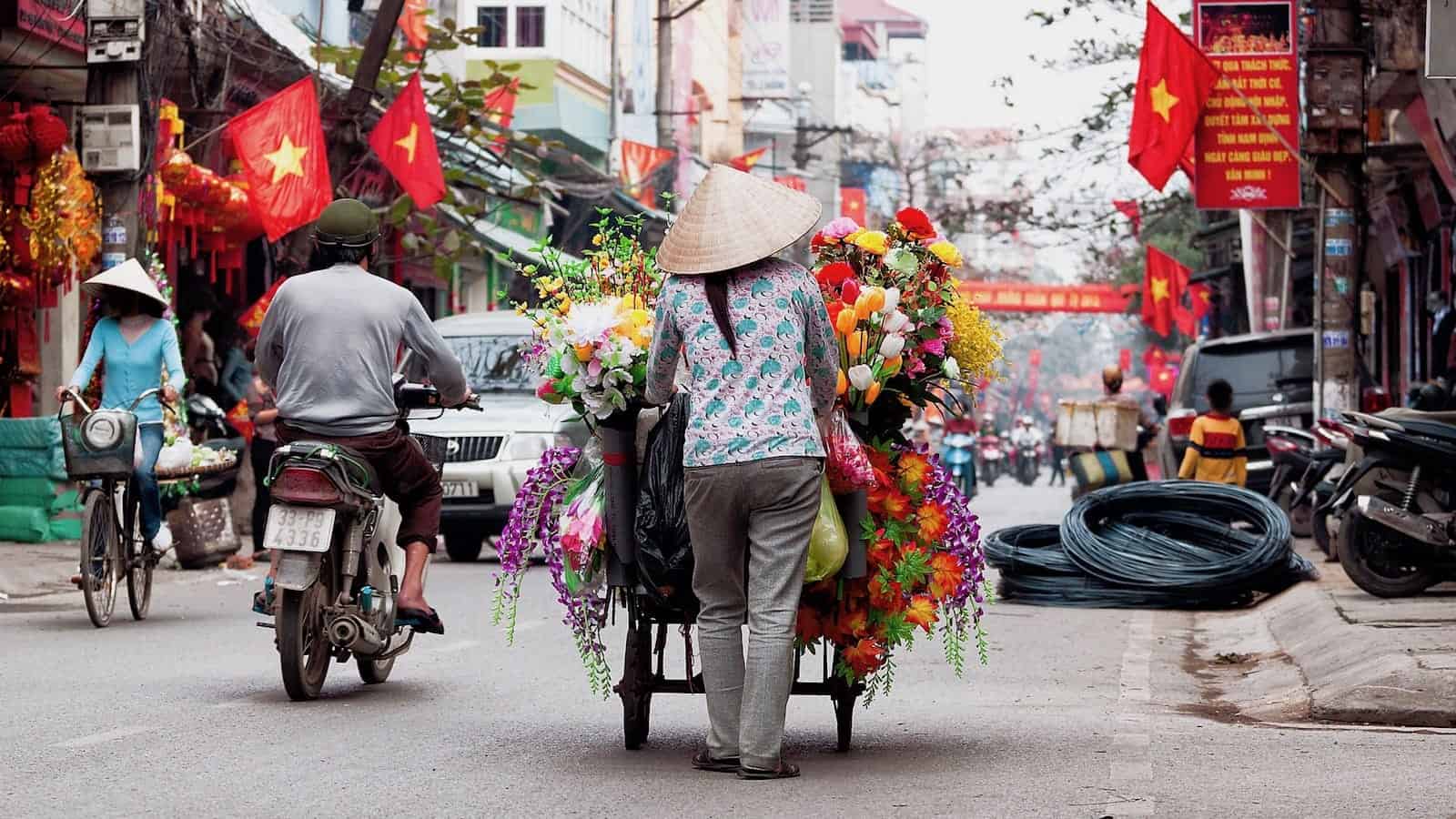
Hanoi offers a mix of ancient temples, French colonial architecture, chaotic street food scenes, and unique attractions like Train Street. You can explore the 36 streets of the Old Quarter, try egg coffee for $1.40, visit the Temple of Literature for $3, take a Halong Bay cruise, or watch water puppets perform traditional Vietnamese stories. Most attractions cluster around Hoan Kiem Lake, making Hanoi easily walkable despite the intense motorbike traffic.
This guide covers the top 15 things to do in Hanoi with current 2025 pricing, honest assessments of tourist traps versus authentic experiences, and practical logistics to help you navigate Vietnam’s capital efficiently.
1. Explore the Old Quarter’s 36 Streets
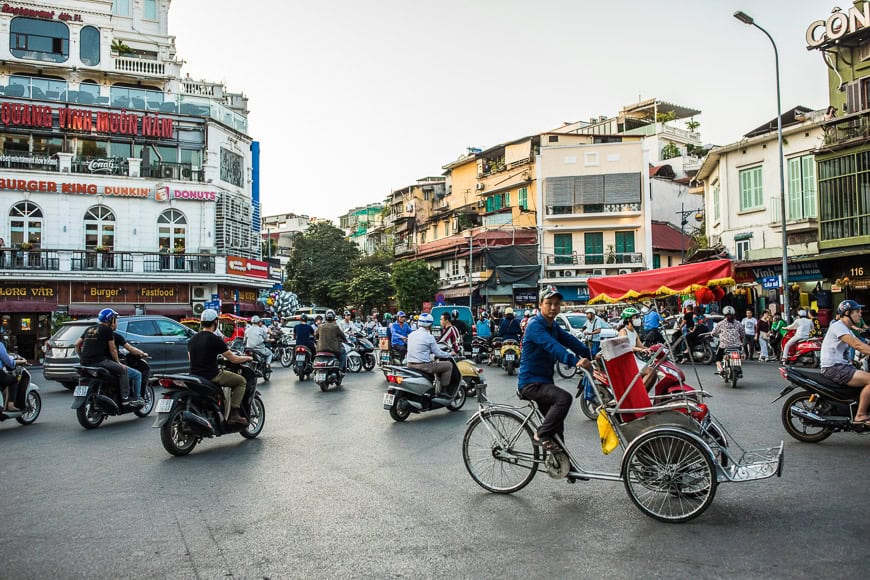
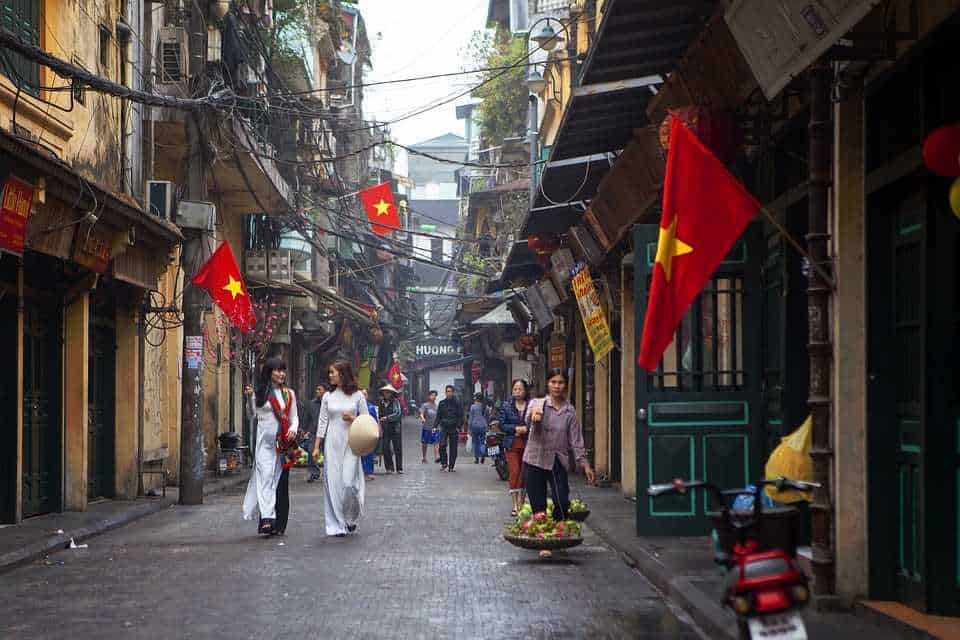
The Old Quarter remains Hanoi’s most atmospheric neighborhood, where narrow streets still bear the names of trades practiced centuries ago—Hang Bac (Silver Street), Hang Gai (Silk Street), Hang Dao (Peach Street). Walking these chaotic lanes gives you the real Hanoi experience: motorbikes inches from your legs, street vendors cooking pho on sidewalks, and tube houses squeezed impossibly tight.
What to expect: Each street traditionally specialized in one craft or product. While commercialization has changed some streets, you’ll still find concentrations of specific goods. The architecture mixes Vietnamese tube houses with French colonial buildings, creating a unique streetscape that survived wars and modernization.
Cost: Free to wander. Budget 50,000-100,000 VND ($2-4) for street food tastings as you explore.
Practical tips: Visit early morning (6-8 AM) to see locals doing tai chi around Hoan Kiem Lake and buying breakfast from street vendors. Weekends bring crowds and traffic closures around the lake from Friday 7 PM to Sunday midnight, transforming streets into pedestrian zones. Wear comfortable shoes—cobblestones and uneven sidewalks make walking challenging.
How to get there: Most hotels in Hanoi are located in or near the Old Quarter, within walking distance. From other areas, use Grab taxi app and search “Hoan Kiem Lake” as your destination point.
2. Visit Hoan Kiem Lake & Ngoc Son Temple
This oval lake sits at Hanoi’s heart, serving as the city’s living room where locals gather for morning exercise, evening strolls, and weekend socializing. Legend says Emperor Le Loi returned a magical sword to the Golden Turtle God here in the 15th century, giving the lake its name “Lake of the Restored Sword.”
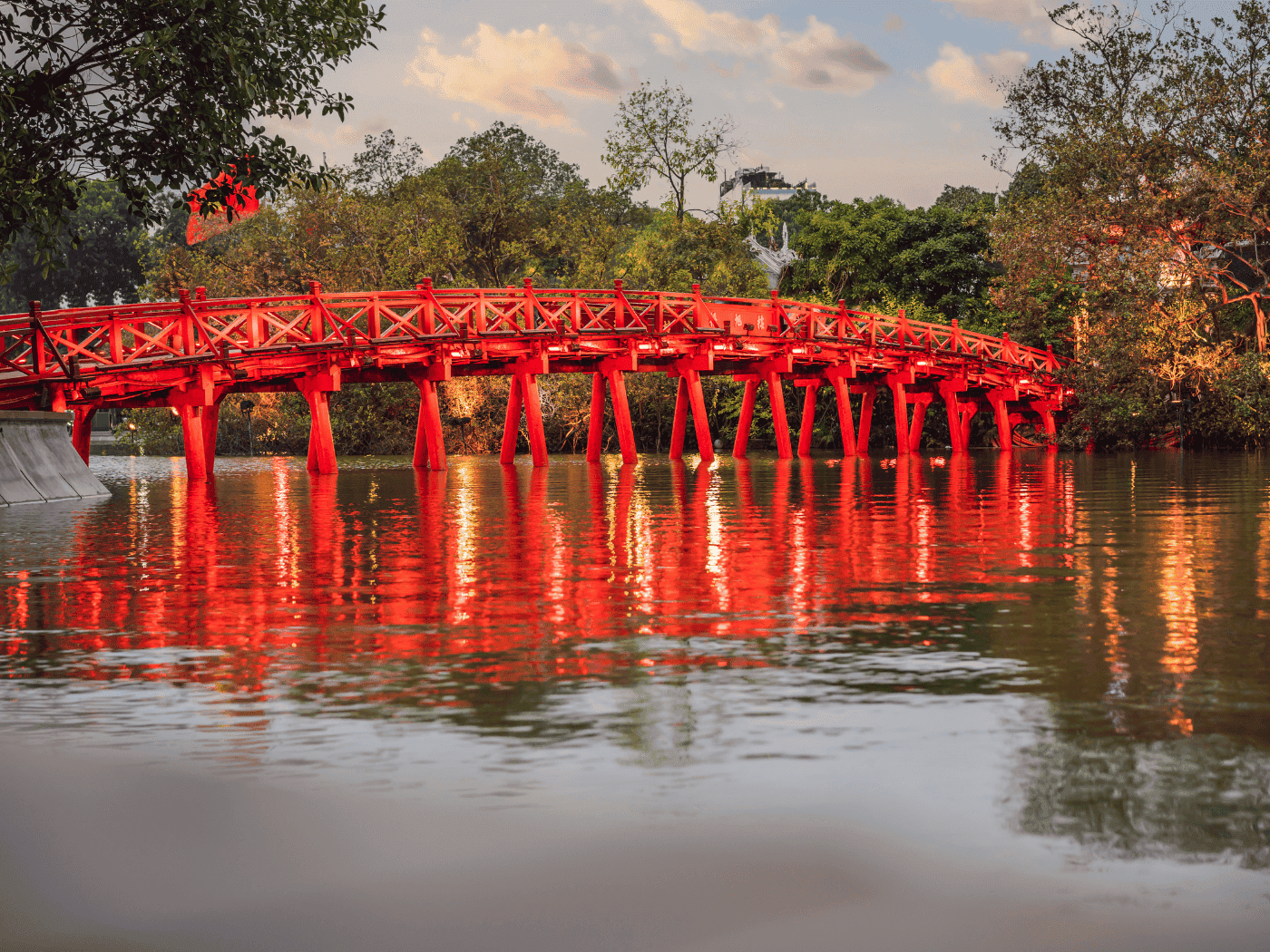
Ngoc Son Temple occupies a small island in the lake, accessible via the iconic red Huc Bridge. The temple honors scholar Van Xuong, military leader Tran Hung Dao, and Confucian philosopher La To.
Cost: Walking around the lake is free. Temple entry is 30,000 VND (~$1.20).
Best time: Sunrise (5:30-6:30 AM) offers misty, peaceful views with locals practicing tai chi. Sunset provides beautiful light for photos. Weekend evenings feature street performances and crowded sidewalks—atmospheric but busy.
What to see: The red Huc Bridge, Turtle Tower on a small islet, the temple’s carved wooden architecture, and a preserved giant turtle specimen inside the temple (one of the rare Hoan Kiem turtles that died in 2016).
3. Try Egg Coffee at Cafe Giang
Egg coffee (ca phe trung) stands as Hanoi’s most distinctive beverage—a creamy, custard-like foam made from whipped egg yolks, condensed milk, and sugar floating atop strong Vietnamese coffee. Bartender Nguyen Van Giang invented it in 1946 during milk shortages, and his family still runs the original cafe.
Where to go: Cafe Giang (39 Nguyen Huu Huan Street, down a narrow alley) serves the original recipe. The cafe has expanded but maintains its authentic atmosphere.
Cost: 35,000 VND (~$1.40) at Cafe Giang. Other cafes charge 30,000-50,000 VND ($1.20-$2).
What it tastes like: Rich, creamy, and sweet—like drinking tiramisu. The egg foam insulates the coffee heat. Hot versions are preferred over iced. Some find it too sweet; ask for less sugar when ordering if concerned.
Alternatives: Cafe Dinh (13 Dinh Tien Hoang) offers lake views. Cafe Lam (60 Nguyen Huu Huan) is one of Hanoi’s oldest cafes. Neo Cafe makes each egg coffee fresh per order.
Hours: Most egg coffee shops open 7 AM-10 PM daily.
4. Experience Hanoi Street Food
Hanoi’s street food scene rivals any city globally for quality, variety, and affordability. Vendors specialize in single dishes perfected over decades, setting up shop on sidewalks with tiny plastic stools.
Must-try dishes:
- Pho (noodle soup): 25,000-50,000 VND ($1-2) per bowl. Try Pho Gia Truyen (49 Bat Dan) for classic beef pho.
- Bun Cha (grilled pork with noodles): 40,000-60,000 VND. Bun Cha Huong Lien (24 Le Van Huu) is where Obama ate with Anthony Bourdain.
- Banh Mi (Vietnamese sandwich): 20,000-35,000 VND. Banh Mi 25 (25 Hang Ca) serves excellent versions.
- Bun Rieu (crab noodle soup): 30,000-50,000 VND
- Fresh spring rolls: 5,000-10,000 VND each
Street food tours: Professional guided tours cost $20-50 and visit 6-8 stops over 3-4 hours. Hanoi Street Food Tour (hanoistreetfoodtour.com) charges $20 for group tours. Tours help navigate language barriers and find best vendors.
Safety: Stick to busy vendors with high turnover—fresh ingredients mean safer food. Avoid ice in drinks unless at established restaurants. Most travelers experience no issues, but have stomach medication ready.
5. Visit the Temple of Literature
Vietnam’s first national university, founded in 1070, honors Confucius and Vietnamese scholars. The complex spans five courtyards with beautiful traditional architecture, ancient trees, and 82 stone stelae inscribed with names of doctoral graduates from 1442-1779—UNESCO recognized these as Documentary Heritage.
Cost: 70,000 VND (~$3) for adults, 35,000 VND for students with ID, free for children under 15.
Hours: 8:00 AM – 5:00 PM daily
Location: 58 Quoc Tu Giam Street, about 2 km west of Hoan Kiem Lake (15-minute walk or 60,000-70,000 VND / $2.50-2.90 Grab ride)
How long to visit: Allow 1-1.5 hours to explore all five courtyards, read information plaques, and take photos of the iconic Khue Van Pavilion (symbol of Hanoi).
Dress code: Modest clothing required—cover shoulders and knees. Remove hats in sacred areas.
Best time: Early morning (8-9 AM) or late afternoon (3-4 PM) to avoid tour groups and heat. Avoid visiting during graduation season when it gets extremely crowded.
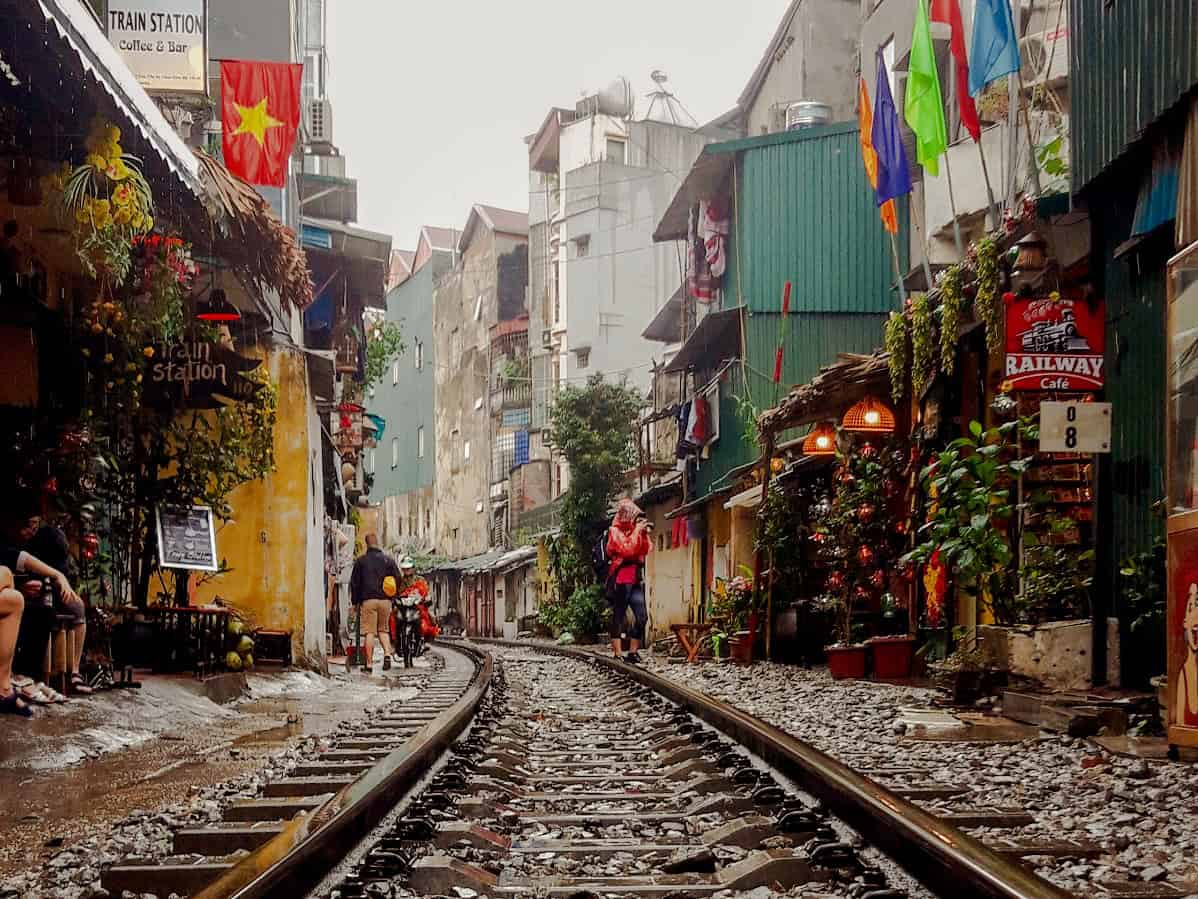
6. Hanoi Train Street (Note: Access Restricted as of March 2025)
Narrow residential alleys where trains pass within inches of cafes and homes became Instagram-famous, but authorities have repeatedly restricted access due to safety concerns.
Current status (2025): The Hanoi Department of Tourism requested tour operators stop organizing Train Street tours in March 2025. However, cafes continue operating discreetly:
- Old Quarter location (Phung Hung Street): Main entrance barricaded, police occasionally guard access. Cafe owners may escort you in if you order drinks. More touristy, pushy atmosphere.
- Le Duan location (Alley 224 Le Duan Street): More accessible, fewer restrictions, calmer atmosphere with less tourist pressure.
Train schedule: Monday-Friday evenings: 7:00 PM, 7:45 PM, 8:45 PM, 9:30 PM. Schedule varies and trains sometimes skip days. Arrive 30 minutes early.
Cost: Free to access tracks, but cafes require drink purchase (25,000-50,000 VND / $1-2).
Safety warning: Trains pass extremely close—stay behind marked safety lines. Do not stand on tracks for photos as trains approach. Follow cafe owner instructions strictly.
Honest assessment: The hype exceeds reality for many visitors. If accessible, worth a quick visit for the unique experience, but don’t make it your Hanoi priority. Consider alternatives like water puppet shows or cyclo rides if Train Street access is blocked.
7. Watch Water Puppet Show
Traditional water puppetry dates back centuries—wooden puppets “perform” on water stages, controlled by hidden puppeteers behind screens. Shows depict Vietnamese folklore, rural life, and historical legends accompanied by live traditional music.
Where to go:
- Thang Long Water Puppet Theater (57B Dinh Tien Hoang) – most famous, near Hoan Kiem Lake
- Lotus Water Puppet Theater – another quality venue
Cost: Tickets range 100,000-200,000 VND ($4-8) depending on seat location. Book online via Klook for same price as walk-up.
Show details: Performances last 50-60 minutes. Shows entirely in Vietnamese but easy to follow through action and music. Daily performances at various times (typically 3:00 PM, 4:30 PM, 6:00 PM, 8:00 PM).
Worth it? Yes, especially for families or those interested in traditional arts. One show suffices—storylines similar across Vietnam.
8. Explore the French Quarter
Contrasting with the Old Quarter’s chaos, the French Quarter features tree-lined boulevards, colonial villas, grand buildings, and spacious sidewalks. This area showcases Hanoi’s colonial legacy.
Key sights:
- Hanoi Opera House: Built 1911 resembling Paris Opéra Garnier. Exterior viewing free; performances require tickets.
- St. Joseph’s Cathedral: Neo-Gothic church from 1886. Free entry. Mass twice daily with extra services Sundays.
- Sofitel Legend Metropole Hotel: Historic 1901 hotel. Book afternoon tea or cocktails to see interior. Wartime bunker tours available.
Best approach: Self-guided walking tour covering 2-3 hours. Start at Opera House, walk to cathedral, explore surrounding streets lined with boutiques, cafes, and art galleries.
Cost: Free to walk around. Budget for cafe stop (50,000-150,000 VND / $2-6).
9. Visit Ho Chi Minh Mausoleum Complex
This monumental complex honors Ho Chi Minh, founder of modern Vietnam. The mausoleum displays his embalmed body; surrounding grounds include his stilt house, presidential palace, One Pillar Pagoda, and museum.
Mausoleum viewing:
- Hours: 8:00-11:00 AM Tuesday-Thursday and Saturday-Sunday. CLOSED Mondays and Fridays.
- Cost: Free, but long queues common (30-60 minute wait)
- Dress code: Strictly enforced—long pants, covered shoulders, no shorts, no hats, no sunglasses. No talking, photography, or phones inside.
- Closed: September-November for body maintenance
One Pillar Pagoda:
- Built 1049, reconstructed after war damage
- Small but photogenic Buddhist temple on single pillar over lotus pond
- Free entry
Practical tips: Arrive early (7:30 AM) to avoid worst queues. Entire complex visit takes 2-3 hours. Combine with Temple of Literature (nearby) for efficient day.
Location: Ba Dinh Square, about 3 km west of Old Quarter
10. Hoa Lo Prison Museum (“Hanoi Hilton”)
Former French colonial prison where Vietnamese revolutionaries were held, later became POW camp for American pilots during Vietnam War, including Senator John McCain.
Cost: 50,000 VND (~$2) adults, 25,000 VND concession, free for children under 16
Hours: 8:00 AM – 5:00 PM daily
Location: 1 Hoa Lo, Tran Hung Dao Street, Hoan Kiem District
What to see: French guillotine, prison cells, torture instruments, exhibits on Vietnamese resistance, American POW section (controversial displays). Two-thirds of original prison demolished in 1990s; remaining third converted to museum.
How long: 45-60 minutes covers museum thoroughly
Honest take: Dark history presented from Vietnamese perspective. Expect graphic content. Important historical site but emotionally heavy.
11. Dong Xuan Market
Hanoi’s largest covered market, built 1889, offers authentic local shopping experience—three floors packed with clothes, household goods, food, and souvenirs.
Hours: 7:00 AM – 6:00 PM Monday-Thursday; 7:00 AM – 12:00 PM (sometimes later) Friday-Sunday
Location: Northern end of Old Quarter, near Long Bien Bridge
What to buy: Fabric, clothing (mostly wholesale), handicrafts, lacquerware, local snacks. Serious bargaining required—start at 50% of asking price.
Practical tips: Watch belongings carefully in crowds. Cash only. Overwhelming crowds and noise—not everyone enjoys this experience. Better for observation than serious shopping unless seeking wholesale quantities.
Cost: Free entry. Purchases vary widely depending on bargaining skills.
12. Take a Cyclo Ride
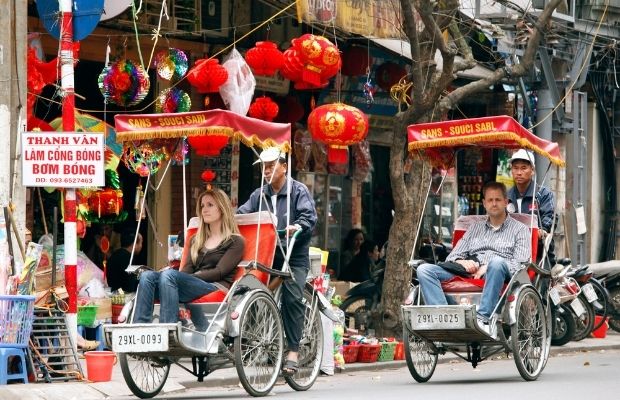
Three-wheeled bicycle taxis (cyclos) provide leisurely way to tour Old Quarter while someone else navigates traffic. You sit in front seat while driver pedals behind.
Cost: 400,000 VND (~$16) per hour is standard, but negotiate before departing. Shorter rides (30 minutes) around 200,000-250,000 VND ($8-10).
Routes: Most cover Old Quarter highlights—Hoan Kiem Lake, St. Joseph’s Cathedral, Dong Xuan Market, narrow streets. Custom routes possible.
Honest assessment: Touristy but fun experience supporting traditional transport method in polluted city. Prices higher than other transport but includes narration (quality varies). Agree on exact route and price in writing before starting to avoid disputes.
Where to find: Cyclos wait near Hoan Kiem Lake and major hotels. Better to book through hotel to ensure fair pricing.
13. Long Bien Bridge
Historic cantilever bridge built 1899-1902 by same company that built Eiffel Tower. Originally 2.4 km long (damaged during war, partially restored), it connects Hanoi across Red River.
Cost: Free to walk across
Why visit: Photo opportunities, engineering history, local life observation (motorbikes, vendors crossing), less touristy than other attractions
Best time: Sunrise or sunset for dramatic lighting. Avoid midday heat.
Practical tips: Walk from Old Quarter side (eastern end) for 20-30 minutes, then return. Full crossing takes 1+ hour. Motorbikes and trains still use bridge—stay on pedestrian section. Nearby is alternate Train Street location with cafes.
Combine with: Ceramic Mosaic Mural (4 km long public art piece along highway near bridge) celebrating Hanoi’s 1000-year anniversary.
14. Tran Quoc Pagoda
Hanoi’s oldest Buddhist temple, founded 6th century, sits on small island in West Lake (Ho Tay). Red-and-gold architecture, 11-story stupa tower, and peaceful atmosphere provide escape from city chaos.
Cost: Free entry (donations appreciated)
Hours: 7:30 AM – 6:00 PM daily
Location: West Lake, about 5 km northwest of Old Quarter (15-20 minute Grab ride, 80,000-100,000 VND / $3-4)
Dress code: Modest clothing—cover shoulders and knees
How long: 30-45 minutes sufficient to explore temple grounds and enjoy lake views
Combine with: West Lake walk, nearby cafes with lake views, Quan Thanh Temple (another historic temple nearby)
15. Cooking Class
Learn to prepare Vietnamese dishes with market tour, cooking instruction, and meal enjoyment. Popular dishes include pho, spring rolls, bun cha, and banh mi.
Providers:
- Hanoi Cooking Centre
- Blue Butterfly Cooking Class
- Hidden Hanoi (focuses on home cooking)
Cost: $25-60 per person depending on class length and location
Format: Typically 3-5 hours including market visit, cooking 3-4 dishes, eating results. Morning and evening classes available. Small groups (6-12 people).
Worth it? Excellent for food enthusiasts or those wanting hands-on cultural experience. You’ll understand Vietnamese ingredients and cooking techniques better than from restaurant meals alone.
Book ahead: Popular classes fill up, especially during peak season (October-April).
DAY TRIPS FROM HANOI
Halong Bay Cruise
UNESCO World Heritage Site featuring 1,600 limestone islands in emerald waters. Overnight cruises (2 days/1 night minimum) include kayaking, cave exploration, swimming, and meals.
Cost: $200-500+ per person depending on cruise quality (budget to luxury)
Travel time: 3 hours from Hanoi
Book through: Reputable agencies like Bhaya Cruises, Paradise Cruises, or tour operators in Hanoi. Avoid ultra-cheap options—you get what you pay for in safety and food quality.
Ninh Binh (“Halong Bay on Land”)
Limestone karst landscapes, rice paddies, rivers, and temples. Day trip includes Trang An boat tour (2-3 hours gliding through caves), Mua Cave viewpoint (500 steps to panoramic views), and Hoa Lu ancient capital.
Cost: Day tours $25-40 including transport, guide, lunch, entrance fees
Travel time: 2 hours from Hanoi
Best for: Those wanting nature/scenery without overnight cruise commitment
Combined Packages
3-day/2-night packages covering Ninh Binh and Halong Bay run $290+ and provide efficient way to see both destinations.
PRACTICAL INFORMATION
Getting Around Hanoi
- Walking: Best for Old Quarter and French Quarter. Watch traffic when crossing—walk steadily, don’t stop suddenly.
- Grab app: Vietnam’s Uber equivalent. Cheaper and more reliable than street taxis. Both car and motorbike options.
- Cyclo: Scenic but expensive. Negotiate price first.
- Rental motorbike: Not recommended unless experienced with Asian traffic. Hanoi traffic is chaotic and aggressive.
Best Time to Visit
- October-November and March-April: Ideal weather—comfortable temperatures (20-25°C / 68-77°F), low humidity, clear skies
- May-September: Hot, humid, rainy (though brief afternoon showers)
- December-February: Cold by Vietnamese standards (10-15°C / 50-59°F), occasionally damp, low season means fewer tourists
Where to Stay
Old Quarter offers best location for tourists—walking distance to attractions, surrounded by restaurants/cafes/shops. Hotels range from $15 budget hostels to $200+ luxury properties.
Money Matters
- Vietnamese Dong (VND) is currency. $1 USD ≈ 25,000 VND (rates fluctuate)
- ATMs widely available; withdraw large amounts to minimize fees
- Cash preferred at street vendors, small restaurants. Cards accepted at hotels, upscale restaurants
- Small denominations useful for street food, taxis
Safety Notes
- Hanoi is generally safe for tourists. Violent crime rare.
- Watch belongings in crowded markets and tourist areas (pickpocketing occurs)
- Traffic is biggest danger—be extremely careful crossing streets
- Don’t engage with aggressive touts or street vendors
- Avoid unlicensed taxis—use Grab app instead
Language
English spoken at hotels, tour operators, and restaurants catering to tourists. Street vendors and local establishments typically speak little English. Google Translate app helps. Learning basic Vietnamese phrases (“xin chào” = hello, “cảm ơn” = thank you) appreciated by locals.