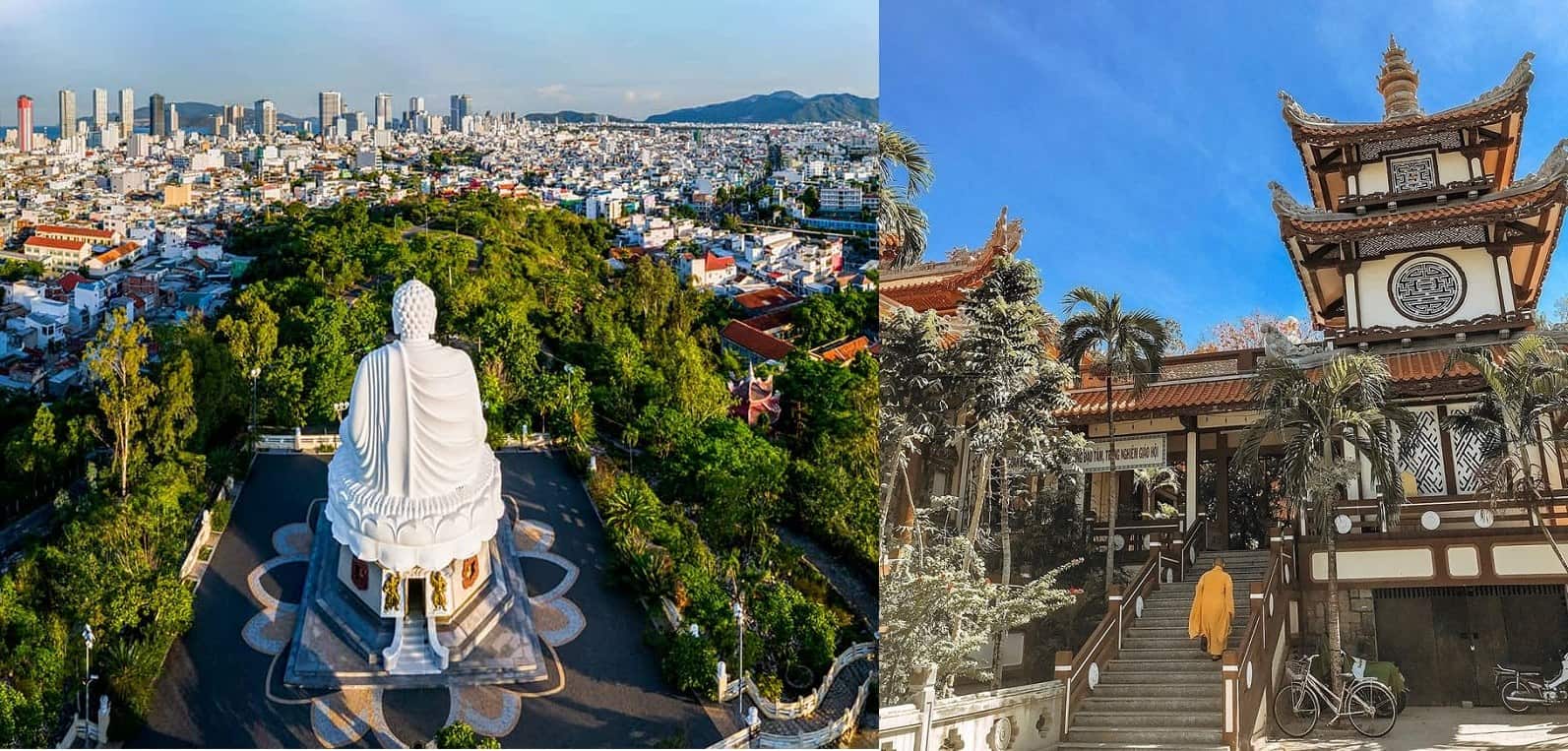
Vietnamese pagodas require modest dress with covered shoulders and knees, removal of shoes before entering prayer halls, and respectful quiet behavior. Most famous pagodas including One Pillar, Tran Quoc, and Linh Ung are completely free, though some charge for special features—Bai Dinh’s stupa costs 50,000 VND ($2 USD). Visit early morning between 7:30-8:00 AM to avoid crowds and heat, especially during January-March when weather is mild and dry.
Critical safety warning: Beware of individuals posing as monks approaching you outside pagodas demanding donations—legitimate monks rarely solicit money from tourists. Official donations happen only at clearly marked boxes inside temples. Use reputable transportation like Grab app or Mai Linh/Vinasun taxis as scams targeting tourists near pagodas are common.
Essential etiquette: Don’t point at Buddha statues, bring food or drinks inside, display public affection, or step directly on door thresholds. This guide compiles practical visitor information from official sources and experienced travelers to help international tourists respectfully experience Vietnam’s beautiful Buddhist pagodas.
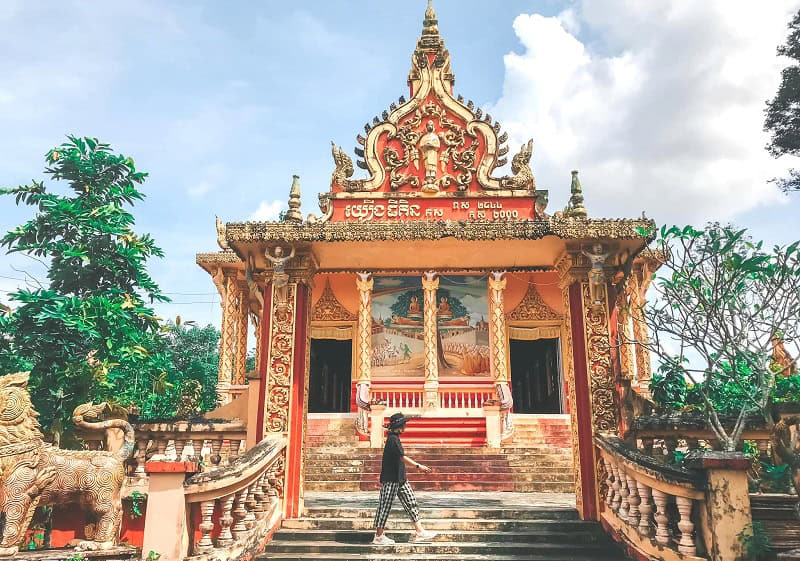
Essential Dress Code Rules for Vietnam Pagodas
Getting your clothing right is the single most important preparation for visiting Vietnamese pagodas. Dress code violations can result in denied entry or uncomfortable situations that ruin your visit.
What You MUST Wear
Your shoulders must be completely covered. This means no tank tops, no sleeveless shirts, no off-shoulder clothing, and no spaghetti straps. A t-shirt or blouse with sleeves is required. For women, even if your bra strap shows slightly, it’s considered inappropriate.
Your knees must be covered. Long pants, capri pants below the knee, or long skirts work perfectly. Shorts of any length above the knee are prohibited. For women, maxi dresses or midi skirts are ideal. For men, long pants are standard—even in scorching 35°C heat.
Choose footwear you can easily remove. You’ll be taking shoes on and off multiple times, so avoid complicated lace-up boots or shoes with many buckles. Slip-on sneakers, sandals, or flip-flops work best. Bring or wear socks for comfort, as temple floors can be scorching hot in summer or rough on bare feet.
Pro tip: Always carry a large scarf or lightweight shawl in your day bag. Even if you’re properly dressed, having an emergency cover-up solves unexpected situations—air conditioning making you cold, needing to cover a stain, or helping a travel companion who forgot proper attire.
What You CANNOT Wear
Tank tops and sleeveless shirts are universally prohibited. This includes athletic wear, summer dresses without sleeves, and men’s muscle shirts. Even if you’re traveling from the beach and everyone around you is dressed casually, pagodas maintain strict standards.
Shorts above the knee will get you turned away. This applies equally to men and women. “Above the knee” means if you’re standing normally and the shorts hem doesn’t reach your kneecap, they’re too short. Don’t try to argue or test the boundaries—you’ll lose.
Mini skirts and short dresses are forbidden. For women, if your dress or skirt ends more than a few inches above your knee, it’s inappropriate. When sitting, your clothing should still maintain modesty.
Revealing clothing of any type is unacceptable. This includes low-cut tops showing cleavage, crop tops exposing midriff, sheer or see-through fabrics, clothing with large rips or holes, and anything excessively tight or form-fitting. Vietnamese culture values modesty highly.
Hats must be removed inside prayer halls. It’s okay to wear a sun hat in outdoor courtyards to protect from heat, but immediately remove it when entering any shrine or prayer building. The same applies to sunglasses—take them off inside sacred spaces.
What Happens If You’re Dressed Inappropriately
Some major tourist pagodas provide temporary wraps or long shirts, but availability is extremely limited. During peak tourist season, these items run out quickly. At Ngoc Son Temple in Hanoi, you can borrow a long blue shirt, but expect long waits during busy periods.
A few pagodas offer rental clothing at the entrance. You’ll typically pay a small deposit (50,000-100,000 VND) that’s refunded when you return the garment. However, most smaller and rural pagodas don’t offer this service at all.
Many pagodas will politely refuse entry if you’re improperly dressed. Guards or staff will point to signs showing dress requirements and turn you away. This is particularly true at historically significant pagodas where rules are strictly enforced.
The best solution is dressing appropriately from your hotel. Don’t assume you can “figure it out later” or buy something nearby. Many pagodas are in areas without convenient shopping, and you’ll waste precious time trying to find suitable clothing.
Shoe Removal Protocol
Remove your shoes before entering main prayer halls and shrines. This is non-negotiable. Look for piles of shoes near entrances—that’s your cue to remove yours. Some pagodas provide plastic bags so you can carry your shoes with you rather than leaving them unattended.
Outdoor courtyards and pathways usually allow shoes. You’ll notice locals wearing shoes in these areas. When you see a threshold leading to a roofed building with Buddha statues, that’s when you remove footwear.
Look for designated shoe storage areas. Many pagodas have shelves or racks where you can safely leave shoes. In very crowded pagodas, consider photographing where you placed your shoes so you can find them again among hundreds of pairs.
Some pagodas provide plastic bags specifically for carrying shoes. If you’re wearing expensive footwear or worried about theft, bring your own small bag. Shoe theft is rare but possible at extremely crowded tourist sites.
Bring or wear socks for comfort and hygiene. Temple floors can be surprisingly hot in summer, especially marble or stone that’s been baking in direct sunlight. In winter, floors can be cold and dirty. Clean socks protect your feet and show respect for cleanliness standards.
Entrance Fees & Costs at Vietnam Pagodas (2025 Updated)
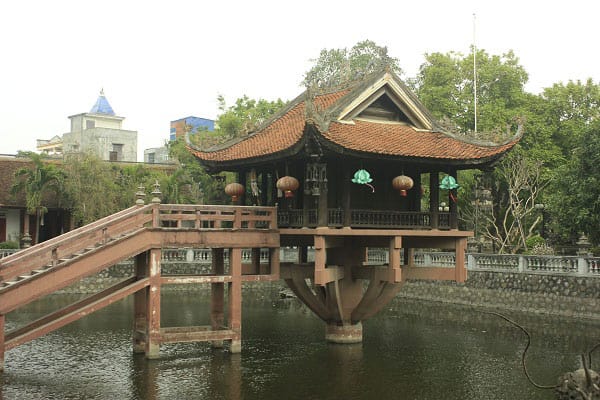
One of the best things about visiting Vietnamese pagodas is that most are completely free. However, some charge fees for specific features or areas, and it’s crucial to know which is which to avoid scams.
Completely FREE Pagodas
One Pillar Pagoda in Hanoi charges no entrance fee whatsoever. This iconic landmark is accessible to everyone without payment. The same applies to the surrounding Ho Chi Minh Mausoleum complex grounds.
Tran Quoc Pagoda on West Lake in Hanoi is entirely free. You can walk around the grounds, enter the prayer halls, and enjoy the lakeside setting without spending a single dong.
Quan Thanh Temple in Hanoi’s Ba Dinh District welcomes visitors free of charge. The impressive bronze statue and historic architecture are yours to explore at no cost.
Thien Mu Pagoda in Hue, the symbol of the ancient imperial city, requires no entrance fee. The iconic seven-story tower, gardens, and temple grounds are completely accessible for free.
All three Linh Ung Pagodas in Da Nang (Son Tra Peninsula, Marble Mountains, and Bai But Beach) charge zero entrance fees. The famous 67-meter Lady Buddha statue at Son Tra Peninsula is free to visit and photograph.
Ho Quoc Pagoda in Phu Quoc welcomes visitors without charge. This seaside pagoda with stunning ocean views requires no ticket.
Bich Dong Pagoda in Ninh Binh has free entrance to the pagoda complex itself. You’ll only pay parking fees—5,000 VND ($0.20 USD) for bicycles or 10,000 VND ($0.40 USD) for motorbikes.
NEW 2025 Entrance Fees (Recently Implemented)
Bach Ma Temple in Hanoi started charging entrance fees on December 8, 2025. The cost is 20,000 VND ($0.80 USD) per person. This historic temple in Hanoi’s Old Quarter previously had free entry, so this is a recent change many guidebooks haven’t updated yet.
Kim Ngan Temple in Hanoi also began charging 20,000 VND ($0.80 USD) per visitor starting December 8, 2025. Located at 42-44 Hang Bac Street, this temple follows the same new pricing structure as Bach Ma.
Both temples offer discounts: 50% reduction (10,000 VND) for seniors and students with valid ID cards, and free entry for children under 16 years old and people with severe disabilities.
Opening hours for both: 8:00 AM-12:00 PM and 1:30 PM-5:30 PM daily, with evening hours 7:00 PM-9:00 PM on Fridays, Saturdays, and Sundays only.
Bai Dinh Pagoda (Ninh Binh) Detailed Costs
The Bai Dinh Pagoda complex entrance is completely free. You can walk the entire grounds, see the 500 Arhat statues, visit multiple halls and temples, and explore without paying an entrance fee.
However, climbing the Bao Thap stupa costs 50,000 VND ($2 USD) per person. This 13-story tower offers panoramic views of the complex and surrounding karst mountains. You can take stairs or an elevator to the top. This fee is optional—you can skip the stupa and still see 90% of the complex for free.
Electric car transportation is available but optional. Walking the entire complex takes 2-3 hours as it’s massive (700 hectares). The electric car one-way trip costs 30,000 VND ($1.20 USD) per person, taking you from the main parking area to the northern entrance near the 500 Arhat corridor. A roundtrip ticket costs 60,000-80,000 VND ($2.50-$3.20 USD) depending on the season.
There’s also a VIP hop-on-hop-off service that stops at all major sites within the complex. This costs more (prices vary, ask at the ticket office) but allows unlimited rides throughout your visit. For elderly visitors or families with young children, this is worth considering.
Guided tours cost 300,000 VND ($12 USD) for the new pagoda complex only, or 550,000 VND ($22 USD) for both the ancient and new pagoda areas. Tours typically last 2-3 hours and are available in Vietnamese and English. Guides are hired from the official ticket office at the entrance.
Other Pagodas with Entrance Fees
Marble Mountains in Da Nang charges 40,000 VND ($1.60 USD) for adults and children over 10 years old. Children under 10 enter free. This fee includes access to Linh Ung Pagoda, Tam Thai Pagoda, Huyen Khong Cave, and Tang Chon Cave on Thuy Son (Water Mountain). Cash in Vietnamese dong only.
The elevator at Marble Mountains is optional at 15,000 VND ($0.60 USD) one-way. This skips 108 steps and makes the climb much easier in hot weather. You can buy separate tickets for up or down, or pay 30,000 VND for roundtrip.
Am Phu Cave at the foot of Marble Mountains requires a separate ticket: 20,000 VND ($0.80 USD) for adults, free for children under 10. The ticket booth is at the cave entrance near the parking area.
Perfume Pagoda near Hanoi has free complex entrance, but you must pay for the boat trip to reach it. Boat rides cost 150,000-200,000 VND ($6-$8 USD) roundtrip per person. The journey takes about one hour each way through stunning limestone scenery along the Yen River.
The cable car at Perfume Pagoda is optional at approximately 200,000 VND ($8 USD) roundtrip. This significantly reduces hiking time. Many visitors take the cable car up and walk down to enjoy the scenery without exhaustion.
Payment Tips to Avoid Problems
Always bring small bills. Many ticket offices struggle to provide change for 500,000 VND notes. Have plenty of 20,000, 50,000, and 100,000 VND notes ready. ATMs are available at major pagoda complexes (Bai Dinh, Perfume Pagoda) but rare at smaller sites.
All pagoda entrance fees require cash payment in Vietnamese dong. Credit cards are not accepted. The few places that claim to accept cards often have “broken” machines. Don’t rely on card payment.
Keep all receipts. Some pagodas allow re-entry on the same day if you show your ticket stub. Even if you don’t plan to return, receipts are useful if disputes arise.
Check current prices before visiting. Entrance fees can change with little notice, especially at government-managed sites. The prices listed here are accurate as of December 2025 but verify through official tourism websites or your hotel concierge.
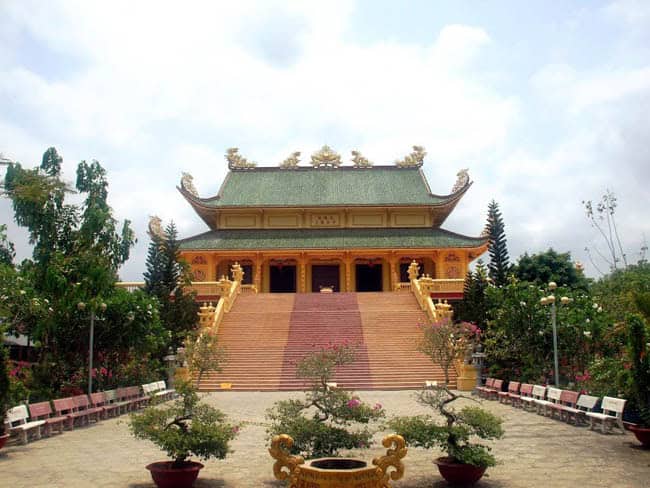
Visitor Etiquette & Behavior Rules
Understanding proper behavior at Vietnamese pagodas isn’t just about following rules—it’s about showing respect for active places of worship that hold deep meaning for millions of Buddhists.
How to Enter a Pagoda Properly
Always enter through the right side of the main gate. This tradition applies to most Vietnamese pagodas and temples. The right side is considered the “entrance” while the left is the “exit.” If you watch local visitors, you’ll notice they naturally flow in this pattern.
When you leave, exit through the left side of the gate. This maintains the proper flow and respects traditional practices. Crossing paths or entering through the exit side is considered poor form.
Step completely over the threshold when entering temple buildings. Never step directly on the raised wooden or stone threshold at the bottom of doorways. In Buddhist tradition, spirits reside in thresholds, and stepping on them is disrespectful. Lift your foot and step over in one motion.
Remove your hat and sunglasses when entering shrines and prayer halls. It’s perfectly fine to wear sun protection in outdoor courtyards, especially in Vietnam’s intense heat, but indoor sacred spaces require bare heads and visible eyes as signs of respect.
Switch your phone to silent mode or turn it off completely. Even vibration can be disruptive in quiet prayer spaces. If you must take a call, exit the pagoda grounds entirely.
Photography Etiquette
Photography is generally allowed in outdoor areas and courtyards. The gardens, exterior architecture, and landscape surrounding pagodas are fair game for photos. Take advantage of the beautiful scenery, ornate decorations, and architectural details.
Always ask permission before photographing monks, nuns, or people praying. Point to your camera and make questioning gestures. If they nod or smile, proceed. If they shake their head or look uncomfortable, respect their wishes immediately. Many monks are happy to pose for photos, but never assume consent.
Some main shrines prohibit photography inside. Look for “No Photography” signs (usually showing a camera with a line through it). When in doubt, ask a staff member or observe what other visitors are doing. If you don’t see anyone else taking photos inside, don’t be the first.
Never use flash near Buddha statues, during ceremonies, or when people are praying. Flash photography is disruptive, disrespectful, and unnecessary with modern phone cameras. Turn off automatic flash before entering any sacred space.
Don’t climb on statues, structures, or religious objects for photos. This is offensive and potentially damages valuable cultural artifacts. Keep respectful distance from all religious icons.
Avoid posing in ways that mock or disrespect Buddhist imagery. Don’t make silly faces near Buddha statues, don’t turn your back to important icons for selfies, and don’t mimic prayer positions as jokes. What might seem like harmless fun to you can deeply offend Buddhist practitioners.
What You MUST NOT Do
Never point fingers at Buddha statues or altars. Pointing is considered extremely rude in Vietnamese culture, especially when directed at sacred objects. If you need to indicate something, gesture with your whole hand palm-up, or simply describe what you’re referring to verbally.
Never point your feet toward Buddha images. When sitting in temple halls, tuck your feet beneath you or point them away from altars. In Buddhist culture, feet are the lowest and dirtiest part of the body. Pointing them at sacred objects is one of the most offensive acts imaginable.
Never eat or drink inside sacred areas. Pagoda grounds are for spiritual practice, not dining. Even drinking water inside prayer halls is inappropriate. Step outside to designated areas or exit the complex entirely if you need food or drink. Some large complexes have specific dining areas near the entrance.
Never touch religious artifacts or offerings. The incense burners, flower arrangements, fruit offerings, statues, and prayer items are sacred. Keep your hands to yourself. If you’re curious about something, ask a staff member or guide, but don’t touch.
Never speak loudly or laugh disruptively. Pagodas are places of meditation and prayer. Keep your voice to a quiet conversational level. Children should be supervised to maintain appropriate noise levels. If you need to have a longer conversation, step outside.
Never display public affection. This includes kissing, extended hugging, or any romantic physical contact. Vietnamese culture is conservative, and pagodas are sacred spaces. Holding hands briefly is generally acceptable, but keep all affection minimal and brief.
Never turn your back to Buddha statues when exiting. When leaving a prayer hall, step backward a few paces while still facing the altar before turning around. This shows continued respect as you depart. Watch how local visitors exit and follow their example.
Never pick flowers, leaves, or take offerings. Everything in the pagoda is either sacred or carefully maintained. This includes the ornamental plants, offerings left by worshippers, and even fallen flowers. Taking anything without permission is considered theft from the temple and extremely bad karma.
Never smoke anywhere on pagoda grounds. This should be obvious, but it’s worth stating explicitly. Smoking is prohibited in all areas of pagodas—indoor, outdoor, parking lots, everywhere. If you need to smoke, exit completely and walk to a public area off the temple property.
Proper Behavior Around Monks
Women should never touch monks or hand items directly to them. This is a strict Buddhist monastic rule. If you need to give something to a monk, place it on a table or surface for him to pick up. Alternatively, hand items to a male intermediary who can give them to the monk.
Address monks respectfully. The proper term is “Venerable” in English, or simply nod with your hands pressed together in a prayer position (called “wai” in Thai or “chao” in Vietnamese culture). Don’t use casual greetings like “hey” or “buddy.”
Never interrupt monks during prayer or meditation. If a monk has eyes closed or is clearly engaged in spiritual practice, leave them alone completely. Even if you’re desperate for information, wait until they finish or find someone else to ask.
If offered a blessing by a monk, accept graciously. Bring your hands together in prayer position, bow your head slightly, and remain quiet during the blessing. Don’t ask questions during the process. After the blessing, you can say “Thank you” or the Vietnamese “Cảm ơn” (gahm un).
Don’t ask monks to pose for selfies with you. While photographing monks from a respectful distance is often acceptable, asking them to pose with tourists like a photo opportunity is inappropriate. They’re spiritual practitioners, not tourist attractions.
Making Offerings and Donations
Donations are completely voluntary. Don’t feel pressured by anyone to donate specific amounts or make offerings. Vietnamese Buddhism doesn’t require visitors to pay for spiritual benefits.
Use official donation boxes clearly marked inside temples. These are usually wooden boxes with locks, placed near the main altar or at temple entrances. Legitimate donation boxes are permanent fixtures, not portable containers carried by individuals.
Common donation amounts are 20,000-50,000 VND ($1-$2 USD). This is purely voluntary. Even dropping 5,000 VND is perfectly acceptable if that’s what you can afford. There’s no “minimum” donation. Many Vietnamese visitors donate amounts you’d consider pocket change.
Incense offerings are usually available for small donations. Near temple entrances, you’ll often find incense bundles with a donation box. 10,000-20,000 VND is standard for a small bundle. Light incense in odd numbers (1, 3, or 5 sticks) as this is traditional in Vietnamese Buddhism.
To offer incense properly, light the sticks, hold them in both hands at chest level with sticks pointing upward, bow three times toward the altar, then place the incense in the burner. Never blow on incense to extinguish the flame—wave your hand instead.
Safety Warnings & Common Scams Near Pagodas ⚠️
This section covers uncomfortable truths that most Vietnam travel guides avoid. We’re including it because honest safety information protects travelers and actually increases trust in Vietnam as a destination when you know what to watch for.
SCAM #1: Fake Monks Demanding Donations
This is the most common and sophisticated scam targeting tourists at Vietnamese pagodas, particularly in Hanoi and other major cities.
How it works: Individuals dressed in Buddhist monk robes (often orange or brown) approach tourists outside popular pagodas like Temple of Literature, Tran Quoc Pagoda, One Pillar Pagoda, and Quan Thanh Temple. They’re usually friendly and speak some English. They’ll offer a “blessing,” a “charm,” “prayer beads,” or “fortune telling” in exchange for a donation.
Initially, they’ll suggest a small amount like 20,000 VND. Once you donate, they immediately become aggressive, claiming you misunderstood and demanding significantly more—often 200,000-500,000 VND ($8-$20 USD) or more. They may grab your arm, follow you, or create a scene to pressure you into paying more.
How to identify fake monks: Legitimate Buddhist monks in Vietnam rarely approach tourists asking for money. They don’t chase people. They don’t offer unsolicited “services.” Real monks doing alms rounds in the morning accept offered donations in their bowls but don’t negotiate or sell items.
Fake monks often have new, clean robes (real monks’ robes show wear). They’re aggressive in approaching tourists rather than peacefully going about their business. They work in tourist areas outside pagodas rather than within temple grounds. They speak English too well and use sales tactics.
What to do: Politely but firmly say “No, thank you” and keep walking. Don’t make eye contact. Don’t engage in conversation. Don’t accept anything they try to hand you. If they persist, say “I will donate inside the temple only” and walk away confidently.
Never feel guilty about refusing. This is a known scam, not legitimate religious practice. You’re not being rude to Buddhism by declining—you’re protecting yourself from con artists.
Common locations: Temple of Literature (Hanoi), Tran Quoc Pagoda (Hanoi), One Pillar Pagoda (Hanoi), Thien Mu Pagoda (Hue), touristy areas of Hoi An. Generally anywhere with high concentrations of foreign tourists near religious sites.
SCAM #2: Unofficial “Guides” Demanding Excessive Fees
How it works: Individuals (not wearing any official uniform or identification) position themselves at pagoda entrances and claim to be “official guides” or “temple guides.” They approach tourists and begin giving information immediately without asking if you want a guide. After the tour—or even just a few minutes of unsolicited information—they demand payment, often 200,000-500,000 VND ($8-$20 USD) or more.
Some versions of this scam involve the “guide” taking you to specific shops or restaurants where they receive commission. They’ll claim these places are “special” or “authentic” but prices are inflated because the guide gets 30-50% kickback.
How to identify: Official guides at major pagodas work from ticket offices, wear identification badges, and have clear published rates posted on signs. They don’t approach tourists randomly. They don’t begin services before discussing prices.
Unofficial guides dress like regular people, have no visible ID, and start giving information whether you asked or not. They’re vague about pricing until the end. They may claim to be “students practicing English” then demand money.
What to do: Before anyone begins giving you information, clearly state: “I don’t want a guide, thank you.” If they persist, firmly repeat yourself. If they begin talking anyway, walk away immediately. They have no authority to force you to listen or pay.
If you do want a guide, ask “How much is your service and what does it include?” before accepting any information. Get the full price upfront. For official guides at major pagodas, prices are typically 300,000-550,000 VND for 2-3 hour tours, clearly posted at ticket offices.
Reality check: Most major tourist pagodas have excellent English signage, information boards, and QR codes linking to information. You genuinely don’t need a guide unless you’re specifically interested in deep historical and religious context. Don’t feel pressured into hiring anyone.
SCAM #3: Entrance Fee Scams at FREE Pagodas
How it works: At pagodas that are completely free (One Pillar, Tran Quoc, Linh Ung, etc.), individuals position themselves near the entrance (but not at official ticket booths, which don’t exist at free sites) and tell tourists “ticket fee” or “entrance fee” or “temple maintenance fee” and demand payment of 50,000-100,000 VND or more.
This specifically targets tourists who don’t know which pagodas are free versus paid. The scammers rely on tourists’ assumption that all tourist sites require entrance fees.
How to identify: Check our comprehensive list in the “Entrance Fees” section above. If the pagoda is listed as FREE, anyone demanding payment for basic entrance is scamming you.
Official ticket booths (when they exist) are physical structures with clear signs, posted prices, and printed tickets. Someone standing with a box or phone demanding “entrance fee” is not official.
What to do: If someone demands an entrance fee at a pagoda you know is free, say “This pagoda is free entry” and walk past confidently. Don’t argue or discuss. If you’re unsure whether the pagoda truly charges a fee, look for an official ticket booth. If you only see individuals with boxes, it’s a scam.
When in genuine doubt, ask at your hotel before visiting or check official Vietnam tourism websites. Don’t rely on people at the entrance who have financial interest in your confusion.
SCAM #4: Transportation Scams
Taxi scams: Rigged meters that jump from 10,000 to 100,000 VND in seconds. Drivers “forgetting” to turn on the meter then quoting astronomical fixed prices at the destination. Fake taxi companies with cars painted to look like reputable brands. Taking the longest possible route to inflate the fare.
Cyclo scams: These three-wheeled bicycle taxis are iconic in Vietnam but notorious for scams. The driver quotes “50,000 VND” but doesn’t clarify whether that’s per person, per kilometer, for the whole trip, or some other formula. At the destination, they demand 500,000 VND and claim you misunderstood. They may call friends or create a scene to intimidate you into paying.
Motorbike “tour” scams: Friendly stranger on a motorbike strikes up conversation, offers to show you around for “just 100,000 VND.” The ride lasts 15 minutes, then they demand 1,000,000 VND ($40 USD) and refuse to take you back to your starting point unless you pay. They may take your phone or bag “to see photos” and hold it hostage for payment.
What to do for safe transportation:
Use the Grab app (Southeast Asia’s equivalent to Uber). Download it before your trip. The price is calculated upfront, the driver’s identity is verified, and payment is cashless or clearly agreed upon. This eliminates 90% of transport scams.
For taxis, use ONLY these reputable companies: Mai Linh (green cars) or Vinasun (white cars). Look for their signs and phone numbers to verify authenticity—fake cars exist painted in similar colors.
Before getting in any cyclo, agree on the TOTAL PRICE for the COMPLETE JOURNEY. Write it down and have the driver confirm. “50,000 VND total for 30-minute trip, final price” leaves no room for confusion. Take a photo of the written agreement if necessary.
Never accept rides from strangers who approach you first. If you want a motorbike experience, book through your hotel or a reputable tour company. The premium you pay for organized tours is worth avoiding the scam risk.
Screenshot a map showing the route from your hotel to the pagoda. If the taxi driver takes an obviously wrong direction, show them the map. If they continue, insist they stop and exit the taxi. Pay only the metered amount up to that point.
SCAM #5: Pickpocketing & Bag Snatching
Pickpocketing is the most common crime tourists experience in Vietnam. It’s rarely violent but extremely common in crowded areas like pagoda entrances, markets near popular temples, and while tourists are distracted taking photos.
How it works: Teams work together. One person distracts you (asking directions, showing you something, bumping into you, or creating a scene) while their partner unzips your bag, takes your wallet from your back pocket, or grabs your phone from your hand. By the time you notice, both scammers have disappeared into the crowd.
Drive-by snatching also occurs. You’re walking near the street with your phone out or bag on your shoulder. A motorbike passenger grabs your item and speeds away before you can react. This happens in seconds.
What to do:
Use a cross-body bag worn in front of your body, not hanging off one shoulder or on your back. Keep your hand on the zipper while walking in crowds. Don’t display your phone or wallet unnecessarily.
Keep valuables in front pockets with your hand over them in crowds. Back pockets are easy targets. Even front pockets can be picked, so maintain physical contact with your valuables.
Don’t put your bag down while taking photos. Place one foot through the strap or hold it between your feet if you need both hands for photography.
Be especially vigilant in these specific situations: entering/exiting crowded pagodas, at busy markets near temples (like Ben Thanh Market before visiting Jade Emperor Pagoda), on crowded buses or trains going to tourist sites, and while distracted looking at maps or taking photos.
Don’t walk near the street edge with your phone in your hand or loose bag on your shoulder. Motorbike snatching is opportunistic—remove the opportunity by walking away from traffic and keeping items secured.
If you’re robbed, don’t chase the thief. Your safety isn’t worth your phone or wallet. Note the time, location, and any details about the thief, then report to tourist police. Your travel insurance will require a police report for claims.
SCAM #6: Currency Switch Scam
Vietnamese currency can be confusing for tourists. Bills range from 1,000 VND (worth $0.04) to 500,000 VND (worth $20 USD). The 20,000 VND and 500,000 VND notes are both blue colored, which scammers exploit.
How it works: You pay for something with a 500,000 VND note (approximately $20 USD). The vendor quickly switches it with a 20,000 VND note (worth only $0.80 USD) using sleight of hand, then claims you didn’t pay enough and demands more money. Sometimes they create a scene, calling you a thief or liar to pressure you into paying again.
What to do:
Familiarize yourself with Vietnamese currency before your trip. Study the colors, sizes, and designs of each denomination. The differences become obvious once you know what to look for.
Pay with exact change whenever possible. Break large bills at convenience stores, hotels, or restaurants you trust—not at street vendors or small pagoda gift shops.
When handing over money, keep your hand on the note until the transaction is acknowledged. Don’t let the vendor take the bill and turn away from you. Maintain visual contact with your money.
Count your change immediately before leaving the counter. Don’t walk away and check later. If the change is wrong, address it immediately while you’re still present.
If someone claims you paid with the wrong denomination, stay calm and confident. Say “I gave you 500,000 VND. I am certain.” Don’t let them intimidate you into paying twice. If necessary, involve a bystander as a witness.
Emergency Contacts
Police (general): 113 (works from any phone, even without SIM card) Tourist Police Hanoi (English spoken): +84 24 3826 3642 Tourist Police Ho Chi Minh City: +84 28 3829 7300 Emergency Medical: 115 Fire Emergency: 114
Your embassy contact: Look up and save before traveling. Embassy staff can assist with stolen passports, major crimes, and emergency situations.
General Safety Best Practices
Travel in groups when possible, especially during early morning visits (7:00-8:00 AM) when sites are less crowded but also have fewer people around for help.
Keep valuables in your hotel safe. Don’t carry your passport unless legally required (immigration checkpoints, etc.). Carry a photocopy instead. Leave expensive jewelry at home entirely.
Buy comprehensive travel insurance before your trip. Ensure it covers theft, medical emergencies, and evacuation. Most credit cards offer some travel protection if you book flights/hotels with the card—check your benefits.
Trust your instincts. If a situation feels wrong, remove yourself immediately. Don’t worry about seeming rude. Your safety is more important than politeness.
Learn basic Vietnamese phrases for emergencies: “Help!” (Cứu tôi! – “koo toy”), “Police!” (Cảnh sát! – “ging saht”), “I need help” (Tôi cần giúp đỡ – “toy kun zoop dough”).
Important perspective: Don’t let these warnings scare you away from visiting Vietnam. The country is generally very safe, and millions of tourists have wonderful, incident-free trips every year. These scams target a small percentage of visitors, and they’re 95% avoidable with basic awareness. Vietnamese people are overwhelmingly kind and honest—these scams are committed by a tiny minority of bad actors who specifically target tourist areas.
By staying alert, informed, and confident, you’ll easily avoid problems and enjoy Vietnam’s incredible pagodas safely.
Best Times to Visit Vietnam Pagodas
Timing your pagoda visits correctly makes the difference between a magical, peaceful experience and a sweaty, crowded ordeal. Here’s exactly when to go.
Time of Day
7:00-8:30 AM is optimal. This early morning window offers the coolest temperatures (crucial in Vietnam’s heat), fewest crowds, and most peaceful atmosphere. Many pagodas open at 6:00 or 6:30 AM, so arriving between 7:00-8:30 means you catch morning prayer ceremonies, see monks going about daily activities, and enjoy soft golden lighting perfect for photography.
Locals visit early for prayer, but tourist crowds don’t typically arrive until 9:00-10:00 AM. You’ll share the space with Vietnamese Buddhists engaged in genuine worship, creating an authentic cultural experience rather than a tourist circus.
The temperature difference is dramatic. In summer, 7:00 AM might be a pleasant 25°C (77°F), while by 11:00 AM it’s 35°C (95°F) with intense humidity. Early visits prevent heat exhaustion and excessive sweating (which is both uncomfortable and makes modest clothing even hotter).
4:00-5:30 PM is second best. Late afternoon offers cooler temperatures than midday, beautiful sunset lighting for photos, and lighter crowds as tour groups depart. Some pagodas have afternoon prayer ceremonies around 5:00 PM worth observing.
The main downside is reduced energy after a full day of sightseeing. If you’re trying to visit multiple pagodas, save simpler ones (like One Pillar Pagoda) for late afternoon and do complex sites (like Bai Dinh) in the morning when you’re fresh.
10:00 AM-3:00 PM should be avoided. Peak heat is brutal, especially in summer months when temperatures exceed 35°C (95°F). Crowds reach maximum capacity as tour buses arrive. The harsh overhead sunlight creates terrible photo conditions with harsh shadows. You’ll be miserable, tired, and fighting through masses of people for every photo.
If you must visit during these hours (perhaps due to tour schedules), bring extra water, wear a hat, use high-SPF sunscreen, and take frequent breaks in shaded areas.
Days of the Week
Monday through Thursday are quietest. These weekdays see primarily local visitors and independent travelers. You’ll have space to explore freely, minimal queues, and easy photography without people constantly in your frame.
Friday through Sunday get progressively busier. Weekends see Vietnamese families visiting, domestic tourists from other provinces, and maximum international tour groups. Sunday is the busiest day at most pagodas.
1st and 15th of the lunar month are special Buddhist worship days. Pagodas fill with local devotees making offerings, burning incense, and praying. These days are culturally fascinating to observe—you’ll see authentic Buddhist practice rather than just tourism. However, they’re also very crowded, and you should be extra respectful and quiet as these are meaningful religious days for practitioners.
If you want cultural immersion and don’t mind crowds, lunar 1st and 15th are incredible. If you want peace and space for photography, avoid these dates.
To check lunar calendar dates, search “Vietnamese lunar calendar [current month]” before your trip and plan accordingly.
Best Seasons
January through March (Spring) is optimal. This season offers the best weather for pagoda visits with mild temperatures averaging 18-25°C (64-77°F), low rainfall, clear skies perfect for photography, and comfortable conditions for outdoor walking between temple buildings.
The Tet holiday (Vietnamese New Year) usually falls in late January or February. While incredibly culturally interesting, it brings massive crowds and booking challenges. Unless you specifically want the Tet experience, visit before or after the holiday.
Spring flowers bloom at many pagodas, adding natural beauty to photos. The pleasant weather means you can comfortably explore large complexes like Bai Dinh for hours without exhaustion.
October through December (Autumn) is second best. Comfortable temperatures, less rain than summer, fewer tourists than spring, and golden autumn light perfect for photography make this an excellent alternative season.
Northern Vietnam (Hanoi, Ninh Binh) experiences actual autumn with cooler temperatures and changing foliage. Central and southern Vietnam remain warm year-round but with lower humidity than summer months.
June through August (Summer) should be avoided if possible. This is Vietnam’s hottest season with temperatures frequently exceeding 35°C (95°F), high humidity making it feel even hotter, afternoon thunderstorms (especially in southern Vietnam), and peak tourist season creating maximum crowds.
If you must visit during summer, absolutely stick to early morning visits (7:00-8:00 AM). By 10:00 AM, you’ll be drenched in sweat and miserable. Afternoon rains usually hit between 2:00-4:00 PM, so plan around this.
Heat exhaustion is a real risk. Symptoms include dizziness, nausea, excessive sweating or stopped sweating, and confusion. If you experience these, immediately find shade, drink water, and consider seeking medical attention.
April-May and September are shoulder seasons. Weather is transitional and somewhat unpredictable, but you’ll find fewer crowds and lower prices than peak season. These months can be excellent for budget travelers who don’t mind occasional rain.
Weather Considerations by Region
Northern Vietnam (Hanoi, Ninh Binh, Halong) experiences four seasons. Best months: November-April (dry and cooler). Avoid: June-August (very hot and humid). Winter (December-February) can be surprisingly cold (10-15°C / 50-59°F), so bring layers.
Central Vietnam (Hue, Da Nang, Hoi An) has a different weather pattern. Best months: January-July (dry season). Avoid: September-December (rainy season with potential typhoons). The rainy season in Central Vietnam is serious—heavy downpours and flooding can make pagoda visits impossible.
Southern Vietnam (Ho Chi Minh City, Mekong Delta, Phu Quoc) is hot year-round. Best months: December-April (dry season). Avoid: May-October (rainy season). However, southern rains are typically brief afternoon showers rather than all-day events, so morning visits work even in rainy season.
Special Periods to Consider
Tet Holiday (Vietnamese New Year – late January/early February): This is Vietnam’s biggest holiday, equivalent to Christmas in Western countries. Everyone returns to their hometown, families gather, and pagodas overflow with worshippers praying for good fortune in the new year.
Pros: Incredible cultural experience, vibrant red and gold decorations everywhere, special ceremonies and festivals, authentic Vietnamese traditions on full display, and an unforgettable atmosphere.
Cons: EXTREMELY crowded (pagodas reach capacity), many businesses and restaurants close for the holiday (3-7 days), transportation fully booked (flights, trains, buses), higher prices for everything, and difficult to find available accommodations.
Recommendation: Only experienced travelers who book everything months in advance and don’t mind challenges should visit during Tet. First-time Vietnam visitors should avoid this period. If you do visit during Tet, arrive at pagodas at 6:00 AM when they open—by 8:00 AM they’re overwhelmed.
Vesak (Buddha’s Birthday – usually April or May): Major Buddhist holiday celebrating Buddha’s birth, enlightenment, and death. All pagodas hold special ceremonies with chanting, incense offerings, and lantern lighting. This is one of the most important days in the Buddhist calendar.
The exact date varies by lunar calendar—check the specific date for your travel year. Expect large crowds but also meaningful cultural experiences. If you attend, dress extra conservatively and be maximally respectful.
Perfume Pagoda Festival (January-March, lunar calendar): This massive pilgrimage festival draws millions of Vietnamese Buddhists to the Perfume Pagoda complex near Hanoi. It’s one of the largest religious festivals in Vietnam.
If you want to experience Vietnamese Buddhism at its most fervent and authentic, this is incredible. However, expect 2-3 hour waits for boats, shoulder-to-shoulder crowds, and limited ability to explore peacefully. Visit early in the festival (early January) for slightly smaller crowds.
Yen Tu Pagoda Festival (January-March, lunar calendar): Similar to Perfume Pagoda, this pilgrimage festival brings Buddhist devotees to climb Yen Tu Mountain. Expect crowded cable cars, packed trails, and long waits. The cultural experience is extraordinary, but peaceful contemplation is impossible.
Crowd Avoidance Strategy
Want to visit famous pagodas without fighting crowds? Follow this five-point strategy:
1. Visit on weekdays, never weekends. Weekends double or triple visitor numbers. If your schedule only allows weekend travel, choose Friday over Saturday or Sunday.
2. Arrive at opening time. Most pagodas open 6:00-7:00 AM. Arriving at opening gives you 1-2 hours before tour groups arrive. This strategy alone eliminates 80% of crowd problems.
3. Choose less-famous pagodas. For every One Pillar Pagoda mobbed with tourists, there’s a Quan Thanh Temple or Giac Lam Pagoda with equal beauty and 10% of the visitors. Research secondary pagodas in each city—they’re often more rewarding than famous ones.
4. Avoid major holidays. Tet, Vesak, and summer vacation (June-August) bring peak crowds. Shoulder seasons (April-May, September-October) have 30-40% fewer visitors than peak months.
5. Travel in low season. While November-March is “best” weather, it also brings maximum tourists. April-May and September-October offer good-enough weather with significantly fewer crowds. If you don’t mind occasional rain, these months provide the best crowd-to-weather balance.
Consider visiting pagodas in less-touristed cities. While everyone flocks to Hanoi’s One Pillar Pagoda, equally beautiful pagodas in cities like Ninh Binh, Hue, or Da Lat see a fraction of the visitors. Your photos will be better, your experience more authentic, and your stress levels far lower.
Top 10 Must-Visit Pagodas in Vietnam
Vietnam has thousands of pagodas, but these ten offer the best combination of beauty, cultural significance, and accessibility for international visitors. Each provides a unique experience—from ancient history to stunning natural settings.
1. Tran Quoc Pagoda (Hanoi)
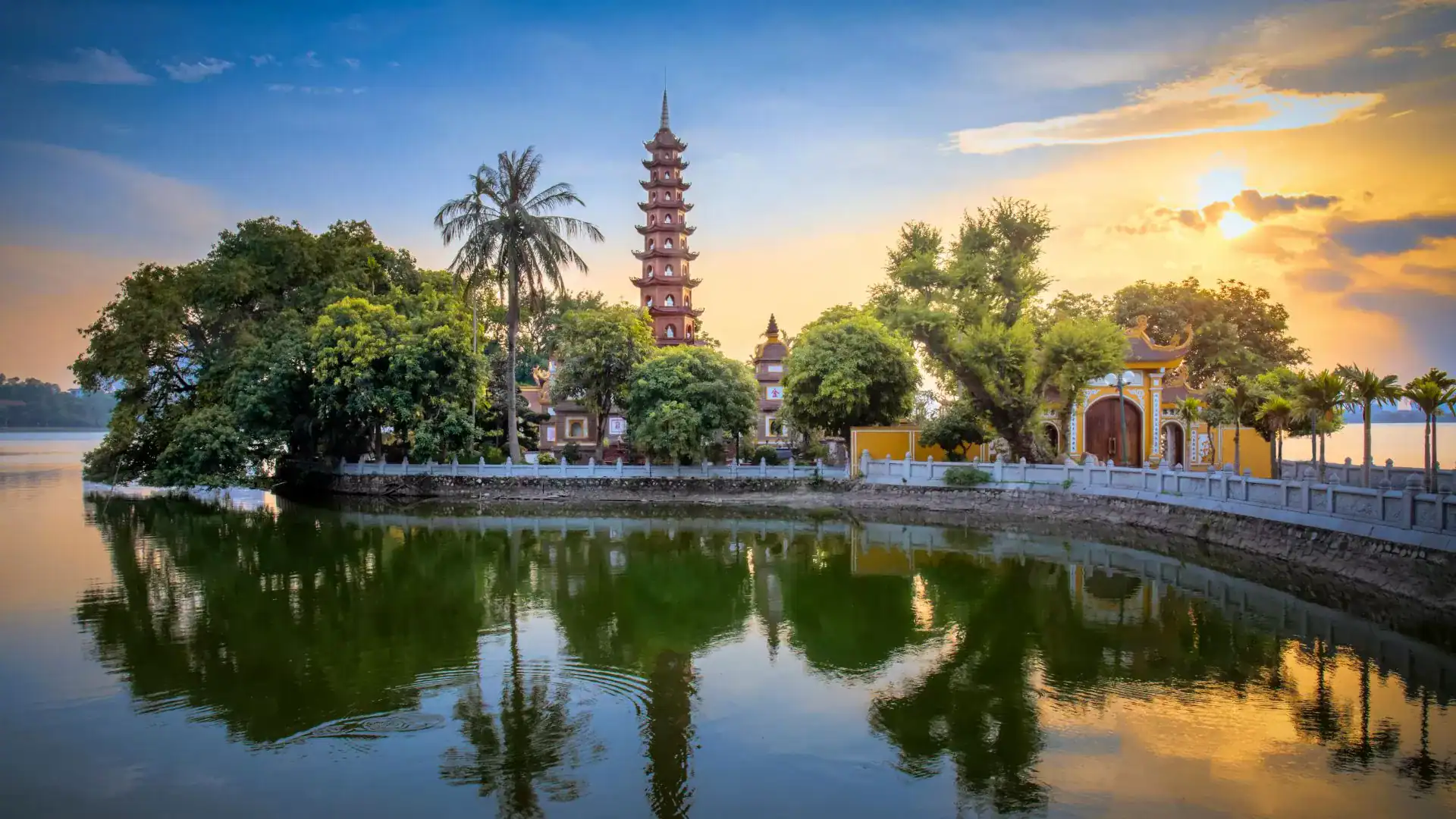
Why visit: As Hanoi’s oldest pagoda at over 1,500 years old, Tran Quoc offers genuine historical significance combined with one of the most beautiful locations in Vietnam—a small island on West Lake connected by a causeway.
Highlights: The 11-story red brick stupa is stunning against the water backdrop. A Bodhi tree grown from a cutting of the original tree in India where Buddha achieved enlightenment adds spiritual significance. The lake setting creates perfect reflections for sunrise and sunset photography.
Time needed: 45-60 minutes for a thorough visit. Add 30 minutes if you want to walk around the lake or find a café with lake views.
Best for: Photography enthusiasts (especially sunrise/sunset shots), history lovers, and anyone seeking a peaceful atmosphere within Hanoi. The combination of ancient history and beautiful natural setting makes this one of Vietnam’s most rewarding pagoda visits.
Practical info: Free entry. Open 7:00 AM-6:00 PM daily. Located on Thanh Nien Road between West Lake and Truc Bach Lake. Easy to combine with nearby Quan Thanh Temple (10-minute walk).
2. One Pillar Pagoda (Hanoi)
Why visit: One of Vietnam’s most iconic images and a symbol of Hanoi itself. The unique architecture—a pagoda designed to resemble a lotus flower rising from a pond, supported by a single pillar—makes this unlike any other pagoda in the world.
Highlights: The striking lotus-inspired design built in 1049 AD during the Ly Dynasty. Legend says Emperor Ly Thai Tong had the pagoda built after dreaming of the bodhisattva Quan Am sitting on a lotus flower. The compact size means you can fully appreciate it in minutes, making it perfect for tight schedules.
Time needed: 20-30 minutes. This is a small site, and you can see everything quickly. However, getting good photos without crowds requires patience.
Best for: Quick photo stops, architecture enthusiasts, and visitors who want to see an iconic Vietnamese landmark without spending hours. Perfect to combine with the nearby Ho Chi Minh Mausoleum complex.
Practical info: Free entry. Open 8:00 AM-4:00 PM daily. Located within the Ho Chi Minh Mausoleum complex at Chua Mot Cot Ward, Ba Dinh District. Often very crowded, so visit right at 8:00 AM opening for the best experience.
3. Perfume Pagoda (Hanoi)
Why visit: This isn’t just one pagoda but a massive complex of Buddhist temples, shrines, and caves scattered across the Huong Tich mountain range. The journey to reach it—by boat along the Yen River through stunning limestone scenery—is half the experience.
Highlights: The Huong Tich Cave (Perfume Cave) is the spiritual heart of the complex, housing the Perfume Pagoda inside a natural cavern. The boat journey through dramatic karst mountains mirrors Ha Long Bay but with fewer tourists. The hiking and cable car options let you choose your adventure level. The scale is enormous—dozens of temples and pagodas spread across mountains.
Time needed: Full day minimum (6-8 hours). You’ll spend 1 hour each way on the boat, plus hours exploring the complex. Most visitors take the cable car up and walk down to balance convenience and scenery.
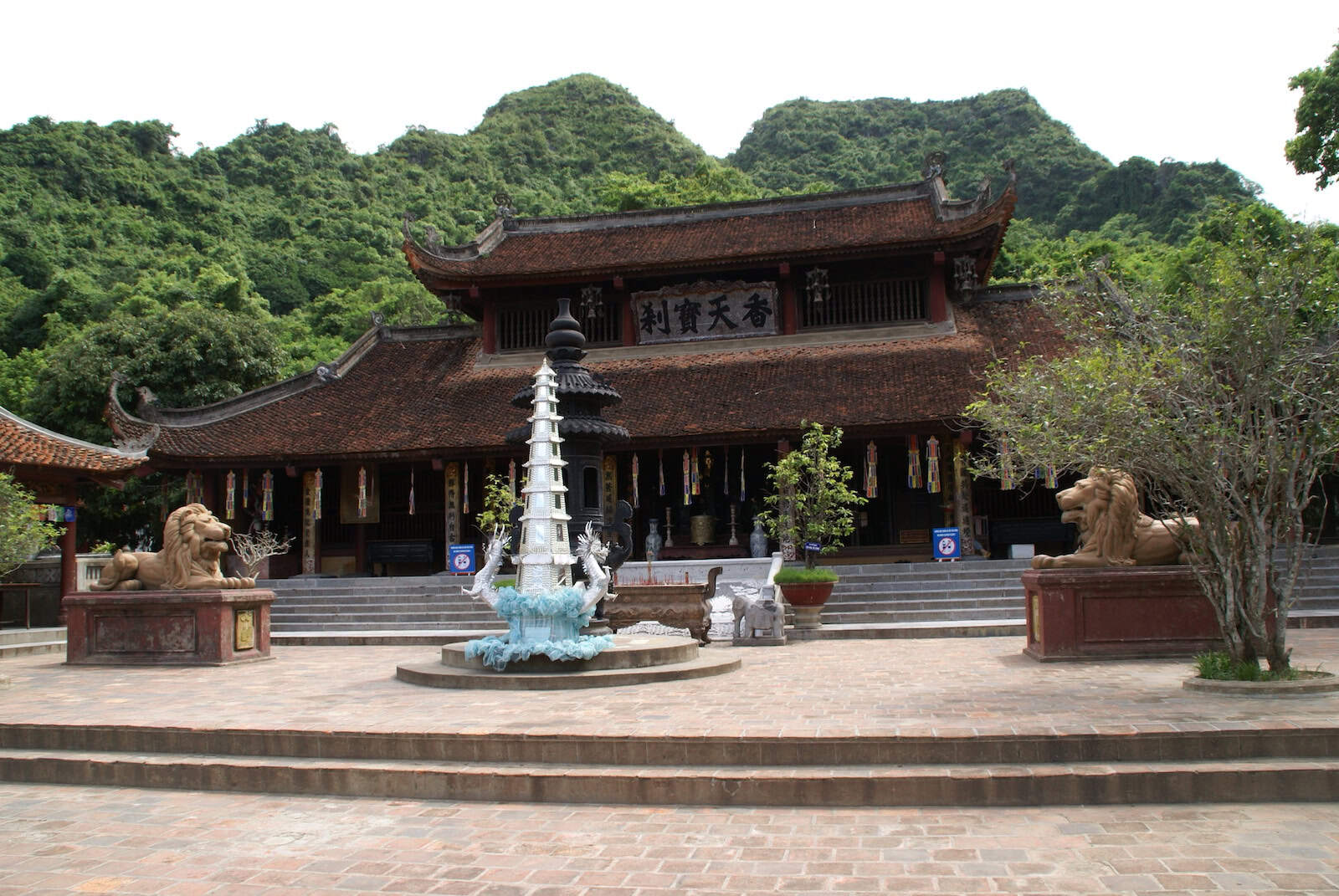
Best for: Adventure seekers, nature lovers, and anyone wanting to combine spiritual tourism with outdoor activities. This is Vietnam’s biggest pilgrimage site, so it offers genuine religious significance alongside natural beauty. The experience is more “journey” than “destination.”
Practical info: Complex entrance free, but boat trip costs 150,000-200,000 VND ($6-$8) roundtrip and cable car costs ~200,000 VND ($8) roundtrip. Perfume Pagoda Festival (January-March) brings millions of pilgrims—amazing cultural experience but incredibly crowded. Located 60 km southwest of Hanoi in My Duc District. Most visitors book day tours from Hanoi ($40-$70 including transport, boat, guide, and lunch).
4. Bai Dinh Pagoda (Ninh Binh)
Why visit: The superlatives are stunning—this is the largest Buddhist complex in Southeast Asia at 700 hectares, with the longest corridor of Arhat statues (500 in total), the tallest stupa in Asia (100 meters), and the largest bronze Buddha statue in Asia. The sheer scale is overwhelming.
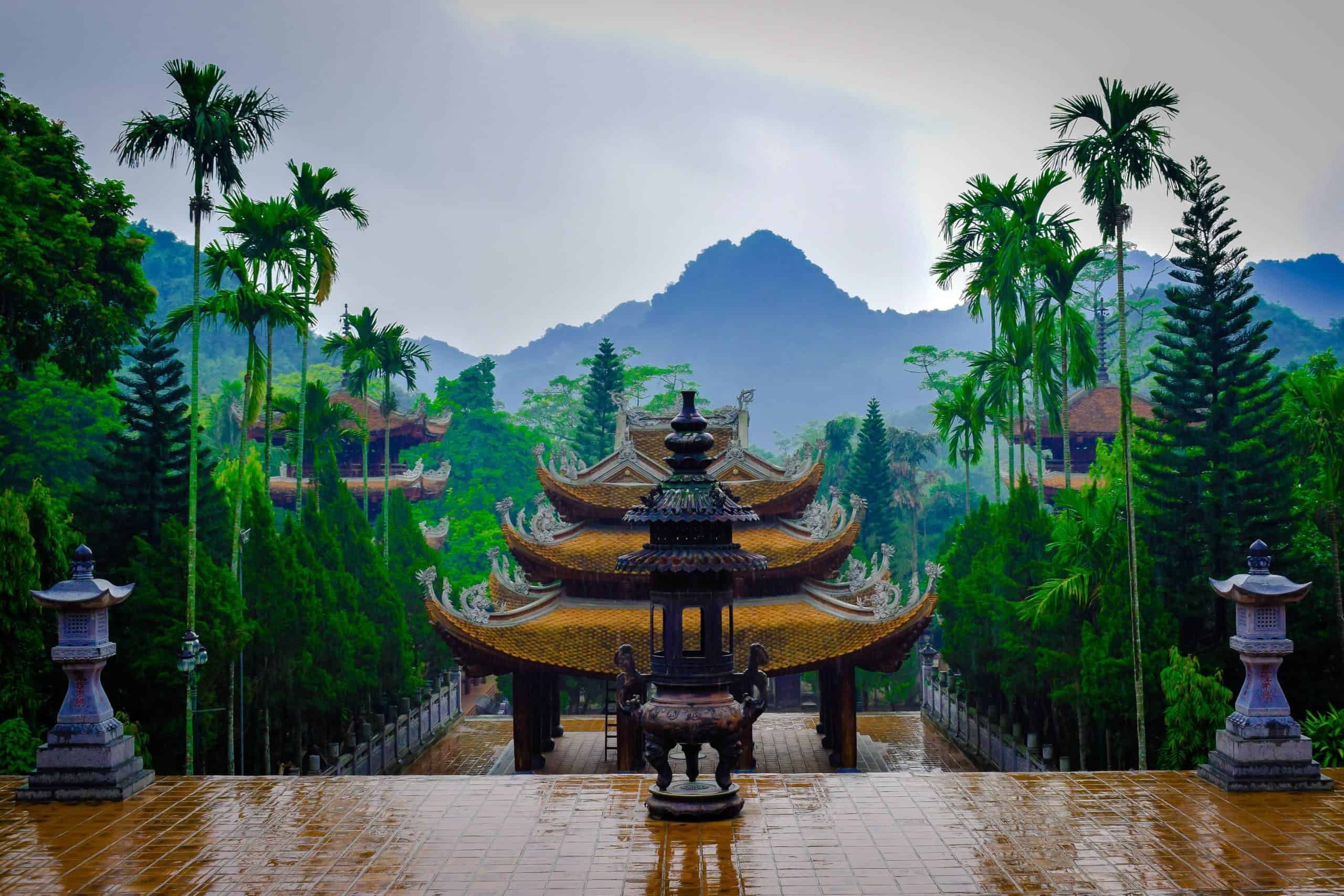
Highlights: The 500 Arhat statues corridor is mesmerizing—each statue unique with different facial expressions and poses. The ancient pagoda section (over 1,000 years old) built into caves offers contrast with the modern complex. The Bao Thap (13-story stupa) provides panoramic views of the surrounding limestone mountains. The giant bronze bell (36 tons) is believed to carry prayers across the land.
Time needed: 3-4 hours minimum to see the main highlights. You could easily spend a full day exploring every temple and shrine. Consider the electric car (60,000 VND roundtrip) as walking the entire complex requires serious stamina.
Best for: People who want to experience Vietnamese Buddhism’s grand scale, photography enthusiasts (the architecture is stunning from every angle), and anyone interested in seeing record-breaking religious sites. This is less intimate than smaller pagodas but more impressive in scope.
Practical info: Free complex entry, but stupa climb costs 50,000 VND ($2). Electric car recommended. Located 95 km south of Hanoi—easy to combine with Trang An or Tam Coc in Ninh Binh. Avoid visiting in peak summer heat (the walking is exhausting). Best months: January-March and October-December.
5. Thien Mu Pagoda (Hue)
Why visit: This is the unofficial symbol of Hue and one of Vietnam’s most photographed pagodas. The seven-story Phuoc Duyen Tower overlooking the Perfume River creates one of Vietnam’s most iconic scenes. The pagoda also holds modern historical significance related to the Buddhist crisis of the 1960s.
Highlights: The seven-story octagonal tower (each story represents a reincarnation of Buddha) is stunning from every angle. The riverside setting provides beautiful views, especially at sunset. The Austin car that monk Thich Quang Duc drove to Saigon before his self-immolation protest in 1963 is displayed here—a sobering reminder of Vietnam’s complex history.
Time needed: 1-1.5 hours including time to explore the gardens and enjoy the river views. Add 30 minutes if you take a dragon boat from Hue city center.
Best for: History enthusiasts (both ancient and modern), photographers (the tower and river create perfect compositions), and anyone wanting to understand Vietnam’s Buddhist heritage. The combination of beauty and historical gravity makes this deeply meaningful.
Practical info: Free entry. Open 7:30 AM-5:30 PM daily. Located 5 km west of Hue city center on Ha Khe Hill. You can reach by taxi, motorbike, bicycle, or take a dragon boat along the Perfume River (more atmospheric but more expensive). Visit early morning (7:30-8:00 AM) to avoid crowds and heat.
6. Linh Ung Pagoda (Da Nang – Son Tra Peninsula)
Why visit: The 67-meter Lady Buddha statue (tallest in Vietnam) visible from across Da Nang provides the “wow factor.” The coastal location on Son Tra Peninsula combines spiritual tourism with stunning ocean views and mountain scenery. This is one of Vietnam’s most photogenic pagodas.
Highlights: The Lady Buddha statue sits on a lotus-shaped foundation containing 17 floors with 21 Buddha statues on each floor—you can enter and climb inside. The location 639 meters above sea level offers panoramic views of Da Nang city, coastline, and East Sea. The pagoda features beautiful architecture blending traditional Vietnamese style with modern elements.
Time needed: 1.5-2 hours including time to photograph the statue from multiple angles and enjoy the views.
Best for: Photography (the statue against ocean backdrop is stunning), families (the grounds are spacious and child-friendly), and anyone wanting to combine beach/ocean views with cultural tourism. The modern, well-maintained facilities make this accessible for all visitors.
Practical info: Free entry. Open 6:00 AM-9:00 PM daily. Located 10 km northeast of Da Nang city center on Son Tra Peninsula. Easily reached by taxi, Grab, or motorbike. Can be combined with Son Tra Nature Reserve for wildlife spotting (red-shanked douc langur monkeys). Bring wide-angle lens for photography—the statue is enormous and difficult to frame from close up.
7. Bich Dong Pagoda (Ninh Binh)
Why visit: This “hidden gem” offers dramatic scenery without the crowds of more famous sites. The three-level pagoda built into a limestone mountain cave creates a unique architectural experience. The surrounding karst landscape rivals Ha Long Bay in beauty.
Highlights: The pagoda’s three levels are named Lower, Middle, and Upper—you climb through cave passages to reach each level. The mountain setting and cave architecture create an adventure atmosphere. The surrounding rice paddies and limestone peaks provide incredible photo opportunities, especially during green rice season (May-June).
Time needed: 1 hour for the pagoda complex. Add 30-60 minutes if you want to explore the surrounding area or climb to viewpoints.
Best for: Adventure seekers who want nature and culture combined, photography enthusiasts (the landscape is stunning), and travelers seeking authentic experiences without mass tourism. This feels more “discovered” than heavily-touristed sites.
Practical info: Free entry (only parking fees: 5,000 VND bicycles, 10,000 VND motorbikes). Open 24 hours but best visited during daylight. Located 7 km from Ninh Binh city center—easily reached by bicycle, motorbike, or taxi. Perfect to combine with Tam Coc boat tour (2 km away). Wear good shoes as there are stairs and uneven cave floors.
8. Yen Tu Pagoda (Quang Ninh)
Why visit: This is Vietnam’s most important pilgrimage site, located at the peak of Yen Tu Mountain where King Tran Nhan Tong founded the Truc Lam Zen Buddhist sect. The spiritual significance is enormous, and the journey to reach it—either hiking or cable car through clouds—creates a mystical experience.
Highlights: The entire pagoda and its artifacts are made of copper, including Buddha statues, bells, and the “never-dry well.” The cloud-covered mountain setting creates an otherworldly atmosphere. The pilgrimage journey is part of the spiritual experience. The views from the summit are breathtaking.
Time needed: Full day (6-8 hours). The hike from base to summit takes 3-4 hours. Cable car reduces this to 1 hour but you still need to walk the final portion. Factor in time to descend and explore.
Best for: Spiritual seekers, pilgrims (this is a serious Buddhist pilgrimage site, not just tourism), hikers who want physical challenge with cultural reward, and anyone wanting an authentic Vietnamese religious experience. This is more demanding than other pagodas on this list but also more meaningful.
Practical info: Free entry but cable car costs extra. Located 50 km from Ha Long City in Quang Ninh Province. Best visited January-March during the Yen Tu Festival, but expect large crowds of pilgrims. Bring warm layers (it’s cold at the summit), water, and snacks. Proper hiking shoes essential. Not recommended for people with mobility issues or heart conditions—this is a challenging climb even with the cable car.
9. Giac Lam Pagoda (Ho Chi Minh City)
Why visit: As Ho Chi Minh City’s oldest pagoda (over 300 years), Giac Lam offers authentic atmosphere without the tourist crowds that plague central HCMC sites. The traditional Vietnamese-Chinese architecture is beautifully preserved, and you’re likely to be one of few foreigners visiting.
Highlights: The 32-meter stupa is impressive. The ancient woodwork, carved pillars, and traditional architecture showcase Vietnamese craftsmanship. The peaceful atmosphere despite being in a major city feels like a refuge. You’ll see actual local worshippers, not just tourists.
Time needed: 45 minutes to 1 hour. The complex isn’t huge, but the detailed architecture rewards slow exploration.
Best for: Travelers seeking authentic experiences away from tourist circuits, architecture enthusiasts (the traditional design is beautiful), and anyone wanting to see how local Vietnamese actually use pagodas for worship. This is real, not curated for tourists.
Practical info: Free entry. Open 6:00 AM-6:00 PM daily. Located at 118 Lac Long Quan Street, District 10, about 3 km from central Ho Chi Minh City. Easy to reach by taxi or Grab. Can be combined with nearby Cholon (Chinatown) for a half-day itinerary. Far less crowded than Jade Emperor Pagoda or other central HCMC temples.
10. Jade Emperor Pagoda (Ho Chi Minh City)
Why visit: This ornate Taoist-Buddhist pagoda showcases elaborate Chinese-Vietnamese architecture with intricate carvings, statues, and decorations. It gained international attention when President Barack Obama visited in 2016, but it was already popular among locals for decades.
Highlights: The detailed wood carvings and colorful statues representing Taoist and Buddhist deities are stunning. The turtle pond adds a peaceful natural element. The interior chambers are filled with incense smoke, creating atmospheric lighting for photography. The building blends multiple Asian spiritual traditions.
Time needed: 30-45 minutes. The complex is relatively compact, so you can see everything without rushing.
Best for: City-based travelers (it’s centrally located in District 1), those interested in Chinese-Vietnamese cultural fusion, and visitors who want an easily accessible cultural experience between other Ho Chi Minh City activities. Perfect for a morning or afternoon addition to your city itinerary.
Practical info: Free entry. Open 6:00 AM-6:00 PM daily. Located at 73 Mai Thi Luu Street, District 1, walking distance from central hotels. Gets crowded during Vietnamese holidays and on the 1st and 15th of lunar months. Photography is allowed but be respectful of worshippers. The neighborhood has good cafés and restaurants for before/after visits.
Practical Logistics for Visiting Pagodas
Planning the practical details correctly prevents problems and maximizes your enjoyment. Here’s everything you need to know about what to bring, transportation, and comfort considerations.
What to Bring: Essential Items
Appropriate clothing is non-negotiable. Pack long, lightweight pants or a maxi skirt. Bring a t-shirt or blouse with sleeves covering shoulders. Include a large scarf or shawl that can serve multiple purposes—emergency coverage, sun protection, air conditioning warmth, or even sitting on grass for picnics.
Small bills are crucial. Keep plenty of 20,000, 50,000, and 100,000 VND notes in your wallet. Donation boxes, small vendors, and taxi drivers often can’t change 500,000 VND notes. Having exact change prevents problems and speeds transactions.
Comfortable walking shoes that are easy to remove. You’ll be taking shoes off and putting them back on multiple times per pagoda visit. Slip-on sneakers, simple sandals, or athletic slides work perfectly. Avoid complicated lace-up boots, shoes with many buckles, or anything time-consuming to remove.
Socks provide comfort and hygiene. Temple floors can be scorching hot in summer (marble and stone absorb heat) or cold and dirty in winter. Socks protect your feet and show respect for cleanliness. Bring clean socks dedicated to temple visits.
What to Bring: Recommended Items
Sunscreen SPF 50+ is essential. Vietnam’s tropical sun is intense, and you’ll be outdoors moving between temple buildings. Apply 30 minutes before sun exposure and reapply every 2 hours. Don’t forget ears, neck, and tops of feet if wearing sandals.
A hat for outdoor areas. Wide-brimmed hats or baseball caps provide crucial sun protection in courtyards and walkways between buildings. Remember to remove them before entering prayer halls.
Water bottle keeps you hydrated. Bring a reusable bottle filled with water. Drink before entering sacred areas (you can’t drink inside), but stay hydrated throughout your visit. Dehydration happens quickly in Vietnam’s heat.
Small backpack or cross-body bag. You need something to carry your items, but it should be small enough to not be cumbersome. Cross-body bags are ideal for security. If using a backpack, wear it on your front in crowded areas to prevent pickpocketing.
Wet wipes or hand sanitizer. Bathrooms at pagodas vary widely in cleanliness and may lack soap. Hand sanitizer or wet wipes let you clean hands after using facilities, before eating, or after touching surfaces in crowded places.
Phone or camera for photography. Obviously you’ll want to document your visit, but bring fully charged devices and ideally a portable power bank. Photography in hot weather drains batteries faster than usual.
What to Leave Behind
Large backpacks are unnecessary. Most pagodas have storage areas if you’re traveling with luggage, but it’s better to leave large bags at your hotel. They’re cumbersome in crowded spaces, make shoe removal difficult, and mark you as a target for theft.
Valuables should stay in hotel safes. Don’t carry your passport (photocopy is sufficient for most situations), expensive jewelry, large amounts of cash, or anything you couldn’t afford to lose. The safest item is the one you didn’t bring.
Offensive t-shirts are inappropriate. Anything with political slogans, controversial statements, offensive images, or inappropriate humor should stay at the hotel. Plain, neutral clothing shows respect for the sacred space.
Strong perfume or cologne can be disruptive. In the close quarters of prayer halls, strong fragrances bother other visitors and can be disrespectful during meditation. Skip the perfume on pagoda visiting days.
Transportation Options: City Pagodas
Grab app is your best transportation option for pagodas in Hanoi, Ho Chi Minh City, and Da Nang. Download the app before your trip, add a payment method, and use it like Uber. The price is calculated upfront, the driver is verified, and you avoid taxi scams entirely. Grab bikes are cheaper for solo travelers; Grab cars better for groups.
Walking works for many city pagodas. In Hanoi, you can walk between One Pillar Pagoda, Ho Chi Minh Mausoleum complex, and other central sites. In Ho Chi Minh City’s District 1, walking is pleasant in early morning before heat. Walking lets you experience local neighborhoods.
Reputable taxi companies are safe if you avoid Grab. Use only these companies: Mai Linh (green cars with clear branding) or Vinasun (white cars). Verify the taxi sign and phone number match the company. Insist the meter is turned on before driving. Screenshot the route on Google Maps and follow along.
Organized tours provide convenience for visiting multiple pagodas in one day. Tours include transportation, guide, entrance fees, and sometimes lunch. They’re more expensive than independent travel but eliminate logistics stress. Book through your hotel or reputable platforms like Klook or GetYourGuide.
Transportation Options: Remote Pagodas
Day tours from major cities are most convenient for remote pagodas like Perfume Pagoda, Bai Dinh, or Yen Tu. Tours typically cost $40-$70 USD and include hotel pickup/dropoff, transportation, English-speaking guide, entrance fees, and lunch. This eliminates the stress of navigation, language barriers, and timing.
Private drivers offer more flexibility than group tours. Book through your hotel—they’ll arrange a car and driver for the day. More expensive (expect $80-$120 for full day) but you control timing, stops, and pace. Perfect for photographers who want to wait for good light or families with specific needs.
Public buses are the budget option but require research. Vietnam’s bus system is extensive, but routes and schedules can be confusing for foreigners. Language barriers make this challenging. Budget 50% more time than a private vehicle would take. Only recommended for experienced travelers comfortable with uncertainty.
Motorbike rental is for experienced riders ONLY. Vietnam’s traffic is chaotic, aggressive, and dangerous. Foreigners die in motorbike accidents every year. If you’re not an experienced motorcyclist comfortable in heavy Asian traffic, do not rent a motorbike. The savings aren’t worth the risk. If you do rent, always wear a helmet, buy insurance, photograph the bike’s condition before leaving, and never ride after drinking alcohol.
Duration Recommendations
Small city pagodas require 30-45 minutes. One Pillar Pagoda, Jade Emperor Pagoda, or Quan Thanh Temple can be seen thoroughly in under an hour. Don’t rush, but you don’t need to allocate half your day.
Medium pagoda complexes need 1-2 hours. Tran Quoc Pagoda, Thien Mu Pagoda, or Linh Ung Pagoda deserve 1-2 hours to fully appreciate. This includes time for photography, sitting peacefully, and exploring grounds beyond just the main temple.
Large complexes demand 3-4 hours minimum. Bai Dinh Pagoda, Perfume Pagoda (not including boat ride), or extensive temple complexes require half a day. Trying to rush these results in exhaustion and missing important areas.
Full-day experiences are journeys. Perfume Pagoda including boat ride, Yen Tu Pagoda including hiking or cable car, or multi-pagoda tours easily consume 6-8 hours. Plan these as day trips from your base city.
Never try to visit more than 2-3 pagodas in one day. Quality over quantity. Pagoda fatigue is real—after 3-4 hours of temples, everything blurs together. Two thoroughly enjoyed pagodas create better memories than five rushed visits. Factor in travel time between sites, meal breaks, and rest periods.
Photography Tips
Golden hour provides the best lighting. The first hour after sunrise and the last hour before sunset offer soft, warm light that makes pagodas glow beautifully. Harsh midday sun creates ugly shadows and blown-out highlights. Plan your visits around light quality if photography is important.
Respectful composition matters. Don’t pose disrespectfully near Buddha statues (no silly faces, no mimicking prayer positions as jokes, no turning your back to sacred images for selfies). Keep a respectful distance from altars and religious ceremonies. Your photos should show cultural appreciation, not mockery.
Capture details beyond wide shots. While you’ll want overall architectural photos, the intricate details make pagodas special. Focus on carved decorations, incense coils, offerings, texture of aged wood, patterns in tile work, and small Buddha statues. These close-ups often tell better stories than wide landscape shots.
Include context and surroundings. A pagoda isn’t just the building—it’s the natural setting, the mountains or water behind it, the gardens surrounding it. Compose shots that show the relationship between architecture and landscape.
Ask permission before photographing people. If you want photos of monks, nuns, or worshippers, make eye contact, point to your camera, and wait for confirmation. Respect “no” immediately. Never photograph people praying without permission—it’s invasive and disrespectful.
Bring extra batteries or power bank. Camera and phone batteries drain quickly in hot weather. Nothing worse than missing great photos because your device died. Charge everything fully the night before and bring backup power.
Clean your lens frequently. Vietnam’s humidity causes lenses to fog and collect moisture. Bring a lens cloth and wipe frequently. Check for smudges before important shots.
Health & Comfort Considerations
Hydrate before visiting since you can’t drink inside sacred areas. Drink a full bottle of water 30 minutes before entering a pagoda. Bring water with you to drink between temple buildings in outdoor areas.
Use bathrooms before entering. Pagoda bathroom facilities vary from modern and clean to basic pit toilets. Don’t wait until you’re desperate. Use your hotel bathroom before leaving or stop at a café nearby.
Apply sunscreen 30 minutes before sun exposure. Sunscreen needs time to absorb and become effective. Apply at your hotel before leaving, not once you arrive. Vietnam’s tropical sun causes serious burns quickly.
Bring an umbrella for dual-purpose protection. A compact umbrella shields you from both intense sun and sudden rain showers (common in summer months). Vietnamese people commonly use umbrellas as sun protection.
Wear breathable, loose-fitting fabrics. Tight clothing becomes unbearable in Vietnam’s heat and humidity. Light cotton or moisture-wicking synthetic fabrics keep you cooler. Avoid jeans if possible—they’re hot and take forever to dry if you get caught in rain.
Take regular breaks in shade. Don’t try to power through entire complexes without rest. Find shaded benches, sit for 5-10 minutes, cool down, and recover. Heat exhaustion develops gradually—prevent it rather than treating it.
Know your physical limits. Some pagodas require significant walking, stairs, or hiking. Bai Dinh involves 2-3 hours of walking. Yen Tu requires mountain climbing. Be honest about your fitness level and choose appropriate sites. Don’t attempt challenging visits if you have heart conditions, mobility issues, or are significantly overweight without consulting a doctor first.
Watch for signs of heat exhaustion. Symptoms include dizziness, nausea, excessive sweating or suddenly stopped sweating, confusion, and rapid heartbeat. If you experience these, immediately find shade, sit down, drink water, and consider seeking medical help. Heat stroke is serious and can be life-threatening.
Frequently Asked Questions
These are the real questions international tourists ask repeatedly. Here are clear, honest answers.
Q: Can I visit pagodas during menstruation?
A: Yes, this is generally accepted at Vietnamese pagodas. Buddhism doesn’t view menstruation as spiritually impure. Major tourist pagodas welcome all visitors regardless of menstrual status.
Some extremely traditional or rural pagodas may have old restrictions, but these are rare and increasingly outdated. At 95% of Vietnamese pagodas, menstruation is not an issue.
If you’re concerned about a specific pagoda, ask at your hotel or check recent tourist reviews online. But in general, proceed with confidence that you’re welcome.
Q: Are pagodas open during Tet (Vietnamese New Year)?
A: Yes, pagodas remain open during Tet and actually see their highest visitor numbers of the year. Vietnamese people flood to pagodas during Tet to pray for good fortune in the new year.
However, expect EXTREME crowds—sometimes so dense you can barely move. Parking is overwhelmed, bathrooms have long lines, and donation boxes overflow. Opening hours may be extended (some pagodas stay open 24 hours during Tet), but facilities are at maximum capacity.
Transportation is difficult during Tet as buses, trains, and flights are fully booked. Book everything months in advance if you visit during this period.
If you want the cultural experience, Tet is incredible. If you want peaceful contemplation, avoid Tet entirely.
Q: Can I bring children to pagodas?
A: Yes, children are welcome at Vietnamese pagodas. However, parents must supervise closely and ensure children follow the same dress code and etiquette rules as adults.
Teach children to be quiet and respectful before entering. Loud running, screaming, or playing is inappropriate in sacred spaces. Many pagodas have peaceful gardens where children can move more freely between visiting indoor areas.
Avoid bringing infants or toddlers during their typical nap times as their crying disrupts others’ meditation and prayer. Baby carriers are better than strollers for navigating stairs and uneven surfaces.
Older children (8+) can have meaningful experiences at pagodas if you explain the cultural significance and expectations beforehand.
Q: What if I forgot appropriate clothing?
A: You have several options:
Some major tourist pagodas (particularly Ngoc Son Temple in Hanoi) provide temporary wraps or long shirts, but availability is limited and they run out during busy periods.
Purchase an inexpensive scarf at nearby markets. Street vendors near popular pagodas sell scarves for 20,000-50,000 VND ($1-$2). This is your cheapest and most reliable solution.
Many hotels will lend scarves or wraps to guests if you explain you’re visiting pagodas. Ask at reception.
Best solution: Plan ahead and carry a large scarf or shawl in your day bag at all times. This solves unexpected clothing problems instantly.
Q: Is photography always allowed?
A: Photography is usually allowed in outdoor courtyards and temple grounds, but rules vary for indoor prayer halls.
Look for “No Photography” signs (camera icon with a line through it). These are often posted at shrine entrances. When signs exist, respect them absolutely.
Even when photography is technically allowed, always ask permission before photographing monks, nuns, or people engaged in prayer. Respect “no” immediately without argument.
Never use flash near Buddha statues, during ceremonies, or when people are praying. Flash is disruptive and disrespectful.
If you’re unsure whether photography is allowed, observe what other visitors are doing. If you don’t see anyone else taking photos inside, don’t be the first.
Q: How much should I donate?
A: Donations are completely voluntary. There’s no required amount, minimum, or expectation.
Common donation amounts are 20,000-50,000 VND ($1-$2 USD), but even 5,000 VND is perfectly acceptable. Many Vietnamese visitors donate amounts that would seem like pocket change to international tourists—and that’s fine.
Donate what feels comfortable for you. The act of giving matters more than the amount.
Always use official donation boxes inside temples. These are clearly marked, permanently installed boxes (usually locked wooden boxes near altars). Never give money to individuals approaching you outside pagodas.
Q: Can I visit multiple pagodas in one day?
A: Yes, but limit yourself to 2-3 maximum. More than that results in “temple fatigue” where everything blurs together and you can’t appreciate individual sites.
Factor in travel time between pagodas. In Hanoi, you might manage One Pillar Pagoda, Tran Quoc Pagoda, and Quan Thanh Temple in one day as they’re relatively close. But visiting Bai Dinh Pagoda (Ninh Binh) requires a full day by itself.
Quality over quantity. Two thoroughly enjoyed pagodas create better memories than five rushed visits where you barely remember which was which.
Consider organizing multi-pagoda days by region: “Hanoi City Pagodas Day,” “Ninh Binh Pagodas Day,” etc. This minimizes travel time and maximizes actual visiting time.
Q: Do I need a guide?
A: Not essential for major tourist pagodas. Sites like One Pillar Pagoda, Tran Quoc Pagoda, Linh Ung Pagoda, and others have excellent English signage, information boards, and sometimes QR codes linking to detailed information.
Guides are helpful if you want to understand deeper cultural, historical, and religious significance beyond what signs provide. They can explain rituals, answer questions about Buddhist practice, and point out details you’d otherwise miss.
Hire guides only from official ticket offices, never from individuals approaching you outside pagodas. Official guides wear identification and have clear published rates (typically 300,000-550,000 VND for 2-3 hour tours).
For complex sites like Perfume Pagoda or Bai Dinh, guides provide more value by navigating the massive complexes efficiently and explaining the significance of different areas.
Q: Are pagodas wheelchair accessible?
A: Unfortunately, most historic pagodas have stairs, uneven surfaces, and are not wheelchair accessible. Vietnamese pagodas were built centuries before accessibility considerations.
Modern pagodas like Bai Dinh have better accessibility with some paved paths, ramps, and the option of electric cars for mobility-impaired visitors. However, even modern sites have areas reachable only by stairs.
Linh Ung Pagoda (Da Nang) has relatively good accessibility due to its modern construction and flat, paved grounds, though some areas still have stairs.
If you use a wheelchair or have significant mobility challenges, research specific pagodas before visiting. Contact tour operators who can advise on accessibility and potentially arrange special accommodations.
Electric wheelchairs with good battery life handle the distances better than manual wheelchairs at large complexes.
Q: Can I visit pagodas during Buddhist ceremonies?
A: Yes, but with extra respectfulness and quietness. Watching Buddhist ceremonies can be culturally enriching and provides insight into living religious practice.
Stand at the back or sides of prayer halls, never in the center or front. Don’t walk in front of people who are praying or participating in ceremonies.
Keep absolutely silent. Turn off phone ringers completely. Don’t take photos during active ceremonies unless you’ve seen others doing so and it appears acceptable.
The 1st and 15th of each lunar month are primary Buddhist worship days when ceremonies are most common. These days offer authentic cultural experiences but are also very crowded.
If a ceremony is happening and space is limited, consider returning at a different time rather than crowding the area and disrupting worshippers.
Conclusion
Vietnamese pagodas offer some of Southeast Asia’s most rewarding cultural experiences—combining stunning architecture, spiritual significance, and natural beauty. From Hanoi’s ancient Tran Quoc Pagoda to Da Nang’s towering Lady Buddha statue to Ninh Binh’s massive Bai Dinh complex, each site provides unique insights into Vietnam’s Buddhist heritage.
Success visiting pagodas comes down to three essentials: dress modestly with covered shoulders and knees, visit early morning (7:30-8:00 AM) to avoid crowds and heat, and stay alert for common scams particularly fake monks approaching outside popular pagodas.
Most pagodas are completely free. Respect local customs by removing shoes before prayer halls, staying quiet in sacred spaces, and never pointing at Buddha statues. Use official donation boxes inside temples only—never give money to individuals approaching you outside.
The optimal visiting season is January-March when weather is mild and dry. Avoid summer months (June-August) when heat becomes oppressive and crowds reach maximum capacity. Always use reputable transportation like Grab app or Mai Linh/Vinasun taxis to avoid scams.
Remember that these are active places of worship, not just tourist attractions. Local Buddhists use these spaces daily for meditation, prayer, and spiritual practice. Your respectful behavior honors their religious traditions while enriching your own travel experience.
With proper planning, appropriate clothing, safety awareness, and cultural sensitivity, visiting Vietnamese pagodas becomes a highlight of any Vietnam trip—offering peaceful contemplation, stunning photography opportunities, and genuine insights into the beliefs that shape Vietnamese culture.