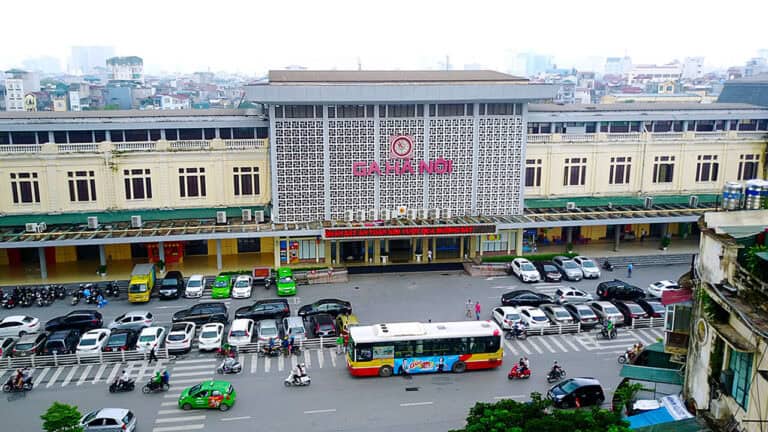
Quick Essential Information
Hanoi Railway Station (Ga Hà Nội) at 120 Le Duan Street serves as Vietnam’s main northern railway hub, connecting travelers to destinations across the country. The station operates two distinct sections: Station A handles southbound Reunification Express trains to Ho Chi Minh City, Da Nang, and Hue, while Station B manages northbound routes to Sapa and Lao Cai. From Hanoi’s Old Quarter, reach the station by Grab ride (VND 40,000-80,000, approximately 10 minutes) or walk 2 kilometers in 20 minutes.
Purchase tickets at Counter #2 where English-speaking staff assist foreigners daily from 7:30 AM to 7:30 PM, accepting both Vietnamese Dong and US Dollars.
Alternative booking options include online platforms dsvn.vn, Baolau, and 12go.asia. Arrive 30-45 minutes before departure to account for unpredictable Hanoi traffic. Luggage storage operates via automatic lockers at VND 50,000 per 4-hour block WikipediaJungle Boss Tours – avoid station staff offering per-item storage services, as this represents a common overcharging scheme. Early morning arrivals should exclusively use Grab app or Mai Linh taxi company to avoid meter manipulation by unauthorized drivers.
IMPORTANT DISCLAIMER
This guide compiles verified information from Vietnam Railways official sources (dsvn.vn), licensed travel agencies, and documented traveler experiences as of November 2025. For real-time official updates, schedule changes, or booking assistance, contact Vietnam Railways directly at 1900 636 212 or visit dsvn.vn. Kimconcept specializes in professional printing services and has compiled this travel guide through comprehensive research of authoritative sources. We recommend confirming all details with official channels before travel.
How to Get to Hanoi Railway Station
From Old Quarter (Most Common Starting Point)
The station sits approximately 2 kilometers from central Old Quarter Jungle Boss Tours, offering multiple transportation options based on your luggage situation and budget.
Option 1: Grab Ride (Recommended)
- Cost: VND 40,000-80,000 ($2-4 USD)
- Duration: 10-15 minutes in normal traffic
- Booking: Download Grab app, enter “Hanoi Railway Station” or “Ga Hà Nội”
- Specify: Tell driver “Station A” (south trains) or “Station B” (north trains) to avoid confusion
- Critical tip: Reject any Grab “attendants” at airport or station offering direct booking – they overcharge significantly Jungle Boss Tours
Option 2: Traditional Taxi
- Recommended company: Mai Linh (green-and-white vehicles)
- Cost: Similar to Grab (VND 50,000-100,000)
- Safety tip: Insist meter starts at zero and displays running fare Jungle Boss ToursLocal Vietnam – dodgy meters increase rapidly
- Avoid: Unmarked taxis, especially during early morning hours (4-6 AM)
Option 3: Walking
- Duration: 20-25 minutes
- Route: Head south on Le Duan Street from Hoan Kiem Lake area
- Feasibility: Only practical with small backpack or carry-on
- Not recommended: If carrying standard luggage or traveling in hot/humid weather
Option 4: Local Bus
- Routes: #1, #32, #34 stop near station
- Cost: VND 5,000 per person
- Challenge: Language barriers make navigation difficult for foreigners Tokyo to Sapporo Train
- Verdict: Skip this option unless you’re experienced with Hanoi public transport
From Noi Bai International Airport
Taxi journey takes 45-60 minutes depending on traffic conditions Jungle Boss Tours, particularly during evening rush hours (5-7 PM).
Transportation Options:
- Grab: VND 400,000-500,000 ($18-22 USD) – most reliable
- Airport Taxi: VND 450,000-550,000 ($20-25 USD)
- Shared Minibus: VND 150,000-200,000 ($7-9 USD) but multiple stops extend travel time
Timing Considerations:
- Allow 75-90 minutes total including waiting for ride
- Morning traffic (7-9 AM): Add 15-20 minutes
- Evening rush (5-7 PM): Add 20-30 minutes
- Account for potential delays, border security checks, and baggage collection Local Vietnam
Understanding Station A vs Station B: Critical Differences
Hanoi Railway Station comprises two distinct sections serving different routes Vietnam Trains. Entering the wrong section causes significant stress, especially with limited time before departure.
Station A (Main Terminal – Le Duan Street)
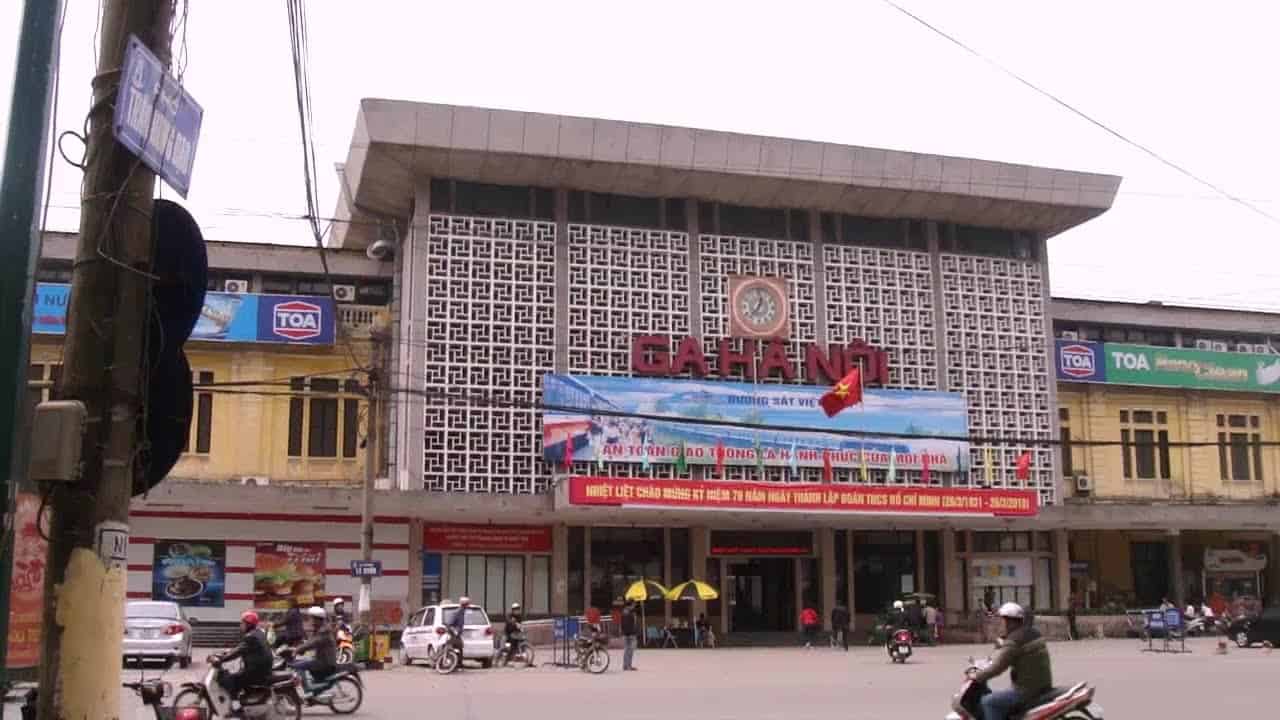
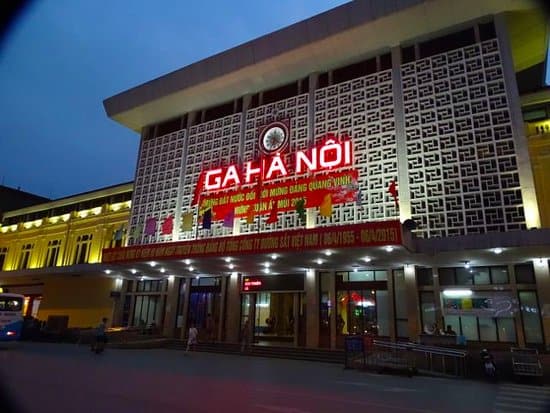
Location: 120 Le Duan Street – the large grey concrete building clearly marked “Ga Ha Noi”
Serves:
- All southbound Reunification Express trains
- Destinations: Ho Chi Minh City (Saigon), Da Nang, Hue, Nha Trang, Ninh Binh
- Train codes: SE1, SE2, SE3, SE4, SE5, SE6, SE7, SE8, SE19, SE21
Facilities Available:
- Multiple ticket counters (including international Counter #2)
- Lotteria fast food restaurant
- Waiting halls with electronic displays
- ATMs and restrooms
- Luggage storage lockers
- WiFi access
Operating Hours: 8:00 AM – 10:30 PM daily
Station B (Tran Quy Cap Street)
Location: Cross the level crossing north of Station A, follow road left to entrance
Serves:
- All northbound routes to mountains and Chinese border
- Destinations: Lao Cai (for Sapa), Haiphong, Dong Dang, Lang Son
- Train codes: SP1, SP2, SP3, SP4, SP7, SP8
Facilities Available:
- Basic ticket counter
- Small waiting shed
- Limited food vendors outside
- Fewer amenities than Station A
Operating Hours: 5:10-6:00 AM, 8:00-11:30 AM, 2:00-5:30 PM
Quick Reference Table
| Feature | Station A | Station B |
|---|---|---|
| Main entrance | 120 Le Duan Street | Tran Quy Cap Street |
| Routes | Southbound | Northbound |
| Popular destinations | HCMC, Da Nang, Hue | Sapa, Haiphong |
| Facilities | Extensive | Basic |
| Size | Large, multi-level | Small, compact |
| English support | Counter #2 available | Limited |
Buying Train Tickets: Complete Walkthrough
Method 1: At The Station (Same-Day or Short Notice)
Station A Ticket Counter Process:
- Enter main doors under “Ga Ha Noi” sign
- Locate ticket office on left side of building
- Check for queue system: During busy periods, collect numbered ticket from machine Vietnam Trains at entrance
- Wait for your number to appear on electronic screen
- Approach Counter #2 (international window) for English service
- Operating hours: 7:30 AM-12:00 PM and 1:30 PM-7:30 PM Jungle Boss Tours
- Outside these hours, use other counters (Vietnamese only)
What to Prepare:
- Passport or ID (required for ticket issuance)
- Destination written in Vietnamese (show to staff)
- Preferred departure date and time
- Seat class preference (hard seat, soft seat, hard sleeper, soft sleeper)
- Cash in VND or USD (credit cards rarely accepted)
Realistic Expectations:
- Booking same-day overnight trains rarely secures sleeper berths Vietnam Trains
- Popular routes sell out 2-3 days in advance during peak season
- Queue times: 15-30 minutes during normal periods, 45-60 minutes during Tet holiday
Pro Tip for Communication Barrier: Write destination, travel time, and seat preference in Vietnamese Hanoioldquarterguide on paper to streamline the process significantly.
Method 2: Online Booking (Strongly Recommended)
Advantages:
- Book 60-90 days in advance for popular routes
- Compare prices and seat availability across multiple trains
- Receive e-tickets immediately to email
- Skip ticket counter queues entirely
- Essential for luxury tourist trains to Sapa, which lack station counters Jackfruit Adventure
Recommended Booking Platforms:
Option A: Vietnam Railways Official (dsvn.vn)
- Direct from national railway operator
- Lowest prices (no commission)
- Interface can be challenging for foreigners
- Vietnamese Dong payment required
Option B: Baolau.com
- User-friendly English interface
- Accepts international credit cards
- Small service fee (2-3%)
- Instant confirmation and e-tickets
- Excellent customer support
Option C: 12go.asia
- Wide selection of trains and buses
- Compare multiple operators
- Slightly higher fees than Baolau
- Reliable booking confirmation
Booking Timeline:
- Booking opens 60 days before departure for end-to-end journeys like Hanoi-Saigon The Man in Seat 61
- Shorter segments open later (2-4 weeks advance)
- Tet holiday period: Book immediately when tickets release
- Normal periods: 5-7 days advance sufficient for most routes
Method 3: Through Travel Agency
When to Use:
- Want complete package (train + hotel + transfers)
- Uncomfortable with online booking
- Need assistance with complex itinerary
- Willing to pay 5-10% commission for convenience
Reputable Agencies:
- Hotel concierge services
- Licensed tour operators in Old Quarter
- Hanoisapatrain.com (Sapa-specific routes)
- Local Vietnam travel agencies
Tourist Train Voucher Exchange (Important!)
If you booked through an agent for tourist trains, exchange voucher at designated desk Local Vietnam before boarding:
Exchange Process:
- Arrive station 45-60 minutes before departure
- Look for “Pick Up Passengers” office (near waiting area)
- Show booking voucher and passport
- Receive actual paper ticket with berth number
- Proceed to waiting area
Tourist Train Operators:
- Fanxipan Express
- Sapaly Express
- Victoria Express
- Orient Express
- King Express
- Livitrans Express
Station Facilities & What to Expect
Available Services
Luggage Storage: Automatic locker system operates 24/7 on ground floor with 18 doors total RailDude
- 12 extra-large doors: 95 x 50 x 50 cm (fits 2 large backpacks)
- 6 large doors: Fits 2 medium suitcases
- Cost: VND 50,000 per 4-hour block
- Location: Right side of main hall (Station A) – blue lockers with yellow sign
- Payment: Accepts VND 10,000-500,000 notes
- Touch-screen interface with personalized PIN code RailDude
- CCTV surveillance 24/7
CRITICAL SCAM WARNING: Station staff may approach offering luggage storage in a back room, charging per item instead of per door RailDudeStack Exchange. This costs 3-5x more than automatic lockers. Politely decline and use automatic system only.
Food & Beverage:
- Lotteria fast food (Station A): Burgers, fries, soft drinks
- Private food vendors outside both stations serving inexpensive local dishes Vietnam Trains
- Platform vendors: Instant noodles, bottled water, snacks
- Limited options in Station B
Other Amenities:
- Free WiFi (limited speed and reliability)
- Multiple ATMs (VietcomBank, BIDV)
- Restrooms (varying cleanliness – bring tissue)
- Phone charging stations (limited availability)
- Information desk (Vietnamese language primarily)
What’s NOT Available
- No full-service restaurants
- No dedicated sleeping areas for long waits
- Limited seating during peak hours
- No shower facilities
- No dedicated prayer rooms
- No pharmacy or medical services on-site
Practical Solutions:
- For meals: Eat before arriving or bring food from nearby shops
- For long waits: Consider booking nearby hotel for few hours
- For medical needs: Hoan Kiem District Hospital 2km away
- For comfort items: Convenience stores within 500m walking distance
Navigating Your First Arrival: Step-by-Step
Scenario 1: Arriving to Catch a Train (Station A)
60 Minutes Before Departure:
- Arrive via Grab/taxi at main entrance (120 Le Duan)
- If carrying luggage and not boarding immediately: Use automatic lockers
- If have voucher: Find “Pick Up Passengers” office (right side of main hall)
- Exchange voucher for actual ticket
- Note your platform number on ticket
30 Minutes Before Departure: 6. Wait inside terminal building until shortly before train arrival Vietnam Trains 7. Watch electronic displays for your train number 8. Listen for announcements (Vietnamese only – watch screens carefully)
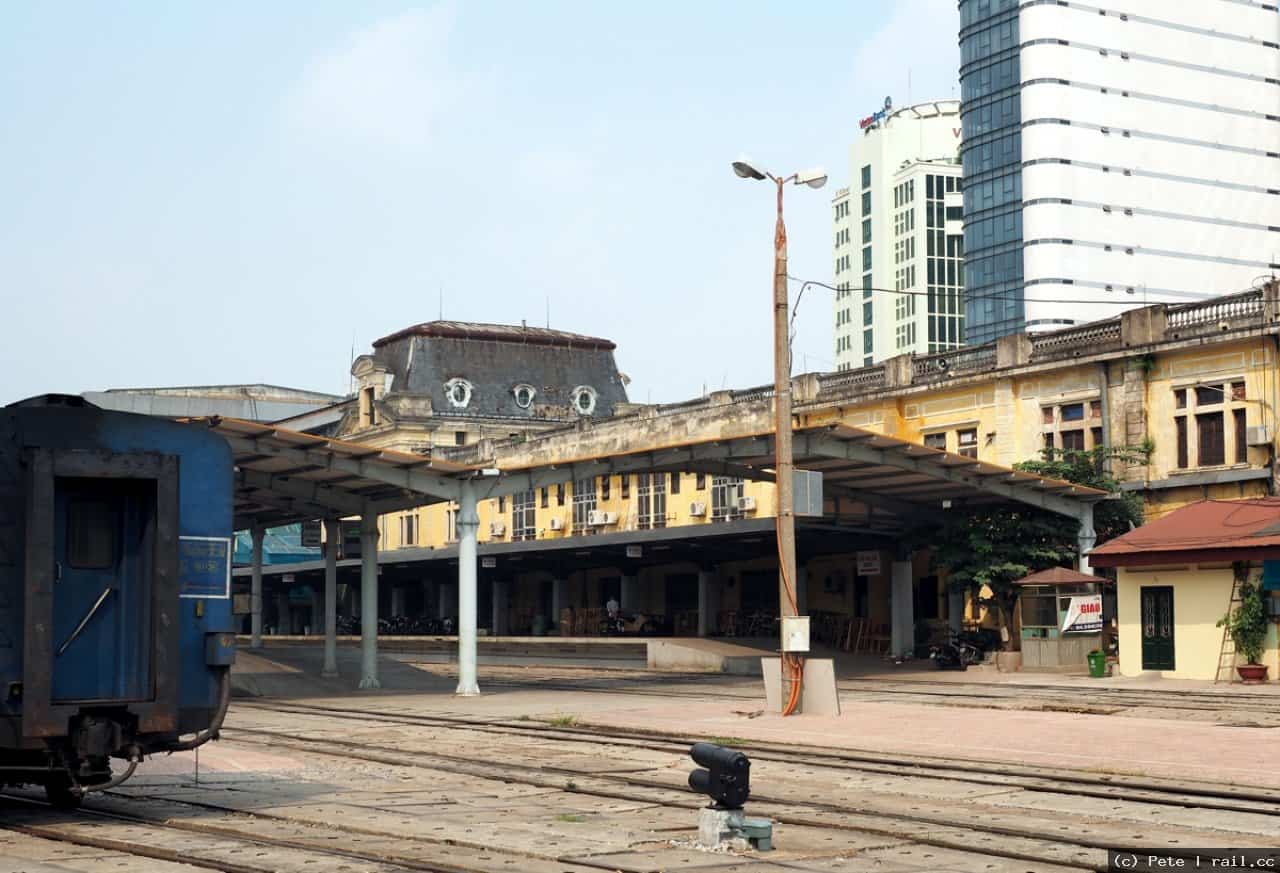
15 Minutes Before Departure: 9. Access to platforms opens via electronic ticket barriers Vietnam Trains 10. Show ticket to attendant 11. Cross tracks carefully to reach your platform 12. Find your carriage number (displayed on train exterior) 13. Board and locate your seat/berth number
Critical Warnings:
- Politely decline individuals offering bag assistance or ticket upgrades Sapa Nomad
- Keep ticket visible but secure
- Bring bottled water and snacks – platform vendors have limited choices Jungle Boss Tours
Scenario 2: Arriving on Early Morning Train
5:00-6:00 AM Arrival (Common for Sapa Trains):
- Exit platform through designated gates
- Avoid taxi touts immediately outside – they overcharge 200-300%
- Walk to street (50 meters from station exit)
- Book Grab ride via app OR look for Mai Linh green-white taxi
- Verify meter starts at zero if using traditional taxi
If You Have Several Hours Before Next Activity:
- Use automatic luggage storage (VND 50,000/4 hours)
- Walk to Hoan Kiem Lake (2km, 25 minutes)
- Find breakfast at nearby cafes (Pho Gia Truyen, 300m away)
- Rest at hotel if booked (many allow early check-in for fee)
Common Problems & Practical Solutions
Problem 1: Train Delayed or Cancelled
What Causes Delays:
- 15-minute delays are normal for Vietnam trains The Man in Seat 61
- Longer delays (1-2 hours) occur during emergencies or track maintenance
- Weather-related disruptions rare but possible
Immediate Actions:
- Check electronic displays for updated arrival/departure times
- Ask information desk for estimated delay duration
- If 2+ hour delay: Consider alternative transport
- Contact Vietnam Railways: 1900 636 212
Alternative Transport Options:
- Bus to same destination: Faster for some routes (Hanoi-Sapa: 5-6 hours)
- Limousine service: More expensive but reliable
- Flight: HCMC or Da Nang (if budget allows)
- Reschedule: Ticket offices may allow date changes with fee
Problem 2: Booked Wrong Station (A vs B)
You Arrive at Station A, Need Station B:
- Walking distance: 5-7 minutes
- Route: Exit Station A, cross level crossing north, turn left
- With heavy luggage: Take Grab (VND 20,000, 3 minutes)
- Time pressure: Inform taxi driver “Station B – Tran Quy Cap” urgently
You Arrive at Station B, Need Station A:
- Same route in reverse
- Station A is larger and easier to spot
Problem 3: Tickets Sold Out
Immediate Options:
- Check different train same day (6 daily trains south, 2-3 north)
- Check next day availability
- Consider bus alternative: Hanoi-Sapa takes about 6 hours Vietnam Weather
- Ask about waiting list (sometimes available)
- Check premium/luxury operators (higher price, better availability)
Prevention:
- Book 5-7 days advance during normal season
- Book 30-60 days advance for Tet holiday (late January/February)
- Check multiple booking platforms simultaneously
Problem 4: Language Barrier at Ticket Counter
Effective Communication Strategies:
- Write everything down in Vietnamese (use Google Translate beforehand):
- Destination (e.g., “Ga Sài Gòn”)
- Date (e.g., “15 tháng 11”)
- Class (e.g., “giường nằm mềm” = soft sleeper)
- Number of passengers
- Show ticket examples from booking websites
- Use Counter #2 during business hours for English support
- Point to schedule posters on walls showing train codes
- Have hotel staff call ticket office beforehand for complex bookings
Problem 5: Suspicious Activity or Scam Attempts
Common Scams:
- Luggage storage “helpers” charging per item
- Taxi drivers claiming meter is broken
- Ticket touts selling fake/inflated tickets
- “Officials” demanding unexpected fees
- Currency exchange at terrible rates
Protection Strategies:
- Use only official counters and automatic machines
- Pre-book Grab rides (payment through app prevents disputes)
- Keep small denomination notes for legitimate purchases
- If uncertain, ask uniformed railway police (tourist-friendly)
Emergency Contacts & Resources
Official Vietnam Railways
- Hotline: 1900 636 212
- Website: dsvn.vn
- Email: cskh@vr.com.vn
Station Information
- Hanoi Station A: 024 3942 3697
- Hanoi Station B: 024 3825 2628
Emergency Services
- Police: 113
- Ambulance: 115
- Fire Department: 114
Tourist Support
- Hanoi Tourist Information Center: 024 3926 3366
- Tourist Police: 024 3826 6140
Transport Alternatives
- Grab Support: In-app help center
- Mai Linh Taxi: 024 3822 2666
- Hanoi Airport: 024 3886 5047
Best Times to Visit & Seasonal Considerations
Avoid These Periods (If Possible)
Tet Holiday (Late January/February):
- Trains book out 30-60 days in advance
- Ticket prices increase 20-30%
- Stations extremely crowded
- Should pre-book as soon as booking opens The Man in Seat 61
- Many vendors closed during holiday
Vietnamese Public Holidays:
- April 30 (Reunification Day)
- May 1 (International Labor Day)
- September 2 (National Day)
- Book 2 weeks advance minimum
Optimal Travel Periods
Best Months:
- March-April: Pleasant weather, moderate crowds
- September-November: Cool temperatures, good visibility
- Avoid July-August: Peak tourist season, higher prices
Best Times of Day:
- Morning departures (6-9 AM): Less chaotic than evening
- Evening departures (9-11 PM): Good for overnight journeys
- Avoid 5-7 PM arrivals: Peak traffic to/from station
What to Do With Extra Time Near Station
If you arrive early or have a long wait between connections, these nearby attractions offer good options:
Hanoi Train Street (5 minutes walk)
- Narrow residential alley where trains pass
- Popular cafe spots inches from tracks
- Check train schedule for best viewing times
- Note: Periodically closed by authorities
Hoan Kiem Lake (25 minutes walk / 8 minutes Grab)
- Central Hanoi landmark
- Walking path around perimeter
- Ngoc Son Temple on island
- Street food vendors and cafes
Old Quarter (25 minutes walk / 10 minutes Grab)
- 36 ancient streets
- Shopping and street food
- Leave 60-90 minutes before train departure to return
Hoa Lo Prison Museum (15 minutes walk)
- Historical site from French colonial period
- Entry: VND 30,000
- Open: 8 AM – 5 PM daily
Frequently Asked Questions
Q1: Can I store luggage if I arrive early in the morning? Yes, automatic lockers operate 24/7 at VND 50,000 per 4-hour block. Located on right side of main hall in Station A.
Q2: How early should I arrive before my train? Arrive 30-45 minutes early to account for Hanoi traffic, ticket exchange (if needed), and platform navigation. Tourist trains requiring voucher exchange: arrive 60 minutes early.
Q3: Do trains have WiFi and charging ports? Most overnight sleeper trains have power outlets in cabins. WiFi availability is inconsistent. Download entertainment beforehand.
Q4: Can I bring food and drinks on the train? Yes, passengers commonly bring their own food. Trains have dining cars and vendors, but selection is limited.
Q5: Are there ATMs at the station? Yes, several ATMs in Station A main hall. Withdraw cash before boarding as on-board options are limited.
Q6: How do I know which platform my train uses? Platform numbers appear on electronic displays and your ticket. Staff direct passengers when access opens (usually 10-15 minutes before departure).
Q7: Can I change my ticket date? Vietnam Railways may allow changes with fees (typically 20-40% of ticket price). Contact booking agent or ticket counter with original ticket.
Q8: Is the station safe at night? Generally safe with security presence. Keep belongings secure and avoid isolated areas. Early morning arrivals (4-6 AM): be cautious with taxi selection.
Q9: Can foreigners buy tickets at the same price as locals? Yes, ticket prices are standardized for all passengers. Some tourist trains charge premium pricing but this is transparent.
Q10: How do I get to my hotel from the station? Grab ride is safest and most convenient (VND 40,000-150,000 depending on destination). Mai Linh taxi is reliable alternative.
Q11: Are there hotels near the station? Yes, numerous budget and mid-range hotels within 500m walking distance. Book in advance during peak season.
Q12: Can I check in luggage like an airport? No checked baggage system. You carry all luggage onto train and store near your seat/berth.
Q13: Do station staff speak English? Counter #2 (International Window) has English-speaking staff. Other counters and general staff have limited English.
Q14: Can I buy snacks and water at the station? Yes, Lotteria fast food, platform vendors, and street vendors outside both stations sell food and beverages.
Q15: What if I miss my train? Tickets are typically non-refundable. Visit ticket counter to inquire about rebooking on next available train (subject to availability and fees).
Final Preparation Checklist
Before You Leave Hotel:
- ☑ Confirm train number, departure time, and station (A or B)
- ☑ Print or download e-ticket to phone
- ☑ Prepare cash in small denominations (VND 10,000-50,000 notes)
- ☑ Download Grab app and add payment method
- ☑ Set alarm for departure – 2 hours (buffer for traffic)
- ☑ Pack snacks and water bottle
- ☑ Bring entertainment (books, downloaded movies, music)
What to Bring:
- ☑ Passport/ID (required for ticket verification)
- ☑ Booking voucher or e-ticket
- ☑ Phone charger and power bank
- ☑ Small lock for luggage
- ☑ Earplugs for noise
- ☑ Light blanket or scarf (air conditioning can be strong)
- ☑ Hand sanitizer and wet wipes
- ☑ Emergency contact numbers written down
Upon Arrival at Station:
- ☑ Go directly to correct station section (A or B)
- ☑ Exchange voucher if required (45-60 min before departure)
- ☑ Locate your platform on electronic display
- ☑ Use restroom before boarding
- ☑ Have ticket and ID ready for checks
Conclusion
Navigating Hanoi Railway Station successfully requires understanding its two-section structure, booking tickets strategically, and preparing for common challenges like traffic delays and language barriers. The station serves as a historic gateway connecting Vietnam’s northern capital to destinations throughout the country, from the beaches of Central Vietnam to the mountains of Sapa.
By following this guide’s practical advice—booking tickets in advance, arriving with sufficient buffer time, using automatic luggage lockers, and avoiding common scams—first-time visitors can transform potentially stressful travel logistics into smooth transitions between destinations. Remember to verify all schedule and pricing information with official Vietnam Railways channels before finalizing your travel plans.
For official updates and booking confirmation, contact Vietnam Railways: 1900 636 212 or visit dsvn.vn