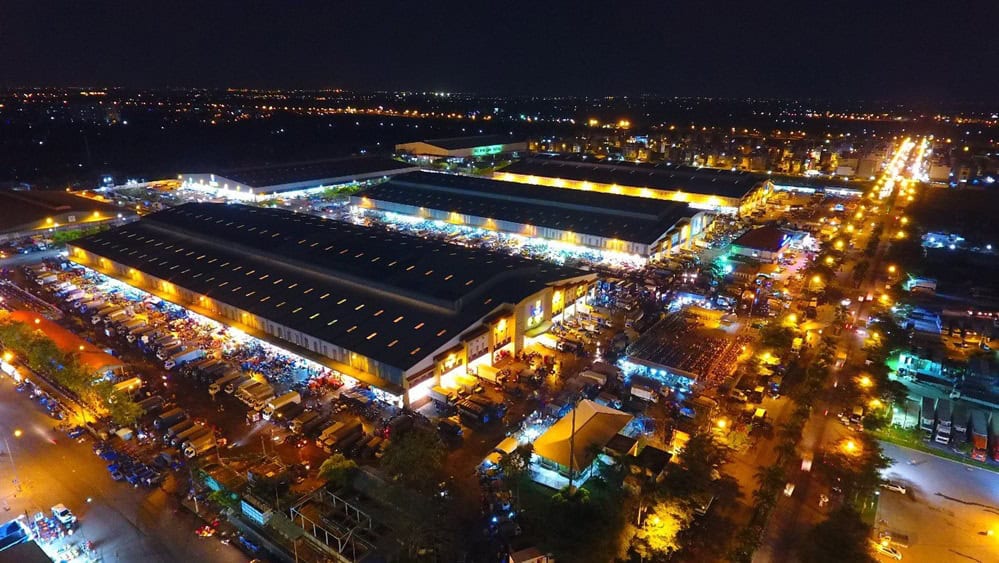
Tucked away in the heart of District 5’s Chinatown, Hoa Binh Market offers travelers what Ben Thanh Market can’t: authentic local prices, genuine Vietnamese-Chinese fusion cuisine, and zero tourist crowds. While most visitors flock to the famous Ben Thanh Market, locals know Hoa Binh as the real deal—a century-old market where you can eat like royalty for under $3 and experience the true pulse of Saigon’s Chinese community.
This comprehensive guide reveals everything you need to know about visiting Hoa Binh Market in 2025, from avoiding price scams to finding the best street food stalls that locals guard as their secrets.
Quick Facts: Hoa Binh Market at a Glance
Address: 37 Bach Van Street, Ward 5, District 5, Ho Chi Minh City
Opening Hours:
- Main market (indoor): 6:00 AM – 6:00 PM daily
- Food vendors & night market: 5:00 PM – 11:00 PM
- Busiest times: 7:00-10:00 AM (fresh produce), 6:00-9:00 PM (street food)
Average Spending: $5-10 per person for a full food experience
Best Known For: Authentic Chinese-Vietnamese street food, affordable prices, local atmosphere
Also Called: “Silver Market” (Chợ Bạc) due to surrounding jewelry shops
Established: 18th-19th century, expanded early 20th century
What Makes Hoa Binh Market Different?

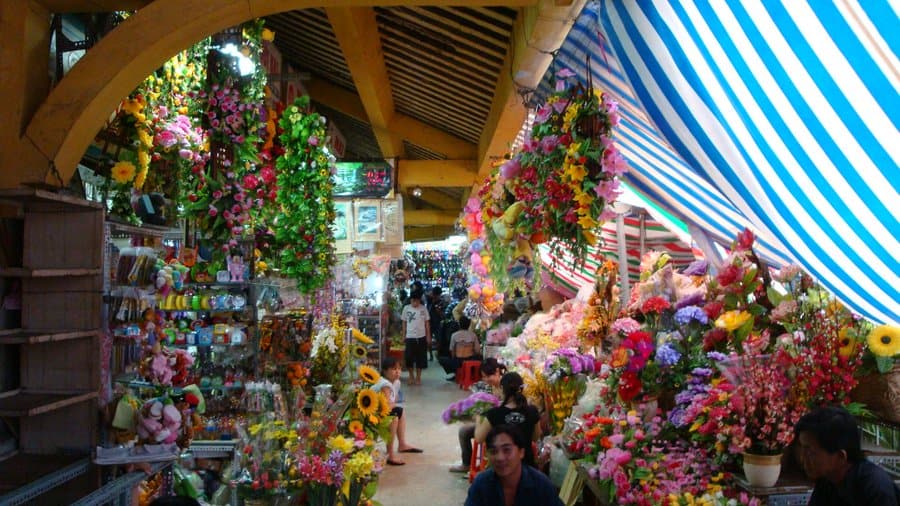
Unlike Ho Chi Minh City’s tourist-heavy markets, Hoa Binh remains stubbornly local. Over 80% of vendors are ethnic Chinese (Hoa) or Chinese-Vietnamese, many operating the same stalls their grandparents opened decades ago. You’ll hear more Cantonese and Teochew than English, and that’s exactly the point—this is where locals shop, not where tour buses stop.
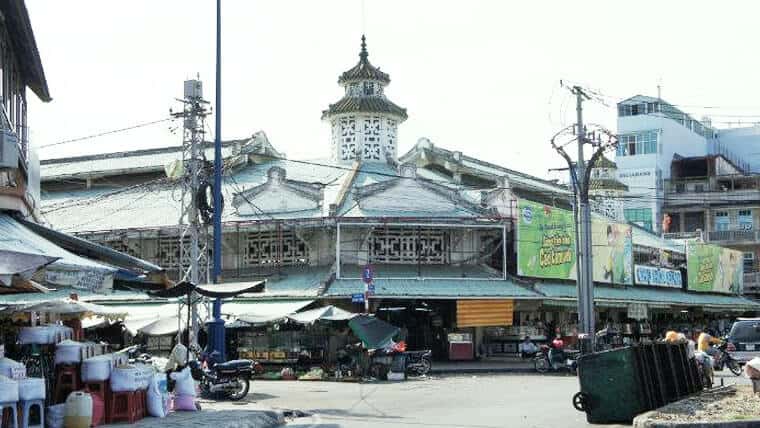
The market sits in the historic Cho Lon district, once Saigon’s separate Chinese city. Walking through Hoa Binh feels like stepping back 50 years: weathered glazed roof tiles (though many replaced with corrugated metal), hand-carved wooden pillars, and red lanterns casting warm light over narrow aisles packed with everything from dried mushrooms to Buddhist altar supplies.
How to Get to Hoa Binh Market
From District 1 (City Center):
- Taxi/Grab: 15-20 minutes, approximately 50,000-80,000 VND ($2-3.50)
- Bus: Routes 06, 45, 56, or 139 stop within walking distance
- Motorbike: Follow Tran Hung Dao Street west toward District 5, turn onto Bach Van Street (about 4.5 km from Ben Thanh Market)
From Tan Son Nhat Airport:
- Taxi/Grab: 25-30 minutes, approximately 120,000-150,000 VND ($5-6.50)
- Bus: Route 119 or 159 to District 5, then short taxi ride
Pro Navigation Tip: Tell drivers “Chợ Hòa Bình, Quận 5” or show them “37 Bạch Vân, Quận 5” on your phone. Most local drivers know it instantly.
Parking: Motorbike parking available on Bach Van Street (5,000-10,000 VND). Cars can be challenging during peak hours—consider parking at nearby Parkson Hung Vuong shopping center and walking 10 minutes.
What to Buy at Hoa Binh Market
Fresh Produce & Seafood (Best 6:00-10:00 AM)
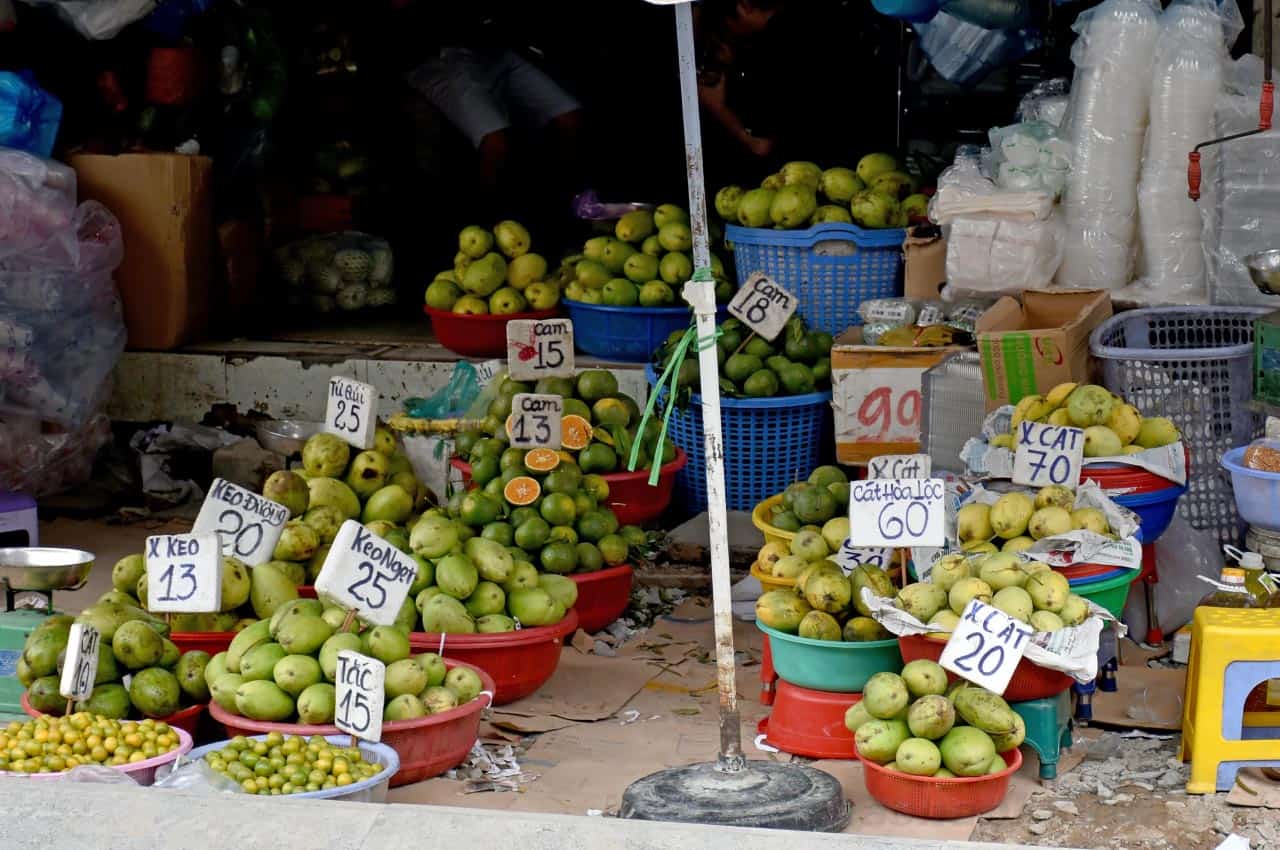
The ground floor buzzes with activity early morning as vendors arrange vibrant displays of vegetables, fruits, and live seafood. Prices run 20-30% cheaper than supermarkets, and quality is excellent since locals shop here daily.
Standout Sections:
- Fresh herbs (mint, cilantro, Thai basil) sold in enormous bundles for 5,000-10,000 VND
- Live seafood: crab, shrimp, fish (haggling expected—start at 60% of asking price)
- Tropical fruits: dragon fruit, mangosteen, rambutan at local prices
Buyer’s Note: Produce is freshest before 9:00 AM. Arrive early or accept slightly picked-over selections.
Chinese Specialty Foods (Don’t Miss)
This is where Hoa Binh truly shines. The dried goods section stocks items rarely found in regular Vietnamese markets:
Must-Try Products:
- Lap xuong (Chinese sausage): Sweet and savory, perfect souvenir if properly packaged
- Dried mushrooms: Shiitake, wood ear, various medicinal varieties
- Chinese teas: Oolong, pu-erh, chrysanthemum, jasmine (vendors offer tastings)
- Mooncakes: September harvest festival specialty, available year-round
- Preserved plums & dried fruits: Popular Chinese snacks
- Herbal medicines: Traditional Chinese medicine shops with knowledgeable herbalists
Price Range: Chinese teas start around 100,000 VND ($4.30) per 100g for quality varieties. Lap xuong runs 80,000-150,000 VND per kilogram depending on quality.
Religious & Spiritual Items
Hoa Binh houses one of District 5’s largest selections of Buddhist and Taoist religious supplies:
- Incense holders, offering trays, altar lamps (basic items 20,000-50,000 VND)
- Buddha statues, Guan Yu figures, God of Wealth statues (50,000-500,000+ VND)
- Feng shui items: jade bracelets, crystal ornaments, lucky charms
- Traditional worship paintings and scrolls
Quality Warning: Prices and quality vary dramatically. Many items lack clear origin. If buying expensive religious items, ask vendors for material certificates (particularly for jade or precious stones). Bargaining is standard—expect to negotiate down 30-40%.
Clothing, Fabrics & Household Items
While not Hoa Binh’s main draw, you’ll find:
- Casual wear: t-shirts, shorts, simple dresses (mostly local brands)
- Fabric stalls: cotton, silk, polyester by the meter
- Kitchen supplies, home goods, basic electronics
- Phone accessories and repair parts
Reality Check: Fashion and electronics are better sourced at An Dong or Tan Dinh markets. Visit Hoa Binh for food and Chinese specialties instead.
The Food Experience: What to Eat at Hoa Binh Market
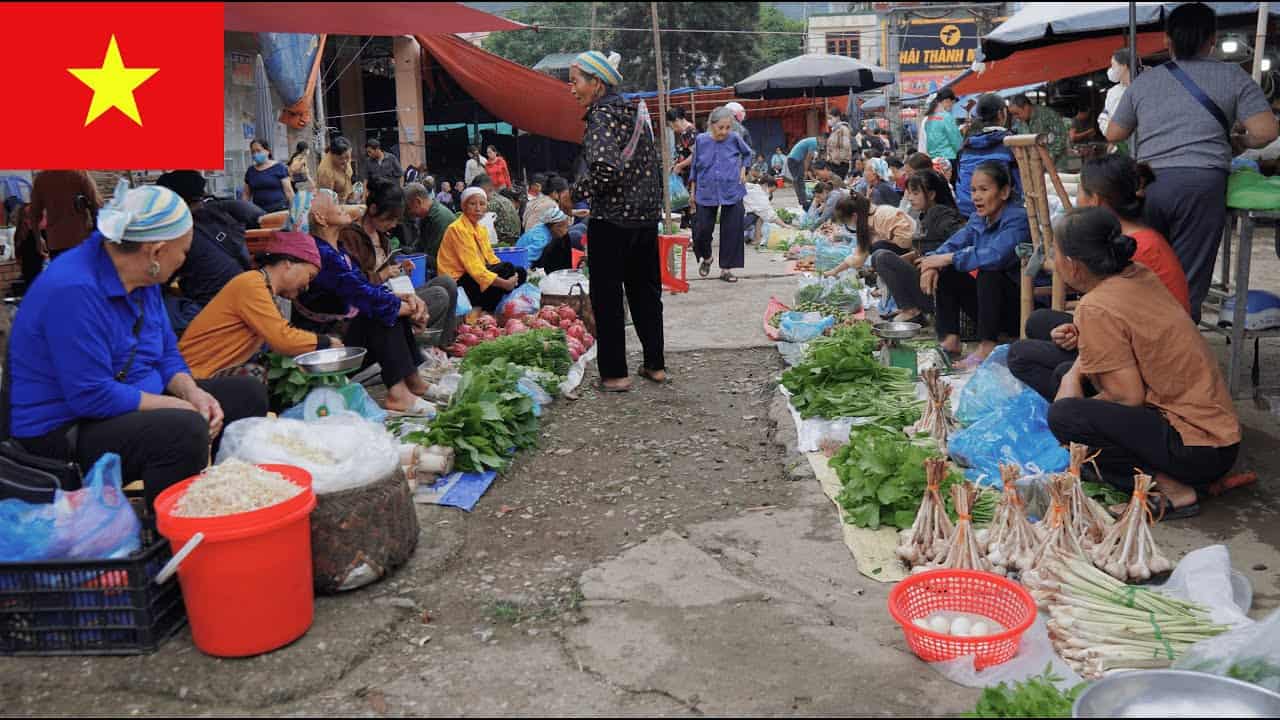
This is the real reason locals love Hoa Binh. As afternoon transitions to evening, the streets surrounding the market transform into one of District 5’s best food scenes. Pushcarts appear, grills fire up, and the aroma of caramelized pork and five-spice powder fills the air.
Signature Dishes You Must Try
1. Banh Canh Cua (Crab Noodle Soup)
Price: 200,000-250,000 VND ($8.50-10.80) for bowl with whole crab
Location: Inside market, highly visible stall with mountains of fresh crabs
This is Hoa Binh’s Instagram-famous dish. Thick, chewy tapioca noodles swim in rich pork-crab broth, topped with a massive whole crab, fish cake, pork, and quail eggs. It’s delicious but pricy by local standards.
⚠️ CRITICAL WARNING: Multiple reviews report price inconsistency and overcharging. The vendor may quote 130,000-200,000 VND initially, then charge significantly more when you pay. Always confirm the FINAL price before eating, ideally in writing or have them point to a visible price board. Some travelers report bills of 250,000+ VND for mediocre portions when expecting 80,000 VND based on verbal quotes.
Alternative: If pricing feels unclear, skip this vendor and try the equally good banh canh at stalls outside the main market for 40,000-60,000 VND per bowl.
2. Ha Cao (Cantonese Dumplings)
Price: 5,000-8,000 VND per piece, 40,000-60,000 VND for a serving
These delicate shrimp dumplings with translucent wrappers are a Chinese-Vietnamese specialty. Steamed fresh throughout the evening, they’re served with sweet soy-vinegar dipping sauce. Look for carts with bamboo steamers stacked high.
3. Banh Ran Doremon (Doraemon Donuts)
Price: 5,000 VND each
Adorable round donuts filled with butter, peanut paste, or mung bean. Called “Doremon” because they resemble the Japanese cartoon character. Crispy outside, soft inside, nostalgic Vietnamese childhood snack.
4. Pho & Bun Rieu
Price: 40,000-50,000 VND per bowl
Several stalls near the parking area serve excellent pho (beef noodle soup) and bun rieu (tomato crab noodle soup). Quality matches dedicated restaurants at half the price.
5. Xiu Mai (Chinese Pork Meatballs)
Price: 45,000-60,000 VND per serving
Sweet-savory pork and beef meatballs in tomato-based sauce, served over rice or noodles. Comfort food at its finest.
6. Che (Vietnamese Sweet Soup)
Price: 8,000-15,000 VND per cup
Multiple che vendors offer 10-20 varieties: mung bean, black bean, corn, taro, mixed three-color (che ba mau). Perfect refreshing dessert after heavy noodle dishes.
Look for the longtime vendor near the phá lấu cart—she’s been selling che for 30+ years, and her mung bean che at 8,000 VND per cup is legendary among locals.
7. Pha Lau (Stewed Offal)
Price: 40,000-60,000 VND per portion
Pork and beef offal slow-cooked in coconut water with star anise, cinnamon, and Chinese five-spice. Served with bread or rice. Popular xe (cart) draws big evening crowds.
8. Banh Mi Nuong (Grilled Bread)
Price: 10,000-15,000 VND
Vietnamese baguette grilled over charcoal, brushed with butter, and stuffed with pate, cheese, eggs, or savory toppings. Cheap, filling, delicious.
9. Trung Cut Lon Chien Bo (Fried Quail Eggs with Tamarind Sauce)
Price: 15,000-25,000 VND for 5-10 eggs
Fertilized quail eggs fried in butter, served with sweet-sour tamarind dipping sauce (mắm me). Unique flavor combination—crispy, rich, tangy.
10. Hủ Tiếu Mì & Mi Vit Tiem (Chinese Noodles)
Price: 40,000-55,000 VND per bowl
Chinese-style egg noodles with various broths—duck, pork, seafood. The Hoa vendors here cook these traditionally, recipes passed down generations.
Eating Strategy: How to Experience Hoa Binh Food Like a Local
Best Time to Visit: Arrive around 5:30-6:00 PM as vendors set up. This gives you first pick of fresh ingredients before evening crowds arrive (7:00-9:00 PM is peak).
Budget Plan:
- Light snacking: $2-3 (50,000-70,000 VND)—grab banh ran, banh mi, che
- Full food tour: $5-7 (120,000-170,000 VND)—try 4-5 different dishes, share with a friend
- Splurge option: $10-12 (230,000-280,000 VND)—banh canh cua + several sides
How to Order:
- Point at the dish, hold up fingers for quantity (Vietnamese generally understand 1-5 fingers)
- Ask price BEFORE eating: “Bao nhiêu tiền?” (How much?)
- Have vendor write price down or show calculator
- Most places don’t have menus—prices are quoted verbally
- Cash only (bring small bills: 10,000-50,000 VND notes)
Hygiene Reality Check: This is street food in an outdoor market environment. Stalls vary in cleanliness. Look for busy vendors (high turnover = fresher ingredients), clean surfaces, and food cooked to order. Your stomach’s tolerance matters—if you’re sensitive, stick to fully cooked items and avoid raw vegetables.
Language Barrier: Very few vendors speak English. Download Google Translate app with Vietnamese language pack. Better yet, learn these phrases:
- “Cái này bao nhiêu?” (How much is this?)
- “Ngon quá!” (Delicious!)
- “Cảm ơn” (Thank you)
Shopping Tips: Bargaining & Price Etiquette
Vietnamese markets operate on bargaining culture, but there are rules:
When to Haggle:
- Clothing, fabric, household goods: Expected, start at 50-60% of asking price
- Religious items, jade, expensive items: Definitely bargain (30-40% down)
- Souvenirs, dried goods: Light negotiation accepted
When NOT to Haggle:
- Fresh produce with clearly marked prices
- Prepared food (prices are usually fixed or minimally negotiable)
- Very cheap items under 20,000 VND (not worth vendor’s time)
Bargaining Etiquette:
- Stay friendly and smile—Vietnamese appreciate warmth
- Don’t bargain aggressively on items you don’t intend to buy
- If you reach agreed price, you should buy—backing out is poor form
- Walking away often brings vendors down another 10-20%
Price Reality Check:
Hoa Binh prices are genuinely local—NOT inflated for tourists like Ben Thanh. That said, if a vendor realizes you’re a foreigner, initial quotes might be 20-30% higher. Polite negotiation usually brings them to fair local price.
Hoa Binh Market vs. Other HCMC Markets: Which Should You Visit?
Hoa Binh vs. Ben Thanh Market:
- Authenticity: Hoa Binh wins (90% local vs. 80% tourist at Ben Thanh)
- Prices: Hoa Binh 30-50% cheaper
- Atmosphere: Ben Thanh more organized, Hoa Binh more chaotic/authentic
- English spoken: Ben Thanh high, Hoa Binh minimal
- Verdict: Visit Ben Thanh for souvenirs and organized experience; Hoa Binh for real local immersion
Hoa Binh vs. Binh Tay Market:
- Size: Binh Tay much larger (25,000 m² wholesale hub)
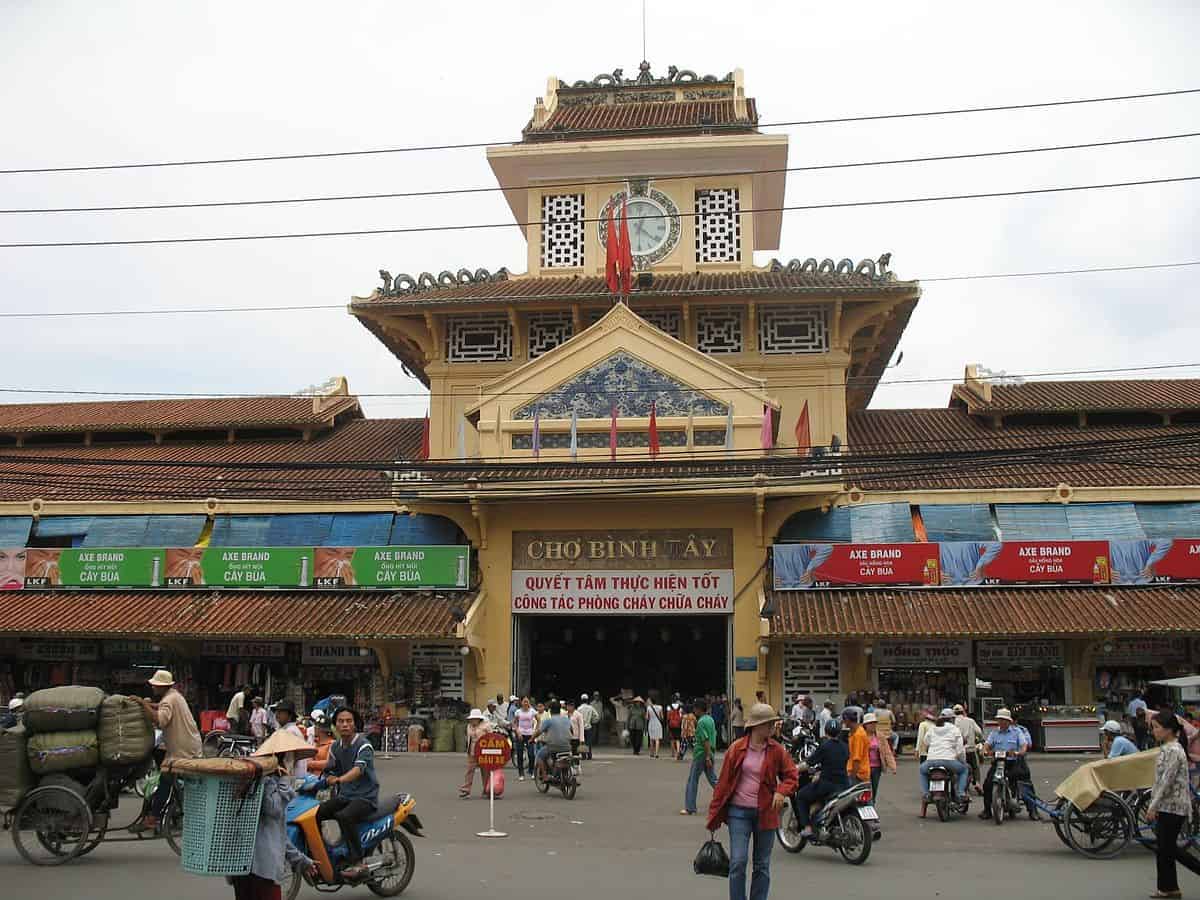
- Architecture: Binh Tay stunning Chinese-French design, Hoa Binh worn but charming
- Food: Hoa Binh better street food variety
- Shopping: Binh Tay better for bulk purchases
- Verdict: Serious shoppers visit both—Binh Tay for wholesale goods, Hoa Binh for food experience
Hoa Binh vs. An Dong Market:
- Focus: An Dong = fashion/fabric, Hoa Binh = food/Chinese goods
- Modernity: An Dong more renovated, Hoa Binh traditional
- Verdict: Different purposes—visit An Dong for clothes, Hoa Binh for food
What to Know Before You Visit
Safety & Security:
- Generally safe, but crowded markets attract pickpockets
- Keep valuables in front pockets or bag close to body
- Motorbike theft happens—use guarded parking (5,000-10,000 VND)
- Don’t leave phones/cameras unattended while eating
What to Bring:
- Cash (most vendors don’t accept cards)
- Small bills (breaking 500,000 VND notes is difficult)
- Reusable shopping bag (vendors charge 1,000-2,000 VND for plastic)
- Hand sanitizer (bathrooms limited, street food environment)
- Comfortable walking shoes (market floors can be slippery)
- Vietnamese phrasebook app or Google Translate
What to Wear:
- Casual, comfortable clothing
- Closed-toe shoes (flip-flops fine but floors sometimes wet/dirty)
- Avoid expensive jewelry (stands out, attracts attention)
- Light layers (outdoor sections hot, indoor areas cooler)
Bathroom Situation:
Public toilets exist but basic. Better to use facilities at nearby Parkson Hung Vuong mall or cafes before/after market visit.
Photography:
- Markets are photogenic, but ASK before photographing vendors directly
- Many older vendors dislike cameras pointed at them
- Food photography generally OK
- Respect “no photo” requests
Nearby Attractions: Make a District 5 Day Trip
Combine Hoa Binh Market with other Chinatown highlights:
Thien Hau Temple (10-minute walk)
Beautiful Taoist temple dedicated to the Goddess of the Sea, built by Cantonese congregation in 1760s. Intricate roof decorations, incense coils, historic atmosphere.
Binh Tay Market (15-minute walk)
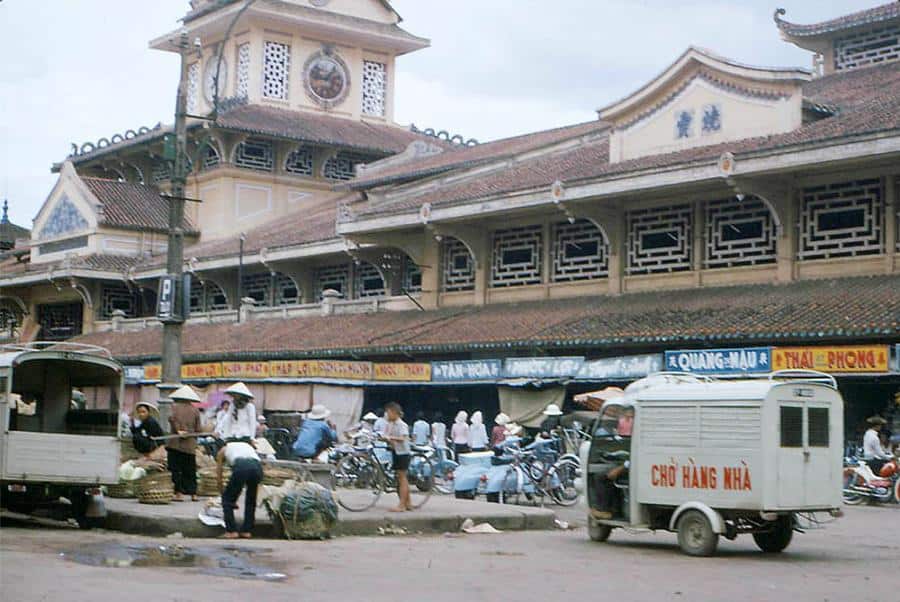
If you have time, compare with larger wholesale market. Architecture alone worth visiting.
Cha Tam Church (5-minute walk)
Historic Catholic church where President Ngo Dinh Diem was captured in 1963 coup. Architectural and historical significance.
Cholon Mosque (12-minute walk)
Small but significant mosque serving District 5’s Muslim community, many of Indian and Malay descent.
Nguyen Trai Street (adjacent)
Pharmacy and medical supplies street—fascinating to browse traditional Chinese medicine shops even if not buying.
Suggested Half-Day Itinerary:
- 9:00 AM: Arrive Hoa Binh Market, explore fresh produce and Chinese specialty sections
- 10:30 AM: Walk to Thien Hau Temple
- 11:30 AM: Quick lunch at Hoa Binh or nearby pho shop
- 1:00 PM: Visit Binh Tay Market
- 3:00 PM: Coffee break at local cafe
- 5:30 PM: Return to Hoa Binh for evening street food experience
Common Mistakes to Avoid
1. Visiting Only During Daytime
Hoa Binh’s magic happens after 5:00 PM when food vendors emerge. Daytime is fine for shopping, but you’ll miss the best part.
2. Not Asking Prices Before Eating
As mentioned with banh canh cua, verbal quotes sometimes change when paying. Always confirm total cost upfront, especially for expensive dishes.
3. Expecting English Menus/Signage
This is a local market. Bring translation app or embrace pointing and gestures.
4. Showing Too Much Cash
Avoid pulling out large wads of money. Keep small bills easily accessible, larger bills hidden.
5. Comparing to Tourist Markets
Hoa Binh is rougher, less polished, and sometimes chaotic. That’s the authenticity you’re paying for.
6. Forgetting Cash
ATMs exist nearby, but don’t assume you can find one easily. Bring sufficient cash before arriving.
7. Being Impatient
Service is slower, language barriers exist, vendors may seem abrupt (this is normal Vietnamese market style, not rudeness). Relax and enjoy the chaos.
Frequently Asked Questions
Q: Is Hoa Binh Market worth visiting if I’m going to Binh Tay Market?
A: Yes, if you’re interested in food. Binh Tay is better for wholesale shopping and architecture, but Hoa Binh has superior street food variety. They serve different purposes.
Q: How much time should I spend at Hoa Binh Market?
A: 1.5-2 hours minimum. 30-45 minutes walking through market sections, 1+ hour eating and exploring food stalls.
Q: Is Hoa Binh Market safe for solo female travelers?
A: Generally yes during daytime and early evening (before 10:00 PM). Standard big city precautions apply—watch belongings, stay in well-lit areas, use official taxis. Avoid very late evening hours.
Q: Can I find vegetarian/vegan food at Hoa Binh Market?
A: Options are limited since most dishes contain meat, fish sauce, or shrimp paste. Che (sweet soups) and fresh fruit are safe bets. Consider eating elsewhere if strictly vegetarian.
Q: Do vendors at Hoa Binh Market accept credit cards?
A: No. Cash only (Vietnamese Dong). Bring sufficient small bills.
Q: What’s the best day to visit Hoa Binh Market?
A: Tuesday-Thursday are quieter. Saturday-Sunday are busiest (local shopping day) but also most energetic. Monday some vendors restock, so selection varies.
Q: Can I ship items bought at Hoa Binh Market internationally?
A: Not directly from vendors. You’d need to arrange shipping through Vietnam Post or private courier service. Most souvenirs (teas, dried foods) can be hand-carried if properly packaged.
Q: Is Hoa Binh Market accessible for wheelchairs?
A: No. Narrow aisles, uneven surfaces, crowded conditions make wheelchair navigation extremely difficult. The market is not designed for accessibility.
Q: Should I tip at food stalls?
A: Tipping is not expected at street food stalls. Prices are low enough that vendors don’t anticipate tips. Round up to nearest 5,000 or 10,000 VND if you want, but not required.
Final Verdict: Should You Visit Hoa Binh Market?
Visit Hoa Binh Market if you:
- Want authentic local experience over polished tourist attractions
- Love street food and adventurous eating
- Appreciate Chinese-Vietnamese cultural fusion
- Prefer cheaper prices and are willing to bargain
- Don’t mind language barriers and chaotic atmosphere
- Want to see where locals actually shop
Skip Hoa Binh Market if you:
- Need English-speaking vendors and clear pricing
- Prefer organized, clean, modern shopping experiences
- Have very limited time and want “greatest hits” tourism (Ben Thanh suffices)
- Are uncomfortable with street food hygiene standards
- Want primarily souvenir shopping (An Dong or Ben Thanh better)
Hoa Binh Market isn’t trying to be Instagram-perfect. It’s gritty, loud, wonderfully chaotic, and delicious. You’ll eat better here for less money than nearly anywhere else in Ho Chi Minh City, and you’ll leave with an authentic glimpse of Vietnamese-Chinese culture that few tourists experience.
Bring cash, bring an appetite, and bring curiosity. Hoa Binh Market will reward all three.