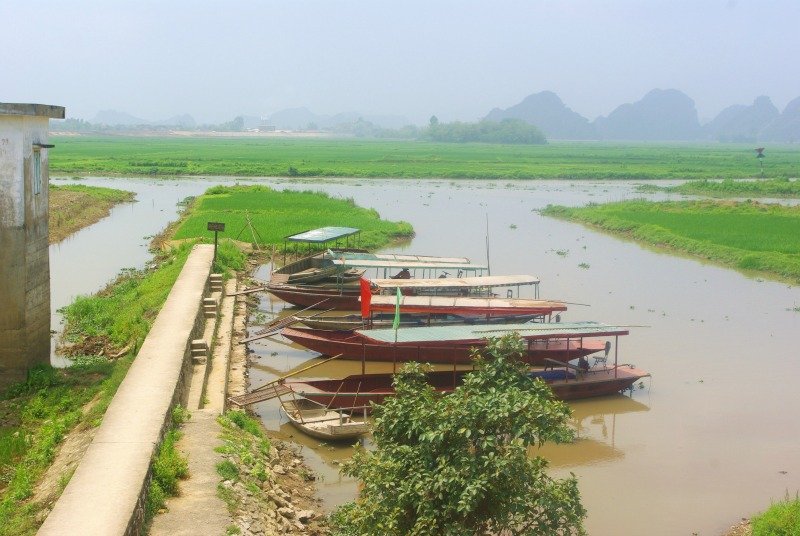
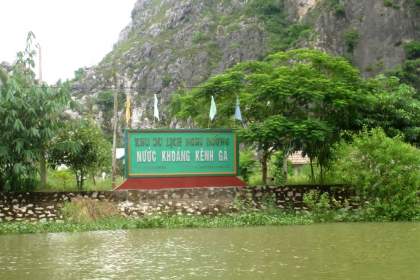
Kenh Ga Floating Village is currently undergoing significant development and construction (2024-2025), with traditional floating village life substantially changed from previous years. Located in Gia Thinh commune, Gia Vien district, Ninh Binh Province (93km from Hanoi), this authentic riverside community is part of a government-approved transformation plan to become a comprehensive tourism complex by 2030.
Current Reality (December 2025): Recent visitor reports indicate construction activity, limited floating village presence, and hot spring resort closures or renovations. However, scenic boat tours along Hoang Long River remain available, and the dramatic limestone backdrop is unchanged.
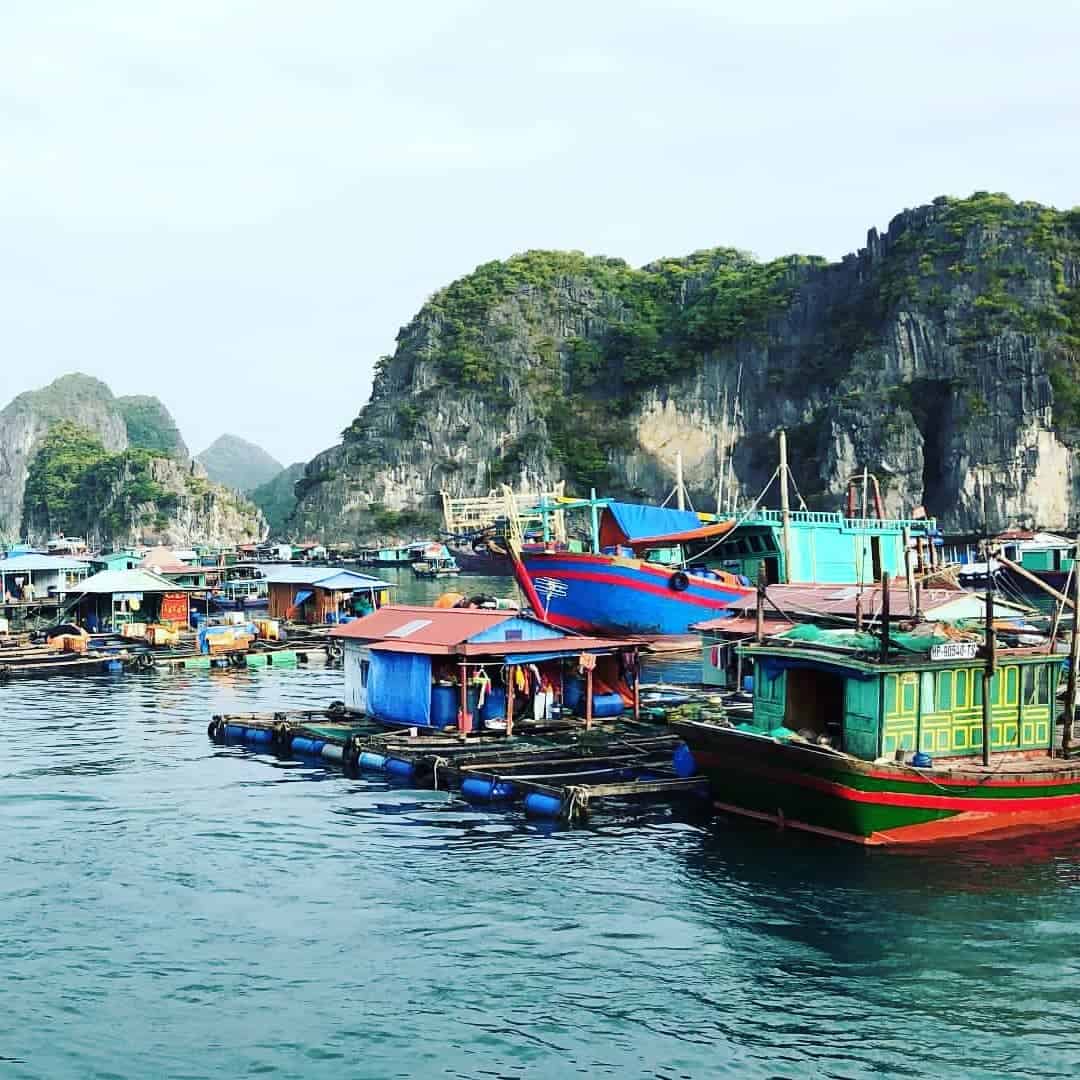
Should you visit now? Only if you’re interested in observing rural Vietnamese life during transition, enjoy off-the-beaten-path experiences, or specifically want the hot spring (verify operational status first). For traditional floating village experiences, consider Van Long Nature Reserve or authentic Ha Long Bay floating villages instead.
What’s Actually Happening at Kenh Ga (2024-2025 Update)
The transformation of Kenh Ga isn’t happening by accident. In April 2025, Ninh Binh Province officially approved Resolution No. 42/NQ-HDND, outlining ambitious plans to transform Kenh Ga-Van Trinh into a comprehensive multi-disciplinary tourist area by 2030, with full development completed by 2050.
Current Development Status:
The government envisions Kenh Ga as a national-level tourist destination projecting 1.5 million visitors annually by 2035 (approximately 10% of Ninh Binh’s total tourism). This massive undertaking creates temporary disruptions that recent visitors have documented extensively.
What Recent Travelers Report:
TripAdvisor reviews from 2024-2025 paint a consistent picture. Multiple independent travelers describe finding “huge amounts of construction,” traditional floating houses being replaced with “concrete islands connected by metal bridges,” and difficulty locating the hot spring resort. One visitor noted, “The floating village is no longer there. Riverways are full of floating plastic trash.”
However, not all feedback is negative. Several travelers mention the journey itself proved rewarding, with “amazing locals” and beautiful countryside routes. The limestone backdrop remains spectacular, and the area retains its peaceful, uncrowded character.
Infrastructure Updates:
As of March 2025, approximately 20 kilometers of road leading to Kenh Ga Hot Spring is under repair and being paved, making access difficult for large buses. The provincial government is investing in underground utilities, water systems, electrical infrastructure, and propane distribution as part of the comprehensive development plan.
What Made Kenh Ga Special (Historical Context)
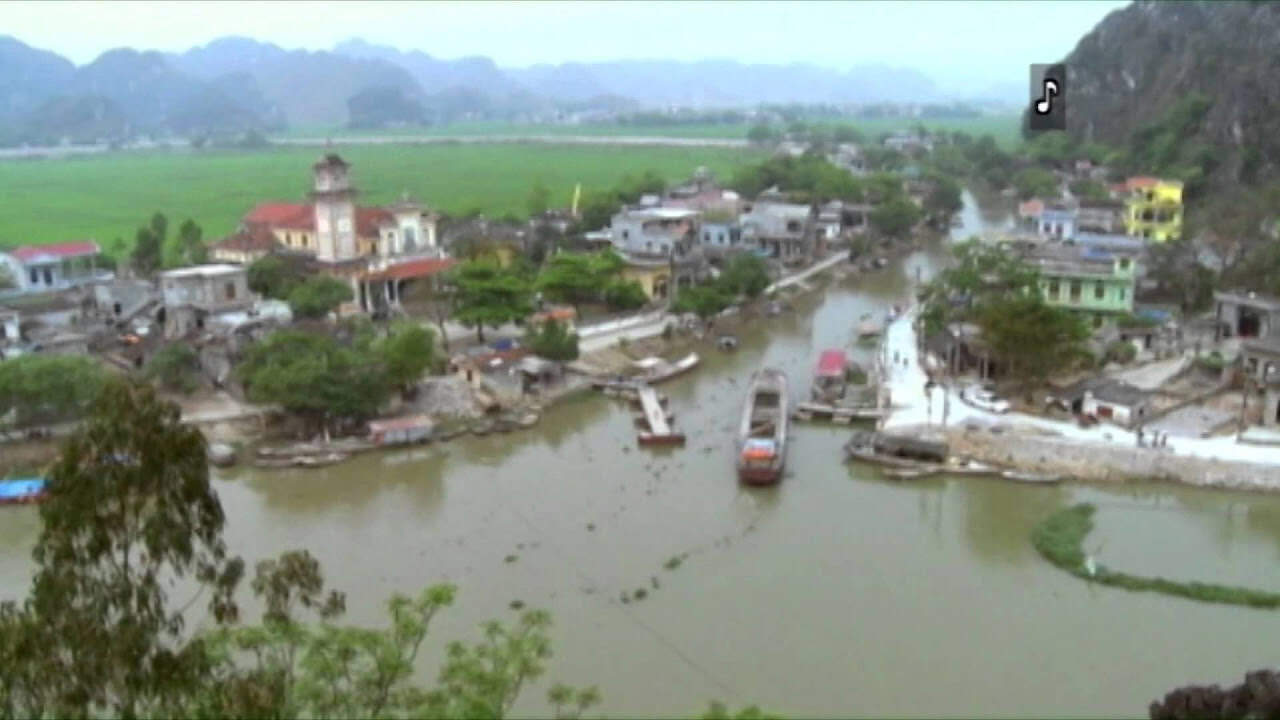
Understanding what Kenh Ga was helps contextualize what it’s becoming. Before 2023, this riverside village represented one of Northern Vietnam’s most authentic floating communities.
The Original Appeal:
Kenh Ga offered something genuinely unique: the only place in Northern Vietnam combining dramatic limestone karst scenery with an authentic floating village. While the Mekong Delta has extensive floating communities and Ha Long Bay has stunning karsts, Kenh Ga uniquely merged both elements.
The village earned its name—”Chicken Canal”—from two possible origins. According to local inhabitants, a limestone mountain peak resembles a rooster, giving the area its distinctive name. Alternatively, the hot spring water was historically used to remove chicken feathers, making plucking easier.
Traditional Lifestyle:
Life on Kenh Ga revolved entirely around the Hoang Long River, where the Boi, Lang, and Hoang Long rivers converge. Families built elevated houses on stilts, calculating floors two to three meters high to avoid flooding. During June and July flood seasons, the entire village became isolated, with all activities conducted by boat.
Children as young as four or five accompanied their parents sailing, swimming, and fishing. Schools were accessed by boat, markets were floating affairs, and the distinctive foot-rowing technique—where boaters row while leaning back using their feet—became a hallmark of local culture.
Why Travelers Loved It:
Pre-2024 visitors consistently praised Kenh Ga for its authenticity. TripAdvisor forum discussions from earlier years show travelers recommending it over Tam Coc specifically because it was “not touristy at all,” offered “fascinating” insights into local river life, and featured “no aggressive selling” unlike more commercial destinations.
One traveler summarized the appeal: “Just turned up at the waterfront and organized it ourselves. It was fascinating and really gave you an idea of local life on the river without being touristy at all.”
Kenh Ga Location & How to Get There
Geographic Clarification:
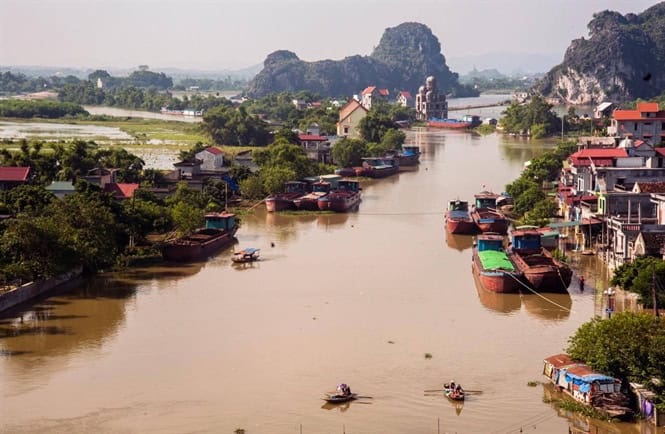
A common confusion: Kenh Ga is in Ninh Binh Province, not Ha Long Bay. These destinations are approximately 150 kilometers apart. Kenh Ga sits in Gia Thinh commune, Gia Vien district, about 93 kilometers south of Hanoi and 20-25 kilometers from Ninh Binh city center.
The village occupies the confluence where three rivers meet—the Boi, Lang, and Hoang Long—creating a junction locals call Vong Am because the warm weather and abundant fish attracted settlement since ancient times.
Transportation from Hanoi:
1. Private Car or Taxi (Recommended for International Tourists)
- Duration: Approximately 2 hours
- Route: Highway 1A south, then Road 477 at Gian Khau junction
- Cost: Negotiate beforehand, typically $50-80 for day trip with driver
- Advantage: Most convenient, flexible timing, no language barriers
2. Bus
- Departure: Giap Bat or My Dinh bus stations in Hanoi
- Destination: Ninh Binh City
- Cost: 80,000-120,000 VND per ticket
- Duration: 2+ hours
- Then: Hire taxi or motorbike to Dong Chua Wharf (additional 30-40 minutes)
3. Train
- Departure: Hanoi Railway Station
- Destination: Ninh Binh Railway Station
- Cost: 100,000+ VND depending on seat class
- Duration: 2+ hours
- Then: Local transport to wharf
4. Motorbike (Experienced Riders Only)
- Route: Highway 1A → turn at Gian Khau junction → Road 477 → follow signs to Me town → Dong Chua Wharf
- Duration: 2.5 hours
- Note: Vietnamese traffic challenging for inexperienced riders
Final Access to Village:
Kenh Ga remains accessible only by boat from Dong Chua Wharf. This boat-only access preserves some of the area’s remote character despite ongoing development. However, road repairs may add 15-30 minutes to travel time from Ninh Binh city.
Combination Itineraries:
Most tour operators pair Kenh Ga with Van Long Nature Reserve since both lie in Gia Vien district. This combination makes efficient use of travel time and offers contrasting experiences—Van Long for pristine wetland nature, Kenh Ga for authentic riverside community observation.
Kenh Ga Boat Tour: What to Expect Now
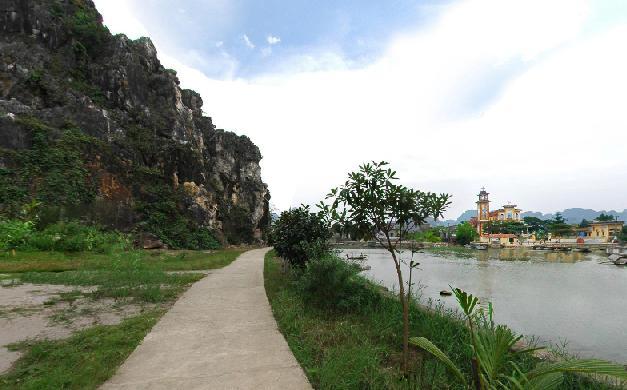
The boat tour remains Kenh Ga’s primary attraction, though the experience has evolved considerably from its pre-development peak.
Tour Basics:
Boats depart from Dong Chua Wharf, navigating the Hoang Long River through the village area. Tours typically last 1-3 hours depending on the route and whether you include Van Trinh Cave visits. You’ll travel in either motorboats (faster, louder) or traditional rowing boats (slower, more atmospheric).
Pricing Reality Check:
Pricing information is frustratingly inconsistent, reflecting the transitional nature of tourism here:
- Official tourism sources list free village entrance
- Tourist reports range from 150,000 to 300,000 VND per boat
- Some visitors report being quoted 150,000 VND but receiving only a 5-minute trip
- Hot spring access (if operational): 75,000-200,000 VND
Recommendation: Negotiate the total price, duration, and route clearly BEFORE boarding. Get specifics: “How long? Where exactly? Total cost including everything?” Write it down if necessary.
Scam Awareness:
While Kenh Ga historically had minimal scam issues compared to Tam Coc, the transitional period creates ambiguity that opportunistic operators may exploit. Based on broader Ninh Binh boat tour patterns:
- Agree on comprehensive pricing upfront – total cost, no surprises
- Clarify duration precisely – “one hour” means 60 minutes, not 20
- Bring your own refreshments – avoid pressure to buy overpriced drinks
- Tipping is not mandatory – despite pressure, tips remain optional
- Verify operator legitimacy – ask accommodation for recommendations
Current Experience:
What remains unchanged is Kenh Ga’s spectacular natural setting. The limestone karsts surrounding the river create dramatic backdrops regardless of village transformation. The Hoang Long River itself—smooth, winding, reflecting mountains—retains its scenic beauty.
You’ll still observe local life, though less concentrated on boats than historically. Fishing activities continue, rice farming operations border the waterways, and the area’s peaceful, uncrowded character contrasts sharply with Tam Coc’s tourist congestion.
Photography opportunities abound, though construction equipment may appear in some frames. The foot-rowing technique, while less prevalent, can still be observed with traditional boat operators.
Kenh Ga Hot Spring: Status & Details
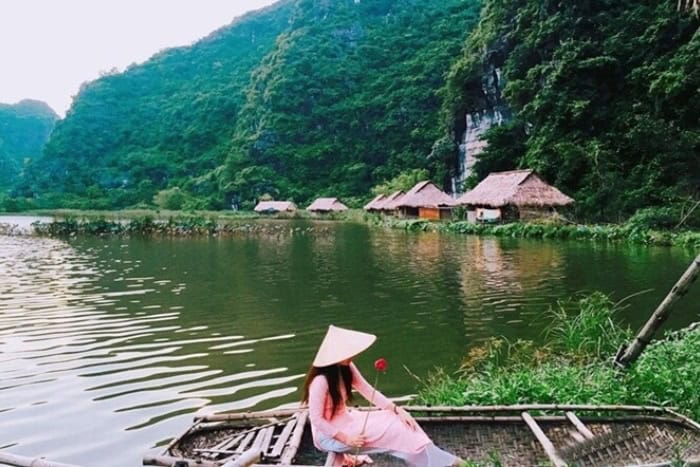
The hot spring represents Kenh Ga’s second major attraction, though its current operational status remains frustratingly unclear.
The Natural Phenomenon:
Kenh Ga’s hot spring flows from the heart of Hang Ca mountain, emerging at a stable 53°C (127°F). The water contains high concentrations of sodium chloride, calcium, potassium chloride, and bicarbonate salts. The spring produces approximately 5,000 cubic meters hourly, creating the distinctive steaming effect visible from distance during winter months.
Historical Significance:
The hot spring has existed for centuries, but formal recognition came during French colonial rule in the 1940s. French geographer C. Madrolle mentioned the spring in his 1923 geographical study of Northern Indochina, and by 1931 he documented it in “Climate and Hot Water Resources in Indochina.” In 1941, researcher M. Autret conducted formal analysis, publishing results in international scientific journals.
The Vietnam Record Book Center later recognized Kenh Ga as one of the nation’s top five hot springs, cementing its status as a significant natural resource.
Current Operational Status (December 2025):
Here’s where information becomes contradictory:
Positive Claims: A March 2025 travel blog (authentiktravel.com) describes upgraded facilities including “Japanese-style Onsen baths, hot and cold mineral pools, and both indoor and outdoor spa areas.” The source claims recent improvements transformed Kenh Ga into a modern wellness destination.
Negative Reality: Multiple TripAdvisor reviews from late 2024 and 2025 report being unable to locate the hot springs, finding them closed, or discovering only a small pagoda with hot water—not a bathing facility. One October 2025 source explicitly states the resort “was closed for repairs” with ticket prices subject to change “after reopening with a new look.”
Most Likely Scenario: The natural hot spring source continues flowing (it’s a geological feature that can’t be “closed”). However, the resort facilities providing comfortable bathing experiences are closed for renovation or redevelopment. Some local operators may offer basic access to the spring itself, but without the spa amenities previously available.
Traditional Health Benefits Claimed:
Local tradition attributes therapeutic properties to the mineral water:
- Relief from arthritis and joint pain
- Improvement in skin conditions
- Support for digestive system health
- Stress reduction and relaxation
- Enhanced circulation
- Bone and muscle strengthening
Critical Recommendation: If the hot spring is your primary motivation for visiting Kenh Ga, contact local tour operators, your accommodation, or recent visitors to verify current operational status before making the journey. The 93-kilometer trip from Hanoi represents significant time investment for potentially closed facilities.
Best Time to Visit Kenh Ga
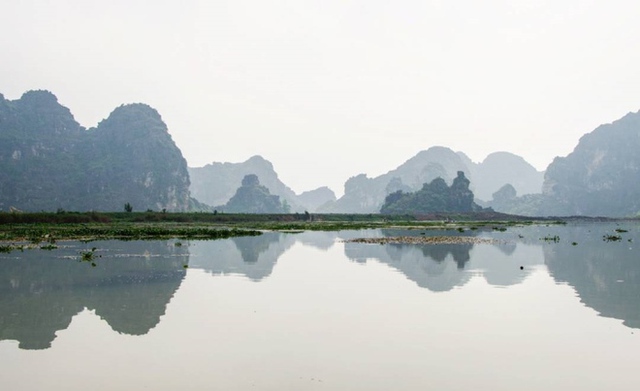
Timing your visit optimally depends on what you hope to experience and your tolerance for various weather conditions.
Optimal Seasons:
June through September represents the traditional best time for Kenh Ga boat tours. During these months, water levels are lower and boat traffic is less frequent, creating more peaceful experiences. The weather remains pleasant, though occasional rain showers occur.
March through May and September through November offer the most comfortable weather overall for Ninh Binh region exploration. Temperatures are moderate, rainfall is manageable, and the countryside looks lush and vibrant.
October specifically provides spectacular scenery when rice fields turn golden during harvest season. The contrast between golden paddies, emerald rivers, and gray limestone creates stunning photography opportunities.
December through February brings cooler weather ideal for hot spring experiences—if the resort is operational. Winter months also create the distinctive fog effect around the hot spring as 53°C water meets cool air.
Seasons to Avoid:
Peak Tet (Lunar New Year) in late January or early February brings potential facility closures, price increases, and massive domestic tourism crowds across all Ninh Binh attractions.
July and August carry heavy rainfall risk and occasional typhoons affecting northern Vietnam. While not guaranteed problems, wet season peaks can disrupt boat tours and make countryside cycling uncomfortable.
Weather Patterns:
Ninh Binh Province averages 23.4°C annually with 80-85% humidity. The dry season runs November through March, while April through October brings increased rainfall. The region experiences relatively stable temperatures year-round compared to northern Vietnam’s more dramatic seasonal swings.
Current Development Consideration:
Given ongoing construction, visiting on weekdays rather than weekends may prove advantageous. Fewer tour groups mean less competition for boat operators and potentially more flexibility in negotiating tours. However, weekend visits might offer more services actively operating.
Kenh Ga vs Other Ninh Binh Boat Tours: Honest Comparison
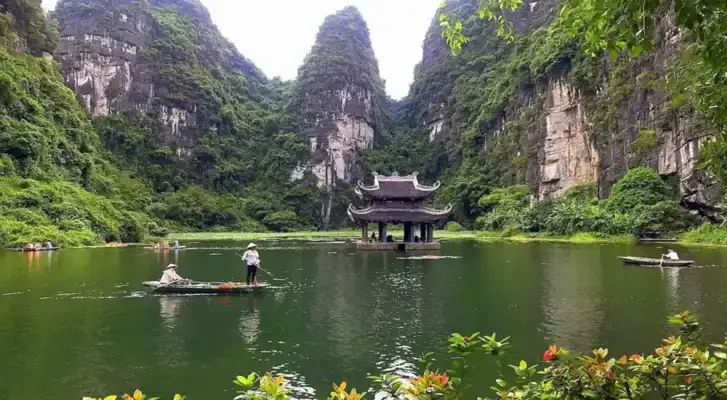
Ninh Binh Province offers several boat tour options, each with distinct characteristics. Understanding these differences helps you allocate limited travel time effectively.
Comprehensive Comparison:
Kenh Ga Floating Village:
- Current Status: Under development, transitional experience
- Crowd Level: Minimal (currently very few tourists)
- Duration: 1-3 hours depending on route
- Typical Cost: 150,000-300,000 VND (inconsistent pricing)
- Cave Access: Van Trinh Cave available nearby
- Authenticity: High for observing real community life
- Scam Risk: Low to moderate
- Special Feature: Foot-rowing technique, uncrowded
- Best For: Off-beaten-path seekers, development observers
Tam Coc (Three Caves):
- Current Status: Fully operational, very established
- Crowd Level: Very crowded, especially 10am-2pm
- Duration: 1.5-2 hours
- Typical Cost: ~250,000 VND per boat
- Cave Access: 3 caves (Ca, Hai, Ba)
- Authenticity: Tourist-focused but scenic
- Scam Risk: Moderate to high (tipping pressure, photo vendors, merchandise sales)
- Special Feature: “Ha Long Bay on land,” famous foot-rowing
- Best For: Classic Ninh Binh experience despite crowds
Trang An (UNESCO Site):
- Current Status: Fully operational, well-maintained
- Crowd Level: Crowded but regulated
- Duration: 2-4 hours (multiple route options)
- Typical Cost: ~200,000 VND
- Cave Access: 9+ caves depending on route
- Authenticity: UNESCO-managed, combines nature and temples
- Scam Risk: Low (government regulation)
- Special Feature: Most dramatic caves, historical temples, best infrastructure
- Best For: First-time visitors wanting reliable, impressive experience
Van Long Nature Reserve:
- Current Status: Pristine wetland reserve, protected
- Crowd Level: Quiet, peaceful
- Duration: 1.5 hours
- Typical Cost: ~100,000 VND
- Cave Access: Few caves, focus on wetlands
- Authenticity: High for nature observation
- Scam Risk: Very low
- Special Feature: Endangered Delacour’s langurs, bird watching, tranquil
- Best For: Nature enthusiasts, wildlife photographers, peace seekers
When to Choose Kenh Ga:
Choose Kenh Ga if you genuinely want an off-beaten-path experience and accept that “authentic” currently means “undergoing transformation.” The village suits travelers who find beauty in imperfection and enjoy observing real communities adapting to change.
Combining Kenh Ga with Van Long Nature Reserve (both in Gia Vien district) makes logistical sense and provides contrasting experiences—construction and development at Kenh Ga, pristine natural preservation at Van Long.
Better Immediate Alternatives:
For most visitors in 2025, Van Long or Trang An will deliver more satisfying experiences. Van Long offers the peaceful, natural atmosphere Kenh Ga once provided. Trang An delivers spectacular scenery with reliable infrastructure. Both avoid the uncertainty surrounding Kenh Ga’s current state.
Nearby Attractions & Activities
Kenh Ga’s remote location doesn’t mean isolation from other worthwhile destinations. Several attractions lie within reasonable distance.
Van Trinh Cave:
Located approximately 1 kilometer from the Kenh Ga boat dock, Van Trinh represents one of Ninh Binh’s larger and more beautiful caves. The 30-minute walk from the river crosses rice paddies where women plant rice and men graze ducks—a genuinely rural Vietnamese scene.
Inside, Van Trinh features multiple chambers with stalactite formations and electrical lighting for visitor safety. While not as dramatic as Trang An’s caves, Van Trinh sees minimal crowds and offers quiet exploration.
Van Long Nature Reserve (Highly Recommended):
Just 15-20 kilometers from Kenh Ga, Van Long represents everything Kenh Ga once was—peaceful, pristine, and authentic. This 3,500-hectare wetland reserve protects 457 plant species (eight in Vietnam’s Red Book) and 39 animal species including nine precious species.
The reserve is most famous for the endangered Delacour’s langur, with Van Long hosting the world’s largest population. Bamboo boat tours glide silently through the wetlands, maximizing wildlife observation opportunities. Bird watchers spot rare species including the black-faced spoonbill, while photographers capture stunning limestone-and-wetland compositions.
Van Long currently provides the peaceful, authentic, natural experience many travelers expect from Kenh Ga. Combining both destinations in one day trip from Hanoi or Ninh Binh makes excellent logistical sense.
Hoa Lu Ancient Capital:
Located approximately 15 kilometers from Kenh Ga, Hoa Lu served as Vietnam’s capital during the Dinh and early Le dynasties (968-1010 AD). The ancient capital occupied a naturally defensive position among karst mountains and rivers.
Today, visitors can explore temples dedicated to King Dinh Tien Hoang and King Le Dai Hanh, learning about Vietnam’s independence following Chinese rule. The site combines historical significance with beautiful natural surroundings.
Bai Dinh Pagoda:
About 25 kilometers from Kenh Ga, Bai Dinh represents Southeast Asia’s largest Buddhist complex. The massive site includes multiple pagodas, hundreds of Buddha statues, and Asia’s tallest stupa offering panoramic views.
While Bai Dinh has a “tourist attraction vibe” with required cart services (60,000 VND), the sheer scale and religious significance impress most visitors. Budget 2-3 hours for thorough exploration.
Trang An Scenic Landscape Complex:
This UNESCO World Heritage Site sits approximately 30 kilometers from Kenh Ga. Trang An offers the most dramatic boat tours in Ninh Binh, with routes passing through nine caves, visiting ancient temples, and showcasing stunning limestone formations.
Three route options (ranging 2-4 hours) provide flexibility based on your schedule and interests. Trang An represents the most reliable, infrastructure-supported boat tour experience in the region.
Cuc Phuong National Park:
Vietnam’s first national park, Cuc Phuong lies about 45 kilometers from Kenh Ga. This primary rainforest protects rare flora and fauna, including the Endangered Primate Rescue Center where visitors observe conservation efforts for langurs, gibbons, and lorises.
Hiking trails range from easy walks to challenging treks through pristine jungle. The park offers a completely different environment from Ninh Binh’s karst landscapes.
Practical Travel Information
What to Pack:
- Sun protection is essential: Wide-brimmed hat, high-SPF sunscreen, sunglasses
- Insect repellent: Mosquitoes are present near water
- Cash in Vietnamese Dong: ATMs are limited in remote areas; bring adequate cash
- Comfortable closed-toe shoes: For boat boarding and walking on potentially muddy paths
- Light rain jacket: Even in dry season, brief showers possible
- Waterproof phone/camera case: Protect electronics near water
- Your own water and snacks: Avoid overpriced boat vendors
- Small daypack: Keep hands free during activities
Appropriate Clothing:
Kenh Ga is a rural, traditional community. Dress modestly out of respect:
- Lightweight, breathable fabrics for hot, humid weather
- Shirts covering shoulders
- Pants or skirts covering knees
- Comfortable for sitting in boats (avoid tight clothing)
- Layers for air-conditioned vehicles versus outdoor heat
Language Considerations:
English proficiency in Kenh Ga village is minimal to non-existent. The community consists primarily of Vietnamese-speaking farmers and fishermen. Basic Vietnamese phrases prove helpful:
- Xin chào (sin chow) = Hello
- Cảm ơn (gahm uhn) = Thank you
- Bao nhiêu tiền? (bow new tee-en) = How much money?
- Quá đắt (gwah daht) = Too expensive
Translation apps (Google Translate with offline Vietnamese downloaded) help navigate basic communications. Tour guides from Hanoi or Ninh Binh typically speak English if you book organized tours.
Safety Considerations:
- Verify life jacket availability before departing on boat tours
- Watch personal belongings during tours; petty theft is uncommon but possible
- Hoang Long River can be deep and currents exist; swimming is not recommended
- Road conditions to Dong Chua Wharf: Currently under repair, drive carefully
- Verify boat operator legitimacy: Ask accommodation for trusted contacts
- Solo female travelers: Generally safe, but standard precautions apply
Cultural Respect:
- Photography: Always ask permission before photographing people, especially in their homes or during personal activities
- Modest behavior: Loud, boisterous behavior is culturally inappropriate in rural areas
- Local customs: Observe and respect traditional practices you may witness
- Compensation: If locals provide assistance (directions, information), small tips appreciated but not demanded
- Environmental responsibility: Take all trash with you; waste management is limited
Critical Pre-Visit Verification:
Given Kenh Ga’s transitional state, verify current status before visiting:
- Contact your accommodation for latest on-the-ground information
- Check with local tour operators about current boat tour availability
- Verify hot spring operational status if that’s your primary interest
- Confirm road conditions to Dong Chua Wharf
- Check weather forecast for your travel dates
Where to Stay Near Kenh Ga
Accommodation options directly in Kenh Ga village are virtually non-existent. Most travelers base themselves in Tam Coc town or Ninh Binh city, treating Kenh Ga as a day trip destination.
Tam Coc Area (Recommended Base – 20km from Kenh Ga):
Budget Options ($10-25/night): Numerous homestays and family-run guesthouses offer basic but clean accommodation. Expect fan or air conditioning, private or shared bathrooms, and simple Vietnamese breakfast. Many hosts speak limited English but demonstrate genuine hospitality.
Popular budget choices include Tam Coc Homestay, Ninh Binh Friendly Homestay, and various family guesthouses along the main Tam Coc road. Book directly or through Booking.com/Agoda.
Mid-Range ($30-60/night): Boutique hotels in Tam Coc provide better amenities including swimming pools, on-site restaurants, bicycle rentals, and tour arrangement services. Staff typically speak English and can organize Kenh Ga visits.
Options include Tam Coc Garden Resort, Ninh Binh Hidden Charm Hotel, and Emeralda Resort Ninh Binh. These properties balance comfort with reasonable pricing.
Luxury ($80-150+/night): Several upscale resorts along the river offer full facilities, stunning views, spa services, and comprehensive tour arrangements. These properties cater to travelers wanting comfort after adventurous day trips.
Premium options include Tam Coc Rice Fields Resort, Chez Loan Ecolodge, and Aravinda Resort Ninh Binh.
Ninh Binh City (25km from Kenh Ga):
Ninh Binh city provides more accommodation options but less atmospheric surroundings. The city serves primarily as a transportation hub and administrative center rather than tourist destination.
Choose city accommodation if you prioritize variety, need specific facilities (international hotels, specific dietary options), or arrive late by train/bus.
Booking Strategy:
Stay 2-3 nights in the Tam Coc area, using it as a base for visiting Kenh Ga, Van Long, Trang An, Hoa Lu, and other attractions. This approach minimizes daily driving while maximizing time at destinations.
Book accommodation in advance during peak seasons (April-May, September-October) and especially during Tet holiday period.
Local Food & Dining
Ninh Binh Province offers distinctive culinary specialties that enhance any visit.
Must-Try Regional Dishes:
Com Chay (Scorched Burnt Rice): Ninh Binh’s most famous specialty, com chay is crispy burnt rice served with rich goat meat sauce. Experienced cooks create crunchy but not hard rice with aromatic, slightly caramelized flavor. The viscous goat meat sauce provides savory, slightly sweet contrast. Available in most Ninh Binh restaurants, com chay is also sold as dried snacks with salted shredded meat—popular souvenirs.
De Nuong (Grilled Goat Meat): Ninh Binh goat meat is considered among Vietnam’s finest. The meat is moderately tender, not too chewy, with characteristic flavor less gamey than goat from other regions. Preparation includes lemon, ginger, chili, lemongrass, galanga, fig leaves, apricot leaves, green bananas, and raw vegetables to balance flavors. Ninh Binh mountain goat appears in 20+ dishes, with rare goat meat with lemon being the signature preparation.
Gia Vien Shrimp Paste: Specific to the Kenh Ga area, Gia Vien shrimp paste is made from fresh small shrimp caught locally in Hoang Long River. After sophisticated processing, the final product has bright red color, specific aroma, and moderate saltiness distinctly different from shrimp paste produced elsewhere in Vietnam. It’s both a condiment and ingredient in various dishes.
Hoang Long Sweet Potatoes: Grown in the rich soil near Hoang Long River, these sweet potatoes have exceptional flavor and texture. Available seasonally, they’re often steamed or grilled as snacks.
Fresh River Fish and Shrimp: The Hoang Long River provides daily catches prepared various ways—grilled, steamed with herbs, or in soups. Freshwater shrimp appears in spring rolls, stir-fries, and traditional soups.
Where to Eat:
Tam Coc Town: The main tourist area offers the widest restaurant selection, from family-run eateries to mid-range restaurants catering to international visitors. English menus are common, and staff can explain dishes.
Local Restaurants Near Kenh Ga: A few simple restaurants exist near Dong Chua Wharf, offering basic Vietnamese meals primarily for locals. Don’t expect English menus or Western options, but prices are very reasonable and food is authentic.
Floating Restaurants: If operational near Kenh Ga, floating restaurants provide scenic riverside atmosphere for meals. Verify prices before ordering to avoid misunderstandings.
Homestay Meals: Many homestays serve authentic home-cooked Vietnamese meals as part of accommodation packages. This often provides the most genuine culinary experience.
Ninh Binh City: The provincial capital offers more varied options including international cuisine, though tourists typically find better value and authenticity in Tam Coc.
Food Safety Tips:
Vietnamese food is generally safe, but follow basic precautions:
- Choose busy establishments (high turnover means fresh food)
- Drink bottled water rather than tap water
- Cooked food is safer than raw in rural areas
- Street food in Ninh Binh is typically safe but use judgment
- Wash fruit thoroughly or peel before eating
Government Development Plans: The 2030 Vision
Understanding Kenh Ga’s future trajectory provides context for its current transitional state and helps travelers decide whether to visit now or wait.
Official Provincial Resolution:
In April 2025, the Ninh Binh Provincial People’s Council issued Resolution No. 42/NQ-HDND approving the “Construction Zoning Plan for Kenh Ga-Van Trinh Tourist Area to 2030, with a vision to 2050.” This formal government document outlines specific objectives and timelines.
Development Objectives:
The plan aims to transform Kenh Ga into a “comprehensive, multi-disciplinary tourist area” combining:
- Eco-tourism leveraging natural landscapes
- Cultural tourism preserving historical and traditional values
- Resort tourism with wellness/spa facilities
- Sports and recreational activities
- Health care and therapeutic services (hot springs)
- Experiential tourism allowing visitor participation in local activities
The stated goal: position Kenh Ga-Van Trinh as a “national tourist area” meeting international development trends while respecting regional and provincial development priorities.
Timeline and Projections:
By 2025 (Current Year):
- Infrastructure groundwork and planning implementation
- Employment for approximately 5,000 people (1,500 locals)
- Continued construction and development activity
By 2030:
- Comprehensive tourist area operational
- Integrated facilities including upgraded hot springs, water parks, sports complexes
- Improved road access and utilities
By 2035:
- Projected 1.5 million annual visitors (10% of Ninh Binh’s total tourism)
- 270,000 international visitors, 1.23 million domestic visitors
- Employment for approximately 6,600 people (2,100 locals)
By 2050:
- Fully realized vision with mature tourism ecosystem
- Complete integration with broader Ninh Binh tourism development
Planned Facilities:
The master plan includes:
- Hot spring resort complex: Japanese-style onsen baths, hot and cold mineral pools, indoor and outdoor spa areas
- Water park: Northern area along Hoang Long River
- Sports and resort complex: Bordering river dike with multiple facilities
- Cultural performance venues: Traditional Cheo and Ca Tru music performances
- Parks and recreation areas: Southwest section with shopping, restaurants, attractions
- Farming areas: Northeast section preserving agricultural character
- Lakeside resorts: East and Southeast foothills
Environmental and Cultural Considerations:
The plan emphasizes:
- Protection and exploitation of natural landscapes
- Preservation of historical and cultural relics with regional identity
- Sustainable development respecting the environment
- Active participation of existing communities
- Improvement of local quality of life through tourism development
What This Means for Travelers:
Short-term (2025-2027): Expect continued construction disruptions, limited facilities, and evolving conditions. Visit only if you accept “work in progress” experiences or are specifically researching development processes.
Mid-term (2028-2030): New facilities should begin opening, providing improved infrastructure while (hopefully) maintaining authentic character. This period may offer the best balance between development and traditional culture.
Long-term (2030+): Kenh Ga will likely transform into a major destination comparable to Tam Coc or Trang An. The traditional floating village atmosphere will be replaced by organized tourism infrastructure. Visit for modern wellness and recreational facilities rather than authentic floating village experiences.
Should You Visit Kenh Ga Now? (Honest Assessment)
This is the critical question. After reviewing all evidence, here’s our straightforward recommendation:
Visit Kenh Ga NOW if you:
✅ Genuinely enjoy off-beaten-path travel and find beauty in imperfection ✅ Accept and understand it’s undergoing transformation rather than existing in pristine traditional state ✅ Are interested in rural Vietnamese life even during periods of change ✅ Want to avoid tourist crowds at any cost ✅ Are combining with Van Long Nature Reserve (highly recommended pairing in same district) ✅ Enjoy observing development and change as cultural phenomena ✅ Have already visited Trang An, Tam Coc, and Van Long and want something different ✅ Are spending extended time in Ninh Binh (5+ days) with time for multiple sites
Skip Kenh Ga or Delay Visit if you:
❌ Expect pristine traditional floating village as described in older guides ❌ Have hot spring as primary motivation (verify operational status first; too uncertain) ❌ Have limited time (2-3 days or less in Ninh Binh area) ❌ Want guaranteed high-quality photo opportunities without construction elements ❌ Prefer well-developed tourist infrastructure with clear pricing, English signage, etc. ❌ Are uncomfortable with ambiguity regarding facilities, prices, or experiences ❌ Haven’t yet visited Van Long, Trang An, or other established Ninh Binh attractions
Better Alternatives for RIGHT NOW:
For Authentic Floating Village Experience:
- Ha Long Bay floating villages: Vung Vieng, Cong Dam, Ba Hang in actual Ha Long/Bai Tu Long Bay—these are functioning floating communities with tourism infrastructure
- Mekong Delta floating markets: Cai Rang, Cai Be—vibrant, active floating commerce and community life
For Ninh Binh Boat Tours:
- Van Long Nature Reserve (25km from Kenh Ga): Pristine wetland, peaceful, excellent wildlife viewing, well-maintained, affordable
- Trang An (30km from Kenh Ga): UNESCO site, dramatic caves, historical temples, reliable infrastructure, worth the crowds
- Tam Coc (20km from Kenh Ga): Classic Ninh Binh experience, beautiful despite crowds, just manage scam awareness
Consider Future Visit:
If you’re genuinely interested in Kenh Ga’s concept but disappointed by current conditions, consider returning post-2030 when the development vision is realized. The transformed destination may offer excellent modern wellness facilities, improved access, and organized experiences—just very different from the traditional floating village that originally attracted travelers.
Frequently Asked Questions
Is Kenh Ga floating village still there?
The traditional extensive floating village is no longer present as described in pre-2024 guides. The community still exists along the Hoang Long River, but most families now live in permanent structures rather than floating houses. Some riverside activities and boat-based living continue, but the comprehensive floating village lifestyle has diminished during current development. The government’s 2030 plan envisions a modern tourist area rather than restoration of traditional floating architecture.
Is Kenh Ga worth visiting in December 2025?
Worth visiting if you: (1) Enjoy authentic rural experiences and accept “work in progress” conditions, (2) Want to avoid crowds entirely, (3) Are combining with Van Long Nature Reserve in the same district, or (4) Find development and transition fascinating. Not worth visiting if you: (1) Expect pristine traditional floating village, (2) Have limited Ninh Binh time (prioritize Van Long, Trang An instead), (3) Want hot spring primarily (operational status uncertain), or (4) Prefer well-developed tourist infrastructure.
How much does Kenh Ga boat tour cost?
Pricing is inconsistent during the transition period. Reports range from 150,000 to 300,000 VND per boat tour. Some sources list free village entrance. The ambiguity reflects unregulated tourism during development. Recommendation: Negotiate complete price (including all stops, duration, number of passengers) clearly BEFORE boarding. Get verbal confirmation and consider writing down agreed terms. Compare quotes from multiple operators if possible. Expect to pay 150,000-200,000 VND for legitimate 1-2 hour tour.
Is Kenh Ga hot spring open in 2025?
Status is unclear and contradictory as of December 2025. The natural hot spring source continues flowing (geological feature that can’t close), but resort facilities appear closed for renovation based on multiple 2024-2025 visitor reports. Some 2025 travel blogs claim upgraded facilities opened, while recent travelers report finding hot springs closed or inaccessible. Local operators may offer basic spring access separate from resort facilities. Critical recommendation: Verify current operational status with local tour operators or your accommodation immediately before visiting if hot spring is your primary interest. Do not assume it’s open based on promotional materials.
What’s the difference between Kenh Ga, Tam Coc, Trang An, and Van Long?
Kenh Ga: Currently under development, minimal crowds, authentic rural life observation, 1-3 hour tours, inconsistent pricing, best for off-beaten-path seekers who accept transition conditions.
Tam Coc: Fully operational, very crowded (especially 10am-2pm), 1.5-2 hour tours through 3 caves, moderate scam risk (tipping pressure, vendors), famous for foot-rowing and “Ha Long Bay on land” scenery, best for classic Ninh Binh experience.
Trang An: UNESCO World Heritage Site, crowded but well-regulated, 2-4 hour tours through 9+ caves with temple visits, most dramatic scenery, reliable infrastructure, best for first-time visitors wanting impressive guaranteed experience.
Van Long: Nature reserve, peaceful and pristine, 1.5 hour tours through wetlands, excellent for wildlife (endangered Delacour’s langurs, birds), very low scam risk, best for nature enthusiasts and those seeking tranquility.
Can I visit Kenh Ga as a day trip from Hanoi?
Yes, but it’s a long day. Travel time is approximately 2 hours each way (4 hours total in vehicle), leaving limited time for boat tour and exploration. Most travelers find staying overnight in Tam Coc or Ninh Binh city more comfortable and allowing visits to multiple sites (Kenh Ga, Van Long, Trang An, Hoa Lu) across 2-3 days. If doing day trip from Hanoi, hire private car with driver rather than relying on public transport for schedule flexibility.
When will Kenh Ga development be finished?
According to official Ninh Binh Provincial Resolution No. 42/NQ-HDND (April 2025), the target is comprehensive tourist area completion by 2030, with full development vision realized by 2050. Current phase (2025-2027) involves infrastructure construction and planning implementation. Mid-term phase (2028-2030) should see new facilities opening. Long-term (2030-2050) involves mature tourism ecosystem development. Construction activity will likely continue for several more years, with significant changes expected post-2030.
Is Kenh Ga safe for solo female travelers?
Generally yes, with standard precautions. Rural Ninh Binh, including Kenh Ga area, is relatively safe with low violent crime rates. However: (1) Arrange boat tours through trusted sources (ask accommodation), (2) Negotiate prices clearly before boarding to avoid disputes, (3) Consider visiting with other travelers if uncomfortable alone, (4) Carry phone with local SIM for emergencies, (5) Inform accommodation of your plans and expected return time, (6) Dress modestly (covering shoulders, knees) out of cultural respect. Sexual harassment is less common in rural areas than cities, but standard awareness applies.
Can I combine Kenh Ga with other Ninh Binh attractions in one day?
Yes, several combinations work well:
Option 1 – Van Long + Kenh Ga: Both in Gia Vien district, natural pairing. Start Van Long early morning (7-8am) for 1.5-hour boat tour, then drive to Kenh Ga (20 minutes) for midday boat tour. Total time: 5-6 hours including travel.
Option 2 – Kenh Ga + Hoa Lu + Bai Dinh: Possible with private transportation and early start. Visit Hoa Lu temples (1 hour), drive to Bai Dinh Pagoda (1.5 hours exploration), then Kenh Ga boat tour (1-2 hours). Full day, 8-9 hours total.
Option 3 – Kenh Ga morning, Tam Coc/Trang An afternoon: Geographic sense as they’re in same general area. Kenh Ga morning boat tour, then drive to Tam Coc or Trang An for afternoon tour. Long day but manageable.
Hire private car with driver for maximum efficiency and flexibility across multiple sites in one day.
Final Recommendations
Kenh Ga Floating Village represents an authentic piece of Vietnamese riverside culture caught in significant transformation. The traditional charm that attracted travelers pre-2024 has been impacted by government-led development (2024-2025), yet the limestone scenery, peaceful atmosphere, and genuine local community remain.
Our Balanced Assessment:
For Immediate Visit (2025-2027): Kenh Ga suits specific traveler types: those who find beauty in imperfection, enjoy observing cultural transition, prioritize authenticity over infrastructure, and want to avoid tourist crowds entirely. Combining Kenh Ga with Van Long Nature Reserve (both in Gia Vien district) creates a worthwhile day trip balancing development observation with pristine natural beauty.
For Most Travelers: Prioritize Van Long (peaceful, pristine, great wildlife), Trang An (dramatic, reliable infrastructure), or actual Ha Long Bay floating villages (Vung Vieng, Cong Dam) for more satisfying immediate experiences. Kenh Ga’s transitional state creates uncertainty about facilities, pricing, and overall experience quality that may frustrate travelers with limited time or specific expectations.
For Future Visit: Consider returning post-2030 when the government’s comprehensive development vision is realized. The transformed destination should offer modern wellness facilities, improved access, organized experiences, and reliable infrastructure—a completely different but potentially excellent destination.
Key Takeaway:
Kenh Ga’s value currently lies in authenticity over polish, in observing real Vietnamese communities adapting to modern development while maintaining rural character. If you seek unspoiled traditional floating villages as promoted in older guides, look elsewhere now. If you appreciate genuine cultural transition and find meaning in “works in progress,” Kenh Ga offers that rare, honest experience.
Information Currency and Limitations:
This guide compiles information from December 2025 sources including:
- Ninh Binh Provincial government planning documents (April 2025)
- TripAdvisor visitor reviews (2024-2025)
- Multiple travel blogs and tour operator websites (2023-2025)
- Historical travel resources documenting pre-development conditions
The situation is rapidly evolving during active construction and development. Verify current operational status, pricing, and facility availability with local sources (accommodation, tour operators, recent visitors) immediately before visiting. Hot spring operational status, boat tour pricing, and access conditions may change with minimal notice.
We have endeavored to present honest, evidence-based assessment balancing Kenh Ga’s historical significance, current limitations, and future potential. This transparency serves travelers better than misleading promotional content still circulating online.