Note: This guide focuses on Quan Am Pagoda in Cholon, District 5, Ho Chi Minh City. Vietnam has several pagodas with the same name in Hoi An, Da Nang, and other locations.
Quan Am Pagoda sits tucked away on a narrow street in Cholon, Ho Chi Minh City’s Chinatown, hidden between food stalls and market vendors. Built in 1740 by Fujianese immigrants, this working Buddhist temple offers visitors a glimpse into the Chinese-Vietnamese community’s spiritual life without the crowds of more famous pagodas. Entry is free, dress codes are straightforward (cover shoulders and knees), and you can visit year-round during daylight hours.
Getting There: Transportation Options
Quan Am Pagoda is located at 12 Lao Tu Street, Ward 11, District 5, approximately 6-8 kilometers from District 1’s tourist center.
By Taxi or Ride-Hailing App (Easiest Option)
Grab, Be, or Xanh SM apps work reliably. Enter “Chua Quan Am Quan 5” or “12 Lao Tu Street” as your destination. Most drivers know the location. Expect 60,000-100,000 VND from District 1 (15-25 minutes depending on traffic). This is the most straightforward option if you’re unfamiliar with the city.
By Public Bus (Budget Option)
Bus routes 6, 7, 8, 17, 54, 56, 62, 68, 139, and 150 service the Cholon area. Get off at Cho Ray Hospital bus station, then walk 10-15 minutes to the pagoda. Buses run every 15 minutes from 5:00 AM to 8:30 PM. Fare is approximately 5,000-7,000 VND per trip. You’ll need to navigate unfamiliar streets for the final stretch.
By Motorbike
If you’re comfortable with Ho Chi Minh City traffic, riding a motorbike offers flexibility. From District 1, follow Nguyen Thi Minh Khai through the roundabout, turn onto Hung Vuong, then Hong Bang, left at Chau Van Liem intersection, and finally left onto Lao Tu Street. Small parking fees (typically 5,000-10,000 VND) apply to street attendants near the pagoda.
Finding the Entrance
The pagoda entrance can be tricky to spot — it’s set back from the street and partially obscured by market stalls selling offerings, incense, and prayer items. Look for the red gatehouse and bilingual Vietnamese-Chinese signs.
What You’ll Find: Layout and Architecture

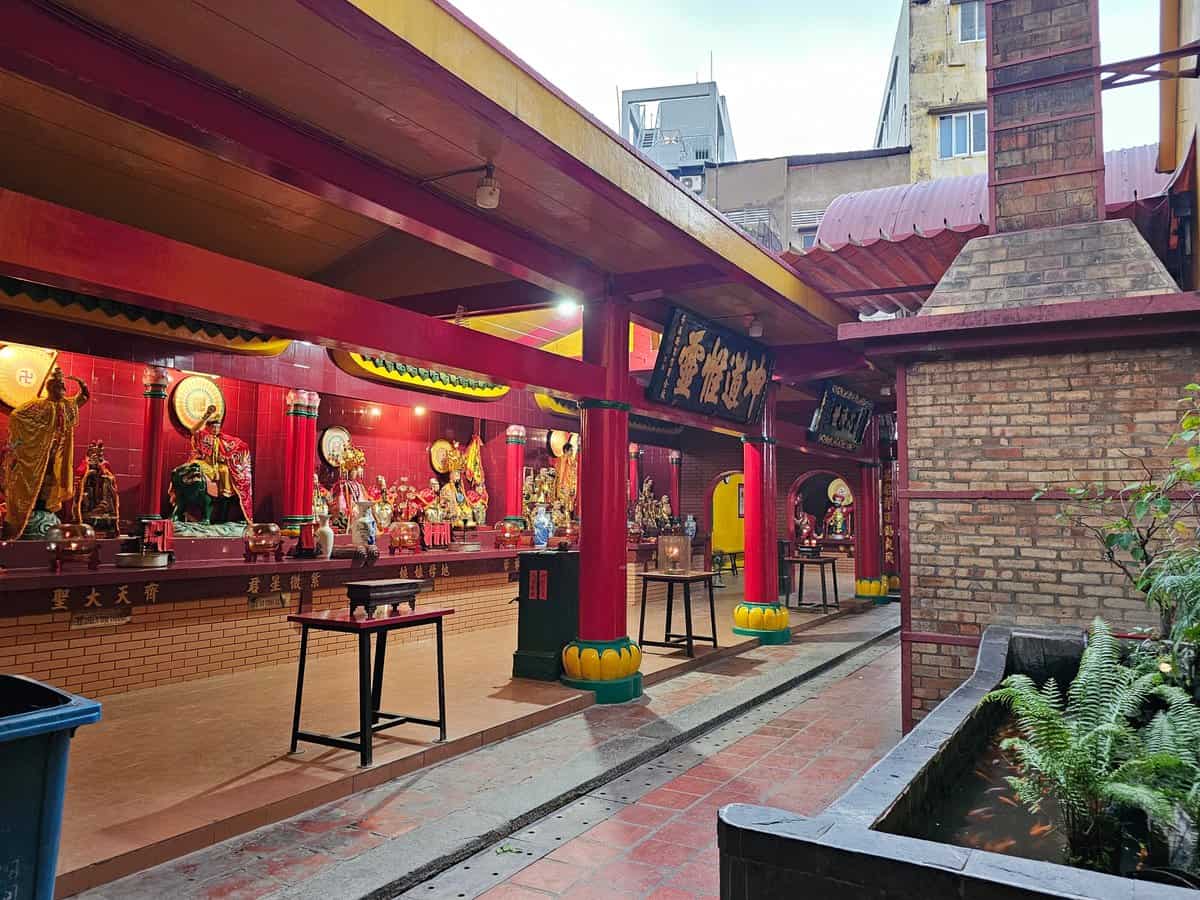
The pagoda complex spans 1,800 square meters across both sides of Lao Tu Street. One side contains the main worship halls, while the opposite side features a garden with an artificial pond.
The Main Complex
Front Courtyard and Gatehouse
You enter through a small red gatehouse into a narrow front courtyard. Relief panels depicting Buddhist Pure Land motifs line the courtyard walls, showing Amitabha Buddha, bodhisattvas, and devotees in traditional iconography.
Front Hall (Antechamber)
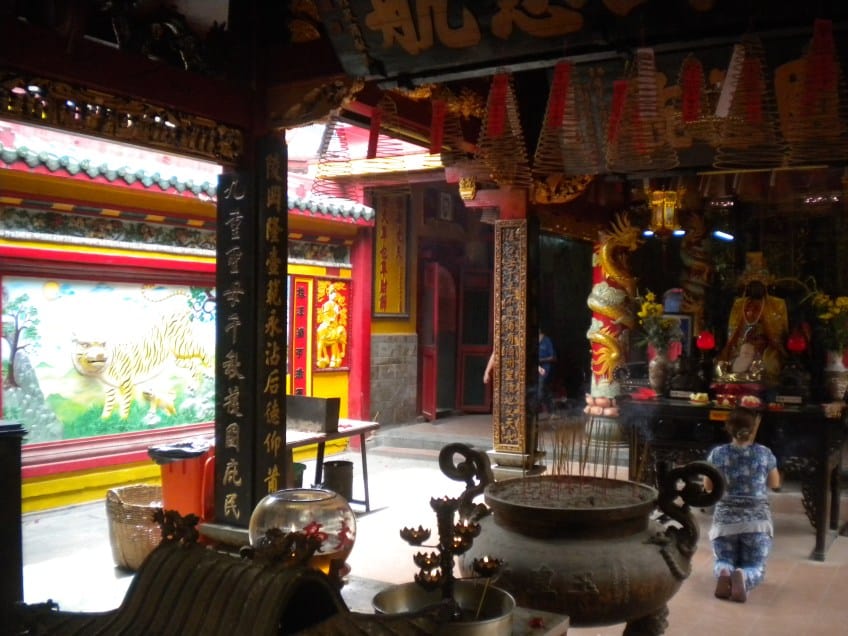
The front hall honors various deities from Chinese folk beliefs, including the Jade Emperor. This space functions as a transition area where visitors light incense before proceeding deeper into the temple. Expect thick incense smoke — it’s a constant presence throughout the pagoda.
Main Sanctuary
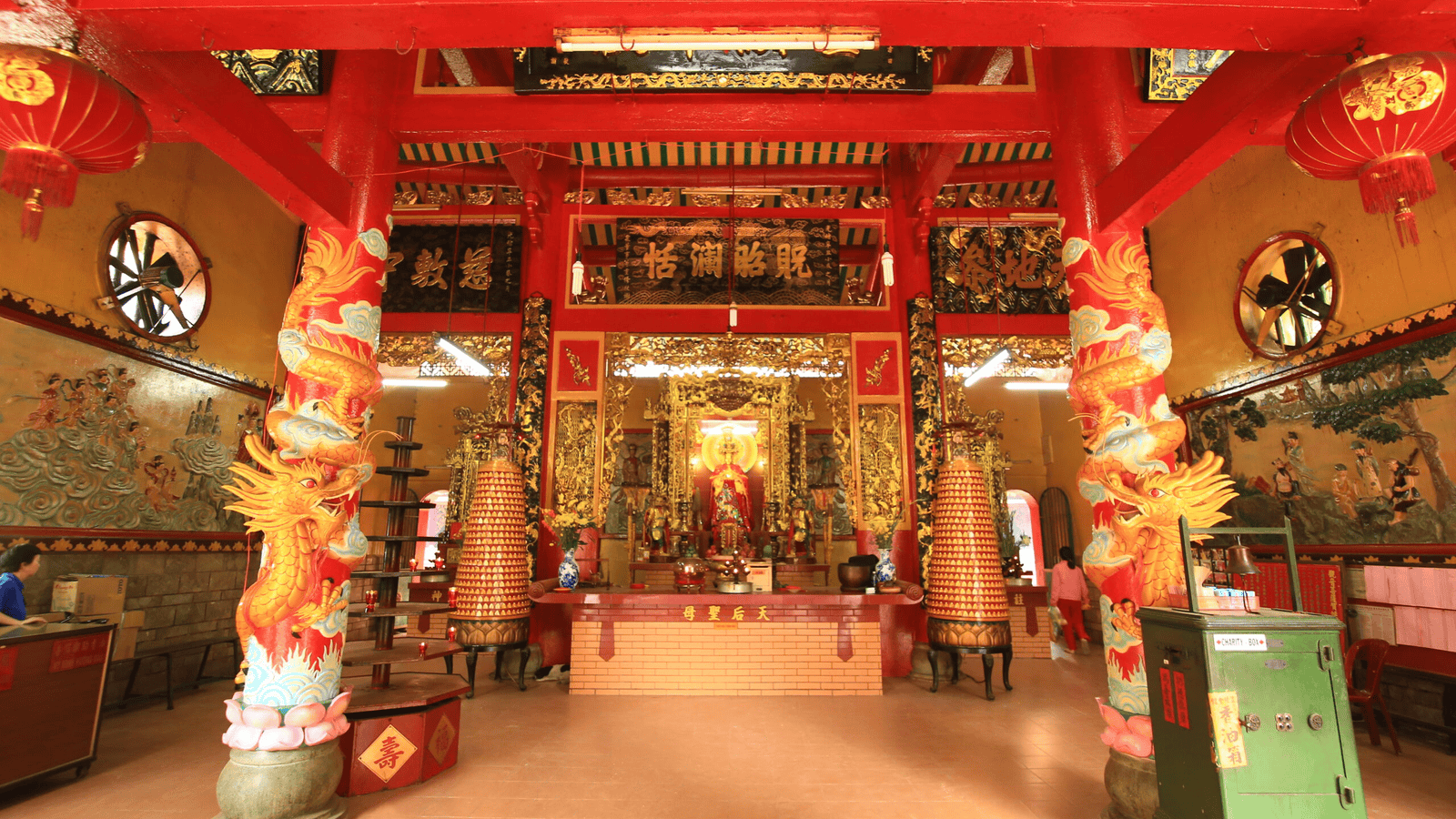
The main altar is dedicated to Mazu (Thien Hau in Vietnamese), the sea goddess worshipped by sailors and those seeking protection during childbirth. Her statue stands central, wearing multicolored robes with a serene golden face. Attendant figures flank her, while guardian demons stand watch at the front. Pillars featuring coiled dragon carvings dominate the space before the altar, with dragons spiraling from heaven above to ocean below.
Rear Courtyard
The partially covered rear courtyard centers on the altar to Quan Am (Guanyin). Her statue shows her standing with raised right hand in a teaching gesture and left hand holding a small vase containing the elixir of life. Numerous smaller altars to other deities line the courtyard periphery. This is typically the busiest worship area, with locals making offerings and lighting incense throughout the day.
The Garden Side
Across the street, a garden area features an artificial pond with a smaller Quan Am statue. She holds a pearl in one hand and a vial in the other. Relief panels with Taoist imagery surround the pond, depicting dragons, clouds, and celestial figures. This space offers quieter reflection compared to the main worship areas.
Architectural Details Worth Noting
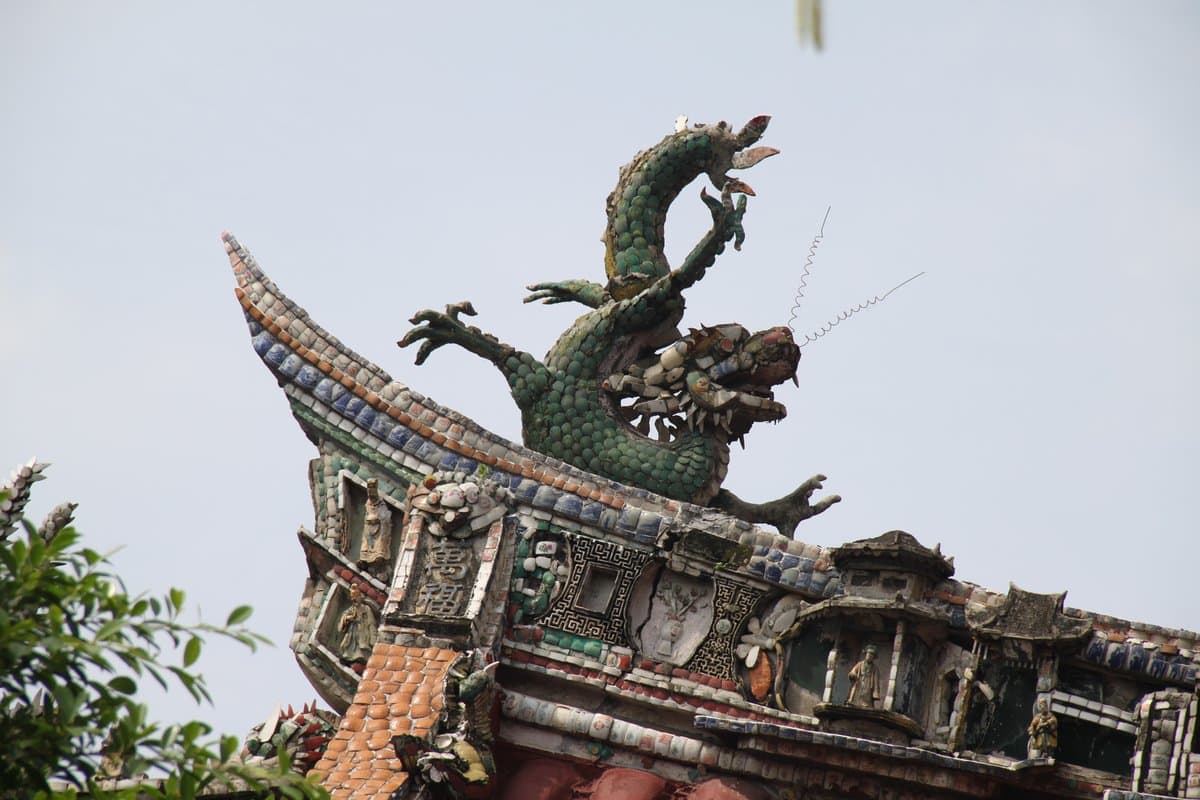
The pagoda follows Fujian Chinese architectural style, built in the shape of a traditional dragon boat. The curved roof eaves are decorated with broken ceramic pieces — intricate scenes from Chinese folk tales and mythology rendered in colorful tiles. Deities and generals mounted on dragon-like creatures top the roof ridges. Red and gold colors dominate throughout, from pillars to wall panels to altar decorations.
Wooden carvings show exceptional craftsmanship in dragon pillars, lotus flower ornaments, and door panels covered in gold lacquer. Lanterns of various shapes hang throughout the interior, creating warm ambient lighting that complements the natural daylight filtering through. The wood frame supporting the tiled roof exemplifies traditional joinery techniques without modern fasteners.
Visiting Practicalities
Opening Hours
7:00 AM to 5:00 PM daily. Some sources indicate 8:00 AM opening, but arriving by 7:00 AM typically works and offers the most peaceful experience.
Entrance Fee
None. The pagoda is free to visit, though donation boxes are available if you wish to contribute to maintenance and operations.
Best Time to Visit
Early morning on weekdays (7:00-9:00 AM) provides the most serene atmosphere with fewer crowds. You’ll see local devotees performing daily rituals, which offers authentic cultural observation without feeling intrusive. Weekends and Buddhist holidays bring significantly more visitors. The pagoda gets especially crowded during Lunar New Year celebrations.
Time Needed
30-45 minutes allows for respectful observation and basic photography. If you’re interested in understanding the religious significance or reading information panels, budget 60 minutes.
Dress Code
Cover your shoulders and knees. This is a working temple where people come to worship, not a museum. Tank tops, short shorts, and revealing clothing will draw disapproving looks and potentially denial of entry by security. Lightweight long pants and t-shirts work fine — you don’t need formal clothing.
Photography Etiquette
Photography is generally permitted, but be mindful of worshippers. Don’t photograph people praying or making offerings without permission. Avoid using flash near altars. The architecture, decorative details, and courtyard spaces provide plenty of photo opportunities without interfering with religious activities. Early morning light offers better illumination for interior shots given the incense smoke.
Behavior Expectations
Keep phones on silent. Speak quietly. Don’t touch altars, offerings, or religious objects unless you’re participating in worship. If you’re uncertain whether an action is appropriate, observe what locals do or simply refrain. Security guards monitor the temple and will approach visitors who behave disrespectfully.
The incense smoke can be intense, especially indoors. If you’re sensitive to smoke, spend more time in the outdoor courtyard areas or bring a mask.
Unique Rituals and Practices
Two distinctive customs make Quan Am Pagoda particularly interesting for cultural observers:
“Beating the Villains” Ceremony
Annually on March 5-6 (solar calendar), worshippers perform a ritual called “Đánh kẻ tiểu nhân” in front of the Tiger altar. Participants repeatedly strike paper dolls representing evil spirits with their shoes, believing this prevents malevolent forces from causing harm. Offerings include even-numbered tangerines, dumplings stamped with red Chinese characters for fortune and prosperity, and raw pork placed on the main altar side. This practice blends spiritual belief with folk tradition in ways you won’t see at conventional Buddhist temples.
Love Prayer Ceremony
The pagoda is known for prayers seeking romantic happiness. Visitors purchase red thread rolls with pre-threaded needles from street vendors outside, then present these at the altar of Hoa Phan Phu Nhan (goddess of beauty and love). This custom makes the temple especially popular among young Vietnamese visitors hoping for relationship blessings.
Nearby Attractions Worth Combining
Cholon’s compact layout makes temple-hopping efficient:
Ba Thien Hau Temple (10-minute walk)
The most important temple in Cholon, dedicated to the same sea goddess Mazu. Built around 1760, it features even more elaborate decorations and typically draws larger crowds than Quan Am Pagoda.
Binh Tay Market (15-minute walk)
The wholesale market heart of Cholon, established in the 1880s. This is where locals shop — far more authentic than Ben Thanh Market’s tourist orientation. The central courtyard and clock tower are architecturally notable.
Tam Son Hoi Quan Pagoda (12-minute walk)
Dedicated to the goddess of fertility. The ornate interior rivals Quan Am Pagoda’s craftsmanship.
Nghia An Temple (8-minute walk)
Over 300 years old, dedicated to Guan Yu from Chinese folklore. The complex features extensive stone and wood carvings from the late 19th-early 20th centuries.
A full Cholon walking tour covering these sites plus street food stops typically takes 4-5 hours. Organized tours like the “Memories of Saigon-Cho Lon” official itinerary cost approximately 400,000-600,000 VND and include guide commentary that helps contextualize what you’re seeing.
What to Expect (Honest Assessment)
The Good
Quan Am Pagoda offers genuine cultural immersion without feeling touristy. You’ll see real worship practices, not performances staged for visitors. The Fujian architecture is distinctly different from Vietnamese Buddhist temples you’ll encounter elsewhere. Free entry removes financial barriers. The Cholon neighborhood surrounding the pagoda provides authentic street life — bilingual signs, Chinese-Vietnamese fusion cuisine, and a community feel that even local Vietnamese find novel.
The Limitations
The pagoda is smaller and less grand than some Cholon temples. Recent renovations have cleaned up what was previously grittier patina — whether this improves or diminishes the experience depends on your preferences. The location tucked behind market stalls means you won’t get dramatic exterior photos. Heavy incense smoke throughout can be overwhelming for some visitors. Information panels are primarily in Vietnamese and Chinese, with limited English translation.
Security guards are present and will enforce dress codes and behavior standards strictly. This isn’t a casual tourist attraction where anything goes — it’s an active religious site first, visitor destination second.
Is It Worth Visiting?
If you’re interested in Chinese-Vietnamese culture, religious architecture, or seeing how local communities maintain spiritual traditions, yes absolutely. If you’re looking for Instagram-friendly grand temples or quick tourist box-checking, Jade Emperor Pagoda in District 3 might serve you better despite being farther from the center.
Quan Am Pagoda works best combined with broader Cholon exploration rather than as a standalone destination. The neighborhood’s market streets, food stalls, and cluster of nearby temples create context that enhances understanding.
Practical Tips from Visitors
Street Vendors Outside
Vendors selling incense, paper offerings, fruit, and prayer items cluster near the entrance. They’re helpful if you want to make offerings but can be persistent with sales pitches. Polite firm “no thank you” works. Prices for incense bundles typically run 10,000-20,000 VND.
Cash Recommended
While the pagoda itself requires no payment, nearby street food and drinks operate cash-only. ATMs are available in Cholon but not immediately adjacent to the pagoda.
Combining with Meals
The corner of Lao Tu and Phung Hung Streets has popular noodle stalls. Ha Ton Quyen Street specializes in wonton soup (siu cao) with multiple competing vendors. Cholon offers excellent Chinese-Vietnamese cuisine at lower prices than District 1’s tourist areas.
Guard Dogs
Some sources mention free-roaming guard dogs protecting the temple due to valuable gilded items. These aren’t aggressive toward respectful visitors but be aware they’re present.
Language Barrier
Don’t expect English-speaking staff. Basic Vietnamese phrases or translation apps help. Most architectural features lack English explanatory plaques.