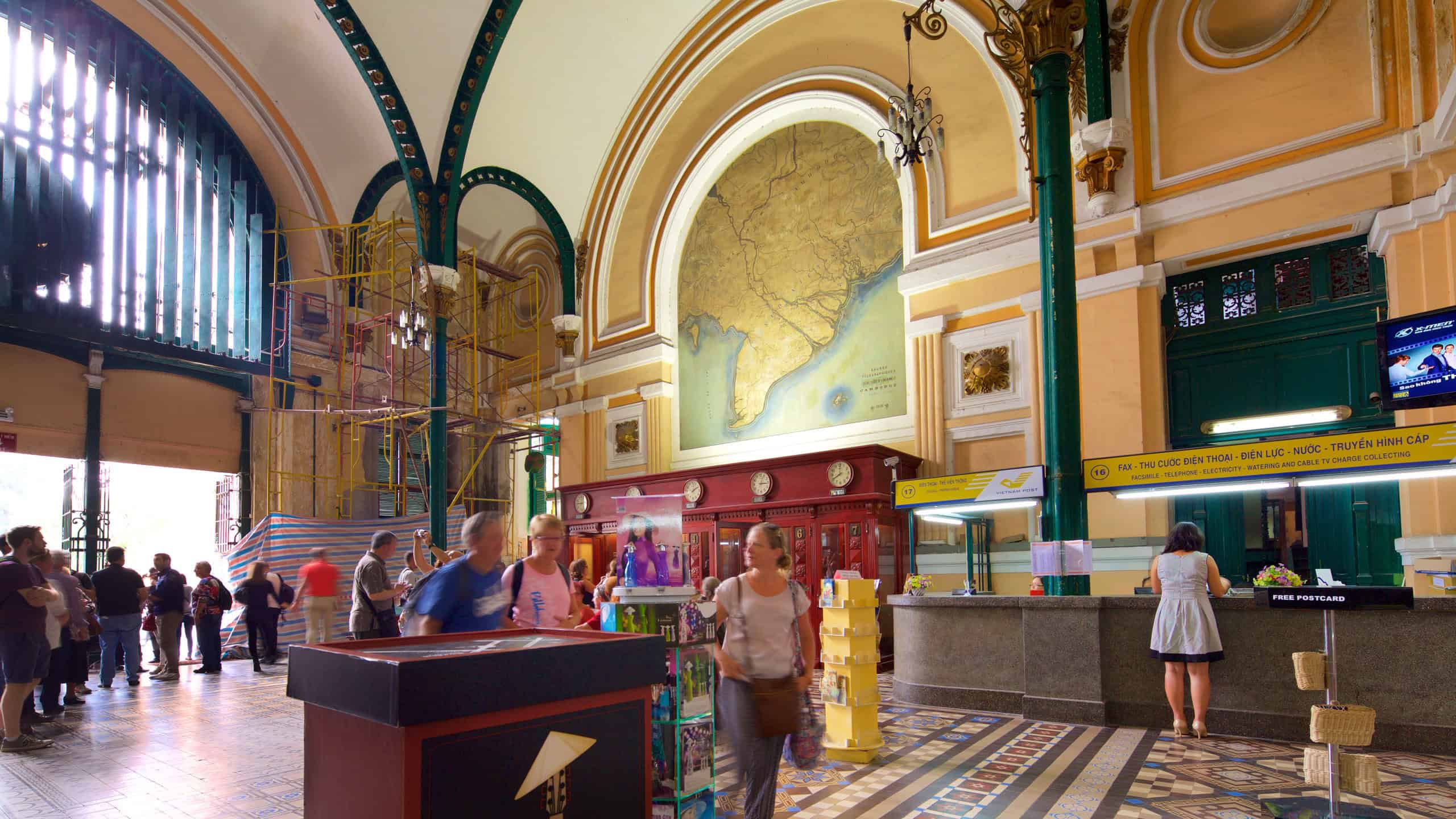
The Saigon Central Post Office in Ho Chi Minh City is a 135-year-old French colonial landmark where you can mail postcards from vintage phone booths, buy fairly-priced souvenirs, and photograph stunning vaulted architecture—all while locals conduct actual postal business around you. Located at 2 Cong Xa Paris Street in District 1, this free-entry attraction takes 20-45 minutes to explore and sits directly across from Notre Dame Cathedral.
Quick Visit Essentials
- Entry Fee: Free
- Best Time: Weekday mornings (7:30-9 AM) or late afternoons (after 4 PM)
- Time Needed: 20-45 minutes (longer if shopping or mailing)
- Opening Hours: 7:30 AM – 6:00 PM (Mon-Sat), 8:00 AM – 5:00 PM (Sun)
- Avoid: 8:30-10 AM and 4-6 PM (rush hours), weekends
Getting There
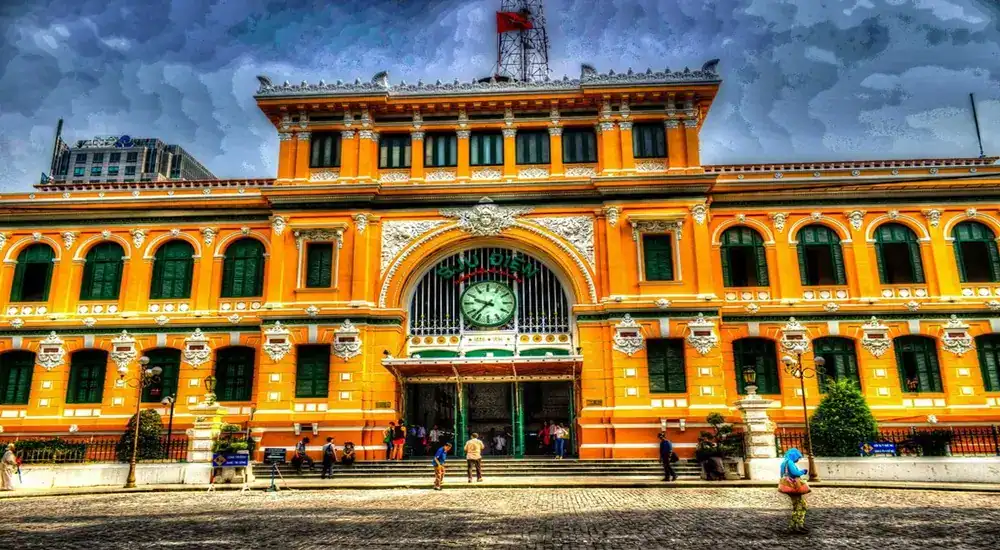
Address: 2 Công Xã Paris Street, District 1, Ho Chi Minh City
Transportation Options:
- Bus: Routes 03, 06, 19, 30, 45, 93, 120 stop on Cong Xa Paris Street
- Taxi/Grab: 50,000-60,000 VND ($2-2.50) from most District 1 locations, 5-10 minute ride
- Walking: 15-20 minutes from Ben Thanh Market or most District 1 hotels
If you’re visiting Notre Dame Cathedral or Book Street, you’re already next door—the post office sits in the heart of District 1’s most walkable tourist area.
The Architect Mystery Solved
Most travel guides incorrectly credit Gustave Eiffel (of Eiffel Tower fame) as the post office’s architect. Historical records prove otherwise: Alfred Foulhoux, Chief Architect of Cochinchina, designed the building as his final major project.
The confusion stems from Eiffel’s work on Vietnam’s Long Bien Bridge in Hanoi. A French architectural journal from September 1891 definitively credits Foulhoux: “This monument…does the greatest honour to the skill and talent of the distinguished Chief Architect of the Colony, M. Foulhoux.”
Built between 1886-1891, the post office replaced an earlier telegraph department from the 1860s. The building blends Gothic, Renaissance, and French colonial styles with a prefabricated cast-iron frame imported from France—a common technique for tropical climates requiring both strength and ventilation.
What You’ll See
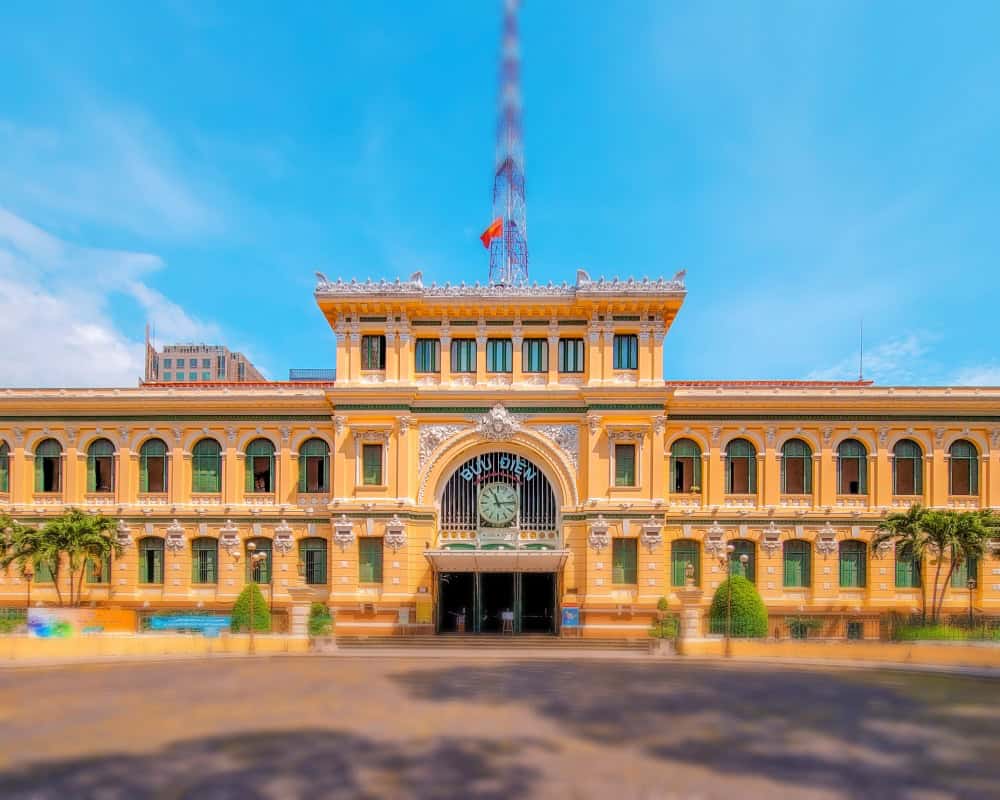
Exterior Architecture
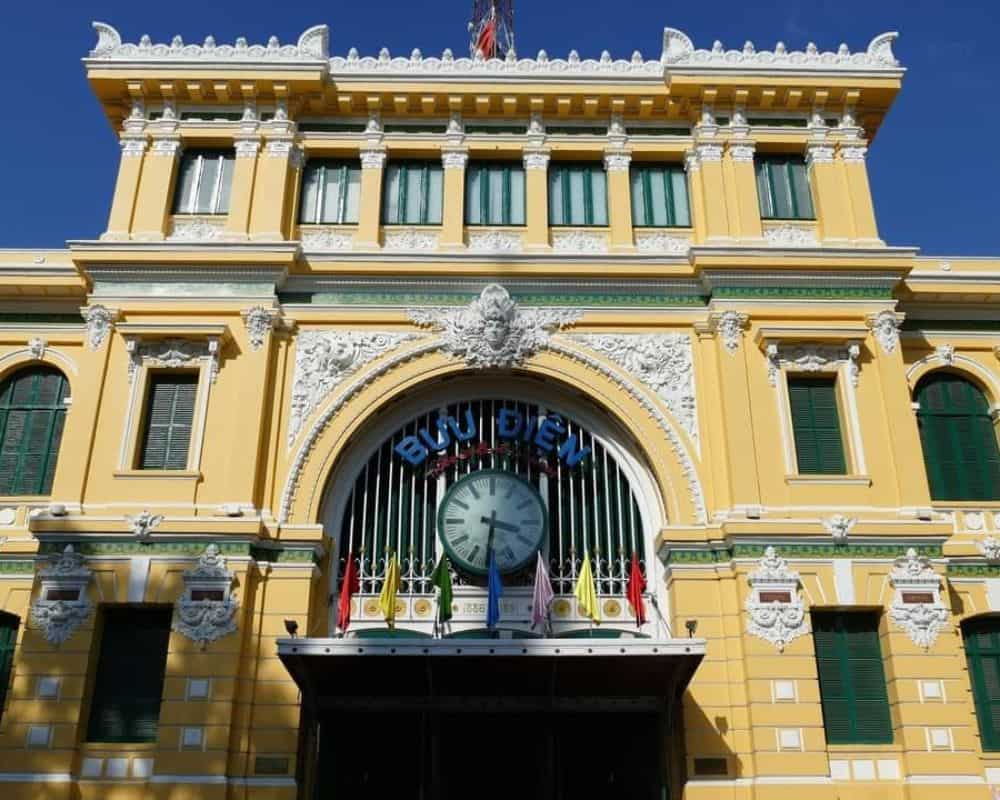
The bright yellow facade with white trim and green shutters epitomizes French colonial Indochina style. Above the main entrance sits a clock that’s kept time for over 130 years—now a city symbol and popular meeting point.
Look for the plaques honoring communication pioneers: Samuel Morse, Alessandro Volta, Michael Faraday, André-Marie Ampère, and Benjamin Franklin. These rectangular panels running along the facade celebrate the telegraph industry’s inventors.
Photography Tip: For the best wide-angle exterior shot, cross the street toward Notre Dame Cathedral. Early morning (7:30-9 AM) or late afternoon (after 4 PM) provides optimal natural light. The golden hour just before sunset creates particularly warm, flattering tones.
Interior Highlights
The Grand Hall Step inside to find an expansive space with soaring vaulted ceilings supported by green-painted iron pillars. The barrel-vaulted ceiling resembles a 19th-century European train station more than a post office—a deliberate design choice reflecting the era’s industrial aesthetic.
The mosaic tile floor, though showing its age, adds period authenticity. Rows of wooden benches line the hall where visitors can rest after exploring District 1’s attractions.
Historic Maps Two meticulously hand-painted maps flank the main hall, created just after the post office opened in 1891:
- Left Side: “Saigon et ses environs 1892” (Saigon and its surroundings 1892) – Shows the city’s layout in its colonial heyday
- Above Phone Booths: “Lignes télégraphiques du Sud Vietnam et Cambodge 1892” (Telegraph lines of Southern Vietnam and Cambodia 1892) – Illustrates the communication network connecting French Indochina
These aren’t reproductions—they’re original 133-year-old artifacts, making them among the post office’s most valuable historical elements.
The Portrait A large portrait of President Ho Chi Minh hangs at the hall’s end, installed after reunification in 1975. Behind it lies Saigon’s original coat of arms inscribed with “Paulatim crescam” (Developing little by little), covered over and no longer visible.
Vintage Phone Booths Fourteen old wooden phone booths line both sides near the entrance. Some retain their original rotary-dial phones, while others have been converted to ATMs. These booths represent a bygone era when international calls required operator assistance and privacy booths.
The Letter Writer’s Legacy Dương Văn Ngộ, Vietnam’s last public letter writer, worked at the post office from 1990 to 2021—a 31-year career writing letters in Vietnamese, English, and French for those who couldn’t write themselves. He passed away in 2023 at over 90 years old, ending a centuries-old Vietnamese tradition. Though gone, his wooden writing desk remains, and some visitors still seek out his memory.
What To Do Here
1. Send a Postcard
The most popular activity: buying postcards featuring Ho Chi Minh City landmarks (Ben Thanh Market, Notre Dame Cathedral, Independence Palace, Opera House) and mailing them with vintage stamps.
Pricing:
- Postcards: 20,000-40,000 VND ($0.80-$1.60) each
- International postage: Surprisingly affordable (prices vary by destination)
- Vintage stamps: Available for collectors
Process:
- Select postcards from vendors lining the walls
- Write your message at the antique wooden desks provided
- Purchase stamps at one of 38 service counters (English signs available)
- Mail from the postboxes inside
Note: International mail takes several weeks. Don’t expect speedy delivery—the charm lies in the tradition, not the efficiency.
2. Souvenir Shopping
Unlike Ben Thanh Market or Saigon Square, the post office offers a refreshingly low-pressure shopping experience. Vendors aren’t pushy, prices are clearly marked, and no haggling is required—making this many travelers’ preferred spot for keepsakes.
Available Items:
- Handmade crafts
- Traditional conical hats (nón lá)
- Postcards and bookmarks
- Magnetic souvenirs
- Small artwork and drawings
- Coin purses
- Stamps (vintage and current)
- Small statues
Why It’s Better Than Markets: Fixed fair pricing, relaxed atmosphere, air-conditioned comfort, and items are often higher quality than typical market fare.
3. Architecture Photography
The post office ranks among Ho Chi Minh City’s most photographed buildings for good reason. Its photogenic qualities span exterior grandeur to interior details.
Best Photo Spots:
- Exterior Facade: Cross to Notre Dame’s side for full building composition
- Vaulted Ceiling: Wide-angle lens captures the dramatic height and ironwork
- Historic Maps: Position near the phone booths for clean shots without crowd interference
- Phone Booths: Vintage rotary phones make excellent close-up subjects
- Floor Tiles: Intricate mosaic patterns reward detail photography
Lighting Tips:
- Morning: 7:30-9 AM for soft natural light through windows
- Afternoon: After 4 PM for warm tones
- Avoid: Midday harsh light and flash (restricted in some areas)
- Golden Hour: Just before sunset for the most flattering exterior shots
4. Observe Daily Postal Operations
This isn’t just a museum—the post office actively processes thousands of letters and parcels daily. Watching postal clerks at the 38 service counters provides a window into Vietnam’s ongoing postal system, a reminder that the building still serves its original 135-year-old purpose.
Visitor Tips & Etiquette
Dress Code: Modest clothing recommended. Avoid overly revealing outfits—this is both a tourist site and active workplace. Think shoulders covered, shorts/skirts at knee-length minimum.
Behavior:
- Keep voices low—locals are conducting actual business
- Don’t block walkways or service counters
- Photography is allowed for personal use; flash may be restricted
- Be mindful when photographing postal workers
Crowds:
- Busiest: 8:30-10 AM, 4-6 PM (local rush hour), weekends, public holidays
- Quietest: First thing at opening (7:30 AM weekdays) or between 2-4 PM
- Moderate: Late mornings (10 AM-noon), early afternoons
What to Bring:
- Small cash (Vietnamese dong) for postcards, stamps, souvenirs
- Camera/smartphone (ensure adequate storage—you’ll take many photos)
- Water bottle (District 1 walking gets hot)
Accessibility:
- Ground floor is wheelchair accessible
- No entrance fee means budget-friendly for all travelers
- Air-conditioned comfort, a relief from tropical heat
Nearby Attractions: Half-Day Walking Itinerary

The post office’s central District 1 location makes it perfect for a self-guided walking tour. All these attractions sit within 15 minutes’ walk:
Immediate Area (0-5 minutes)
Notre Dame Cathedral (directly across the street)
- Under renovation until 2027, but exterior photography still worthwhile
- Built 1863-1880 with materials imported from France
- Red brick facade remains impressive despite scaffolding
- Best photos: Early morning when the square is quiet
Book Street (Nguyễn Văn Bình) (1-minute walk)
- Shady, tree-lined pedestrian street
- Bookshops offering local literature
- Quiet cafes perfect for coffee breaks
- Frequent cultural events and small performances
- Completely free to browse
Short Walk (5-15 minutes)
Nguyễn Huệ Walking Street (10-minute walk toward Saigon River)
- 670-meter pedestrian boulevard
- Views of People’s Committee Building
- Saigon Opera House nearby
- Street performers, vendors, and city atmosphere
- Best visited: Evening when illuminated
Independence Palace (450 meters, 6-minute walk)
- Former presidential palace of South Vietnam
- Preserved exactly as it was on April 30, 1975 (fall of Saigon)
- Original war command rooms, communication equipment
- Rooftop helipad with historical helicopter
- Entry fee: 40,000 VND for adults
- Time needed: 1-1.5 hours
Saigon Opera House (10-minute walk)
- Built 1898 in French Third Republic style
- Hosts performances: “A O Show,” “TEH DAR,” “The MIST”
- Beautiful exterior photos, especially at night
- No entrance fee to view exterior
30/4 Park (Between post office and palace)
- Small urban park, popular with students
- Shaded benches under century-old trees
- Perfect spot for bánh mì (Vietnamese sandwich) from street vendors
- People-watching opportunity
Ben Thanh Market (1 kilometer, 15-minute walk)
- Ho Chi Minh City’s most famous market
- Souvenirs, clothing, household items
- Food stalls with local specialties: broken rice, Vietnamese pancakes
- Note: Prices higher than post office, haggling required
- Best for: Vietnamese street food experience
War Remnants Museum (District 3, 15-minute walk)
- Comprehensive Vietnam War documentation
- Indoor and outdoor exhibits
- Moving and eye-opening historical perspective
- Entry fee: 40,000 VND
- Time needed: 1.5-2 hours
- Note: Emotionally intense content
Sample Half-Day Itinerary (4 hours)
Morning Route (Start 7:30 AM):
- Saigon Central Post Office (45 minutes) – Arrive at opening for best light, fewer crowds
- Notre Dame Cathedral exterior photos (15 minutes)
- Book Street coffee break (30 minutes)
- Nguyễn Huệ Walking Street to Opera House (30 minutes)
- Independence Palace tour (1.5 hours)
- Lunch at 30/4 Park or nearby restaurant
Afternoon Route (Start 2:00 PM):
- Saigon Central Post Office (45 minutes) – Good afternoon light, moderate crowds
- Notre Dame Cathedral & Book Street (45 minutes combined)
- Walk to War Remnants Museum (1.5 hours)
- Ben Thanh Market dinner and shopping (1+ hours)
This itinerary covers District 1’s French colonial heritage, modern Vietnamese history, and local culture without requiring transportation between stops.
Best Time to Visit Ho Chi Minh City
Dry Season (December-April): Ideal weather conditions
- Pleasant temperatures, lower humidity, abundant sunshine
- December-January: Peak tourist season (larger crowds)
- February-March: Slightly fewer tourists, still excellent weather
- Recommendation: February-March for best balance
Rainy Season (May-November): Still manageable
- Peak rainfall: June-August
- Afternoon thunderstorms common
- Mornings often clear and sunny
- Fewer tourists, potential deals
- Recommendation: Visit morning hours, carry light rain jacket
For Post Office Visits: Any time of year works—it’s an indoor attraction. Rain actually drives more visitors inside, so sunny days may mean smaller crowds.
Interesting Facts
- World Recognition: Ranked #2 in “11 Most Beautiful Post Offices in the World” by American Architectural Digest magazine
- Still Fully Operational: After 135 years, it remains Ho Chi Minh City’s main postal hub, processing thousands of items daily
- The 1863 “Stork” Stamp: Vietnam’s first postage stamp, issued when the original post office opened
- Construction Cost: 40,000 piastres in 1891 currency
- Material Origins: Iron framework prefabricated in France, shipped to Saigon for assembly—common for tropical colonial buildings requiring durability
- Name Evolution: Originally “Saigon Telegraph-wire Department,” reflecting its primary purpose as a communication hub for French Indochina
- The Hidden Coat of Arms: Behind Ho Chi Minh’s portrait lies Saigon’s original coat of arms with the motto “Paulatim crescam,” covered after 1975 reunification
Frequently Asked Questions

Is it really free to enter? Yes, completely free. It’s an active post office, not a paid museum. You only pay if you buy postcards, stamps, or souvenirs.
How long should I spend here? Most visitors need 20-45 minutes. Add extra time if you plan to shop extensively or send mail. Photography enthusiasts might spend an hour capturing details.
Can I use the post office for actual postal services? Absolutely. All 38 service counters offer full postal services: letters, parcels, stamps, international shipping. English signs help non-Vietnamese speakers.
Are there ATMs inside? Some vintage phone booths have been converted to ATMs. Additional ATMs are located in nearby Diamond Plaza.
Is it wheelchair accessible? The ground floor main hall is wheelchair accessible. There are small staircases to upper souvenir shop areas.
Can I send packages home? Yes, but for large items, standard cardboard boxes and packing materials may not be readily available. Come prepared or expect to purchase materials nearby.
What about phone/internet access? SIM cards are sold by vendors inside. Free WiFi is not consistently available—purchase a local SIM if you need data.
Is there a dress code for tourists? No strict code, but modest dress shows respect: covered shoulders, knee-length shorts/skirts minimum. You won’t be turned away for casual tourist clothing.
Can I hire a tour guide? Independent guides sometimes offer services outside, or you can join organized city tours that include the post office. It’s easy enough to explore independently.
What’s the best combo with other attractions? Post Office + Notre Dame Cathedral + Book Street makes a perfect 2-hour morning. Add Independence Palace or War Remnants Museum for a half-day experience.
Why Visit?
In a city racing toward modernity, the Saigon Central Post Office offers something increasingly rare: a fully functional piece of living history. You’re not observing a preserved museum piece—you’re witnessing Vietnamese daily life unfold in a 135-year-old architectural masterpiece.
The blend of tourist attraction and working post office creates unique experiences: sending postcards under vaulted ceilings while locals mail bills; browsing souvenirs steps away from postal clerks processing parcels; photographing vintage phone booths that once connected Saigon to the world.
For architecture enthusiasts, the building represents French colonial design at its finest. For history buffs, it’s a tangible connection to Vietnam’s colonial past and post-independence evolution. For casual tourists, it’s an air-conditioned respite with fair-priced souvenirs and Instagram-worthy backdrops.
Most importantly: it’s free, centrally located, and genuinely interesting. Whether you spend 15 minutes or an hour, the post office delivers a memorable slice of Ho Chi Minh City’s character—the kind of authentic experience that defines great travel.