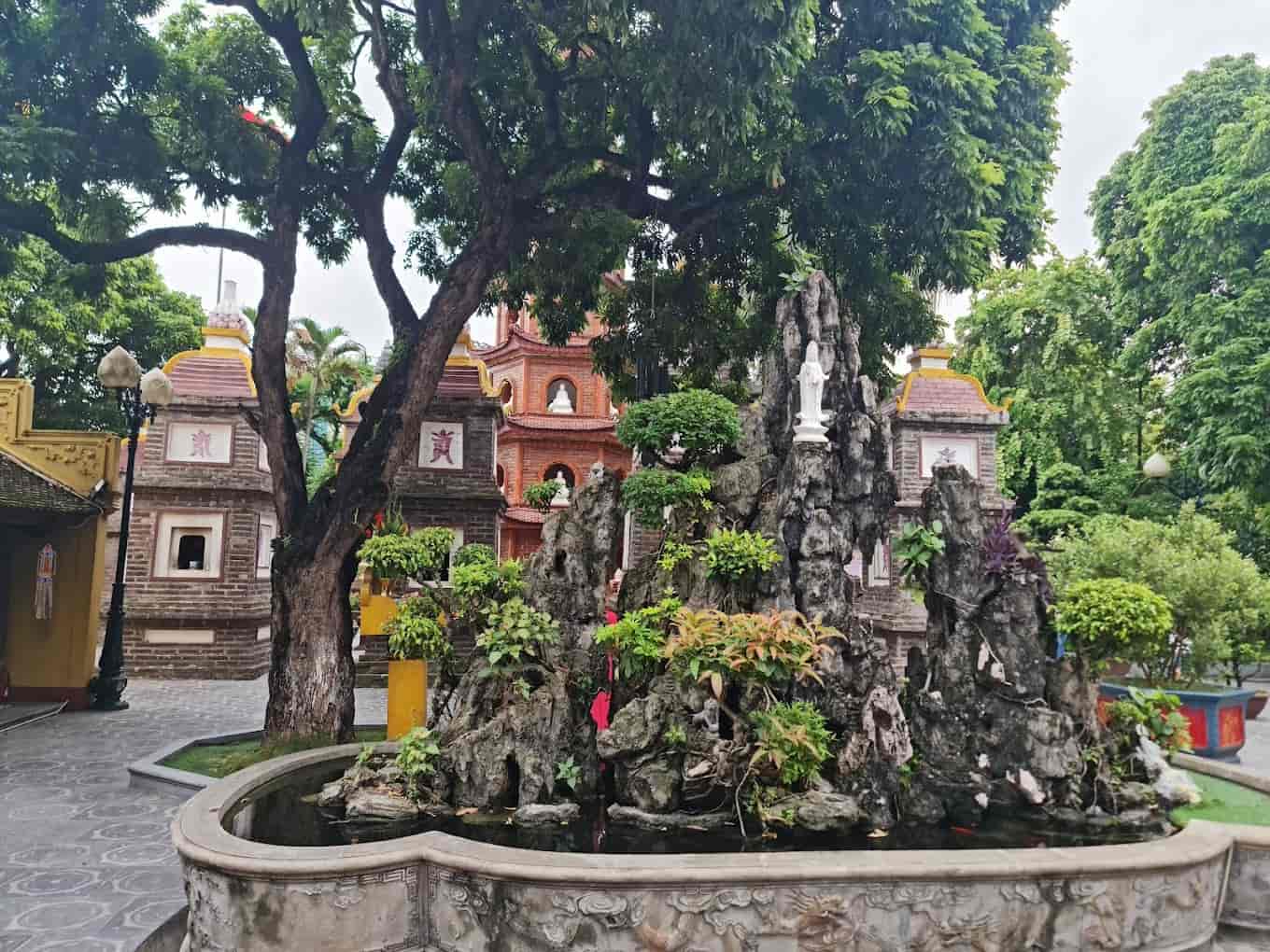
Tran Quoc Pagoda is Hanoi’s oldest Buddhist temple, free to enter, located on West Lake at 46 Thanh Nien Street. Opening hours are 8:00 AM – 4:00 PM daily (some sources report 7:30 AM – 6:00 PM). The pagoda features an iconic 11-story red stupa, a sacred Bodhi tree gifted from India in 1959, and Vietnam’s most beautiful Reclining Buddha statue.
Visit takes 30-60 minutes. Best times: weekday mornings (7:30-9:00 AM) or sunset (4:00-5:30 PM) to avoid crowds. The site gets extremely crowded on lunar calendar 1st and 15th days, during Tet holiday, and weekends. Dress code strictly enforced: cover shoulders and knees, remove shoes before entering halls. Located 5km from Hanoi Old Quarter, easily reached by taxi (60,000-80,000 VND) or bus #50.
Quick Facts Box
| Detail | Information |
|---|---|
| Age | 1,500+ years (built 541-548 AD) |
| Entrance Fee | Free |
| Opening Hours | 8:00 AM – 4:00 PM (main hours) |
| Location | 46 Thanh Nien St, Tay Ho District |
| Visit Duration | 30-60 minutes |
| Distance from Old Quarter | ~5 km (15-20 min by taxi) |
| Dress Code | Shoulders/knees covered, remove shoes |
| Busiest Times | Lunar 1st & 15th, weekends, Tet |
| Photography | Allowed (no flash inside) |
| Best For | History, architecture, photography |
Opening Hours: What You Need to Know
Standard Hours: Most sources confirm 8:00 AM – 4:00 PM daily. However, some 2025 sources report extended hours of 7:30 AM – 6:00 PM.
Special Hours:
- Lunar 1st & 15th days: Opens earlier (6:00 AM) and stays open later (6:00 PM)
- Lunar New Year’s Eve: Open all night for worshippers
- Regular weekdays: Less crowded, standard hours apply
Lunch Break Confusion: Some visitors report a midday closure (11:30 AM – 1:30 PM), though this is not consistently mentioned. If visiting around noon, expect potential limited access to inner halls.
Recommendation: Arrive by 8:00 AM for guaranteed entry and smallest crowds, or visit after 3:30 PM for golden hour photography.
Getting There: Practical Transport Options
From Hanoi Old Quarter (5 km distance):
By Taxi/Grab:
- Cost: 60,000-80,000 VND (~$2.50-3.50 USD)
- Time: 15-20 minutes depending on traffic
- Easiest option for first-time visitors
By Bus:
- Bus #50: Direct route, most convenient
- Bus #33, 41, 55A, 55B, 58: Stop at An Duong bus stop (5-minute walk to pagoda)
- Cost: 7,000 VND per ride
- Time: 25-35 minutes
By Motorbike/Scooter:
- Rental: 150,000 VND/day from hotels
- Parking: 10,000 VND at nearby Quan Thanh Temple, then 10-minute lakeside walk
- Route: Follow Thanh Nien Road directly
By Cyclo (Traditional):
- Negotiate price first: ~80,000-150,000 VND
- Scenic but slow option
Walking from Old Quarter:
- Distance: 5 km
- Time: 60-70 minutes
- Only recommended if combining with West Lake circuit walk
The Crowd Reality: Honest Assessment
⚠️ CRITICAL WARNING: Tran Quoc Pagoda’s “tranquil Buddhist sanctuary” reputation does NOT match reality during peak times. Multiple visitor reviews emphasize overwhelming crowds that destroy the peaceful atmosphere.
When It’s Packed (Avoid These Times):
- Lunar 1st & 15th days: Busiest days with local worshippers
- Tet Holiday (Jan-Feb): Extremely crowded, open all night
- Weekends: High tourist traffic 10:00 AM – 3:00 PM
- Vesak (Buddha’s Birthday, April-May): Major Buddhist festival, monks from across Vietnam
- Any public holiday: Expect crowds
Actual Visitor Complaints from Reviews:
- “Super packed with tourists, hard to feel tranquility”
- “Noise level was high, spoilt the serene atmosphere”
- “If you want quiet, come very early morning”
- “Difficult to find zen moment with crowds”
Best Times for Peaceful Visit:
- Tuesday-Thursday mornings (7:30-9:00 AM): Smallest crowds
- Late afternoon weekdays (3:30-4:30 PM): Good for sunset photos, thinning crowds
- Avoid first/mid-month lunar dates: Check lunar calendar before planning
What You’ll Actually See: Main Attractions
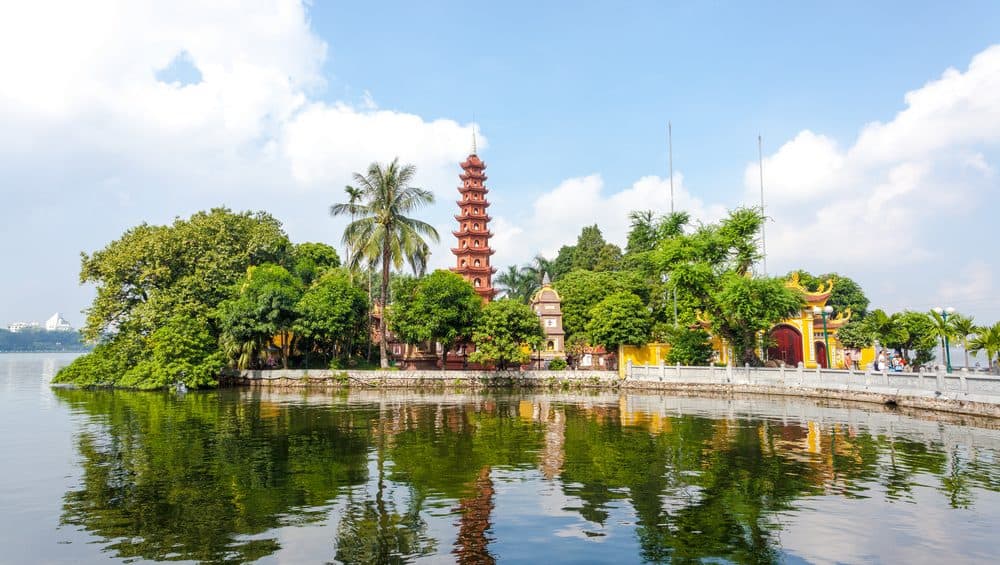
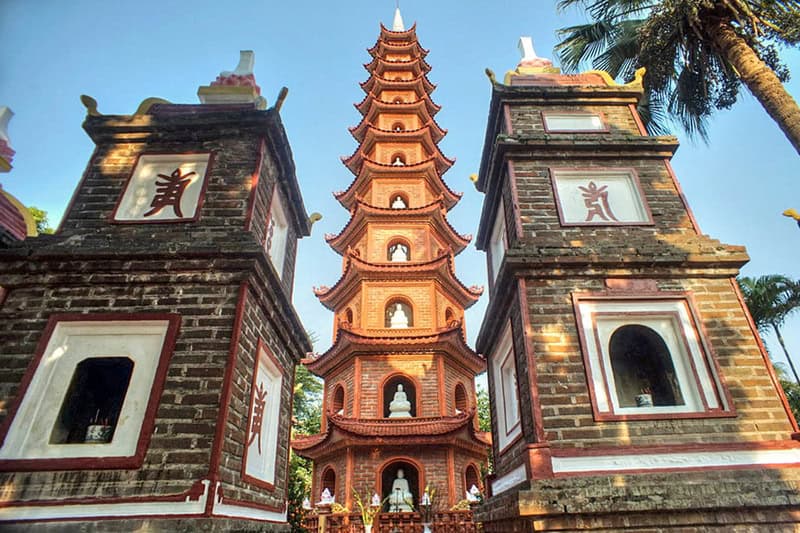
1. The 11-Story Stupa (Bảo Tháp)
Built: 1998 (recent construction, not ancient)
Height: 15 meters
Design: 11 tiers with 6 arched doorways per level
Inside each doorway: White gemstone statue of Amitabha Buddha. The nine-tiered lotus at the top symbolizes enlightenment. This red stupa is the pagoda’s most photographed feature.
Photography Tip: Best shot from entrance causeway with West Lake background, especially during golden hour (5:00-5:30 PM).
2. Sacred Bodhi Tree
Origin: Gift from Indian President Rajendra Prasad during 1959 Vietnam visit
Significance: Grown from cutting of original Bodh Gaya tree where Buddha achieved enlightenment
Age: 66 years old (as of 2025)
Located in rear courtyard. The large canopy provides shade for meditation. Heart-shaped leaves considered sacred by Buddhist pilgrims.
3. Reclining Buddha Statue (Thích Ca Thập Niết Bàn)
Location: Front House
Material: Wood with glossy golden paint
Recognition: Voted “most beautiful Reclining Buddha statue in Vietnam”
Rarity: Such statues are rare in Northern Vietnam (more common in Thailand/Laos)
Depicts Buddha entering Nirvana. Intricate carving showcases exceptional Vietnamese sculptural artistry.
4. The Stele House (Nhà Bia)
Contains 14 stone steles engraved with poems from Vietnamese scholars and kings, primarily from Nguyen Dynasty. These record the pagoda’s renovation history from 1813-1815 and provide historical documentation of each dynasty’s modifications.
5. Three Main Halls
Front House (Tiền Đường): Main worship area, houses major Buddha statues
Incense Burning House: Active ritual space where visitors light incense
Upper House (Thượng Điện): Contains ancestral monk altars and additional shrines
Connected layout resembles Chinese character “Công” (工) when viewed from above.
Dress Code & Etiquette Rules
Strictly Enforced Dress Requirements:
- ❌ NOT allowed: Shorts, mini skirts, tank tops, sleeveless shirts, revealing clothing
- ✅ Required: Shoulders covered, knees covered
Additional Rules:
- Remove shoes, hats, and umbrellas before entering any enclosed hall
- Speak quietly – this is an active place of worship
- Avoid loud conversations or disruptive behavior
- Ask permission before photographing monks or ceremonies
- No flash photography inside halls
- Do not touch sacred statues or artifacts
- Step over thresholds, do not step on them
Offerings & Incense:
- Incense available at Incense Burning House
- Present offerings in odd numbers (odd = lucky in Vietnamese/Chinese culture)
- Donations accepted but NOT required
- No food offerings with meat (monks are vegetarian)
Photography Guide: Best Shots & Techniques
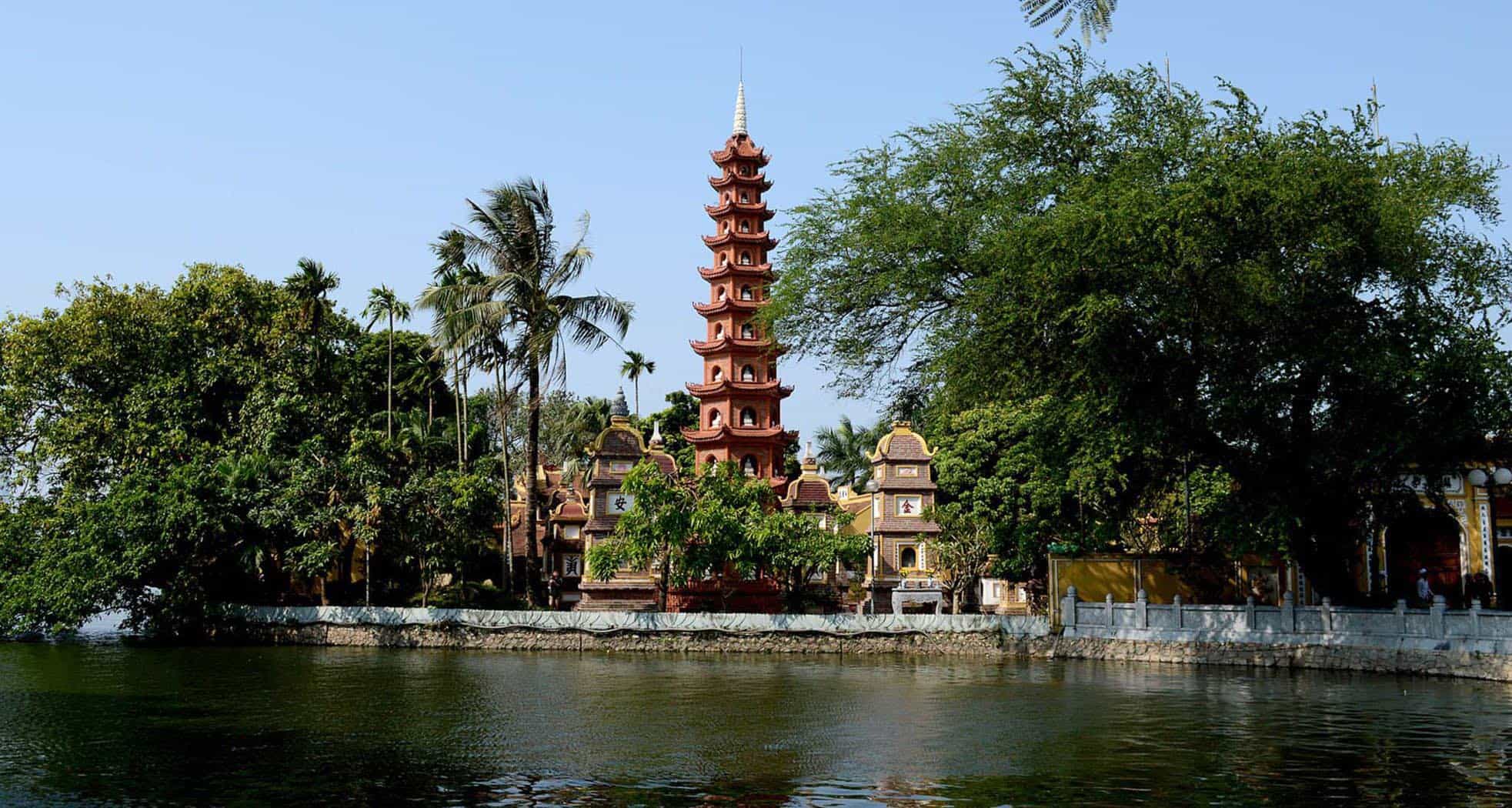
Top 5 Photography Spots:
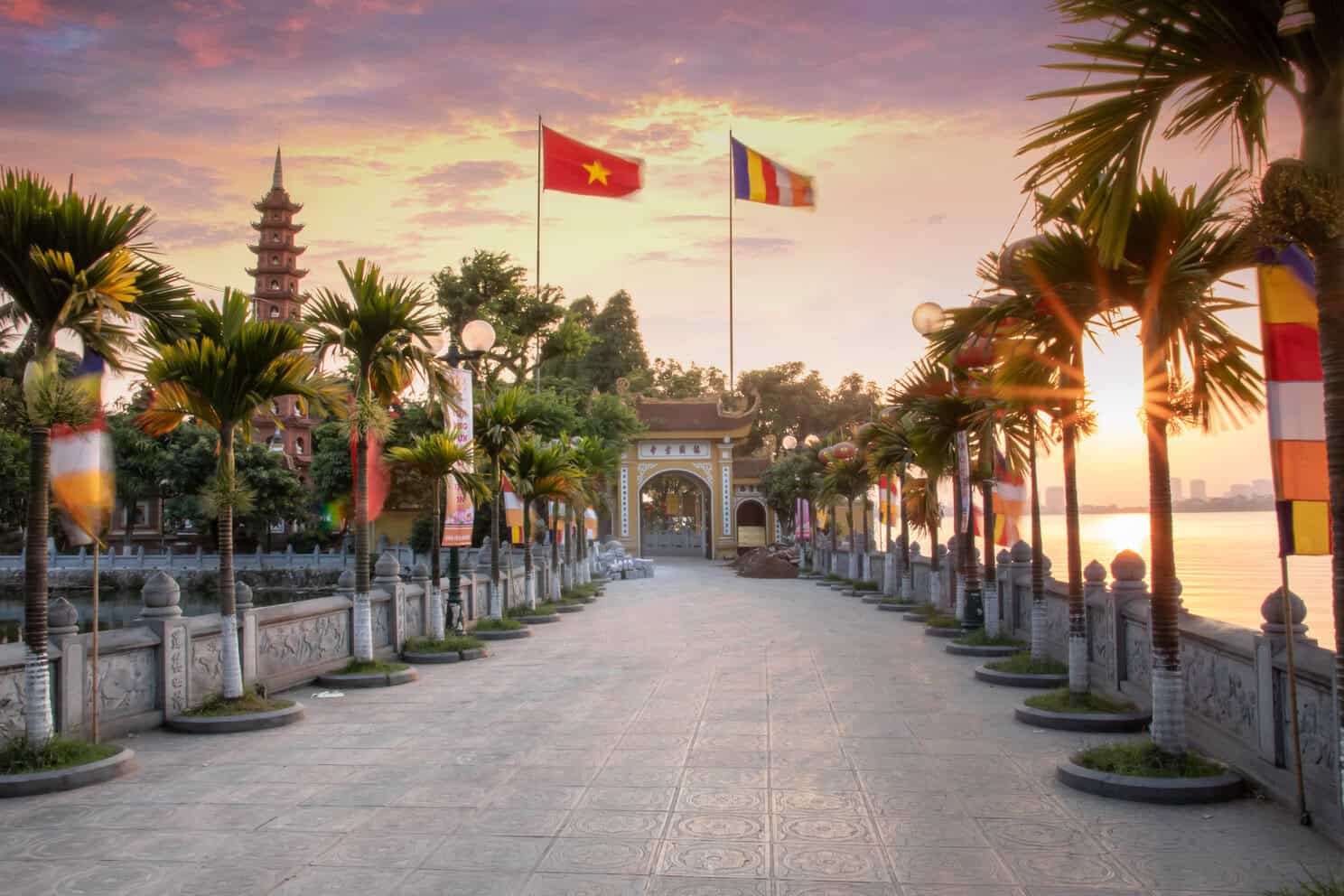
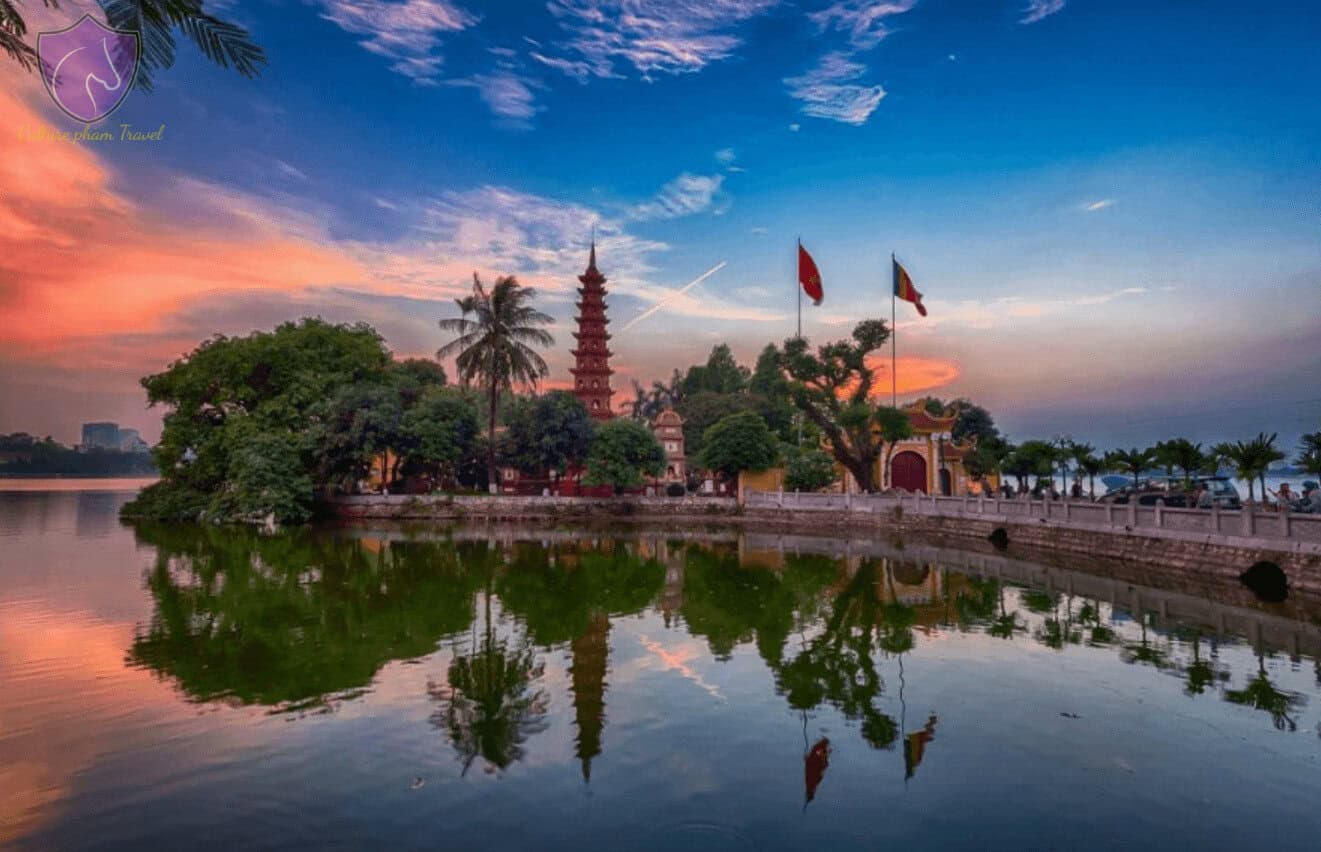
1. Entrance Causeway (Must-Have Shot)
- Frame stupa with West Lake background
- Best time: Sunset (5:00-5:30 PM) for golden glow on red stupa
- Also good: Early morning (7:00-8:00 AM) with soft light
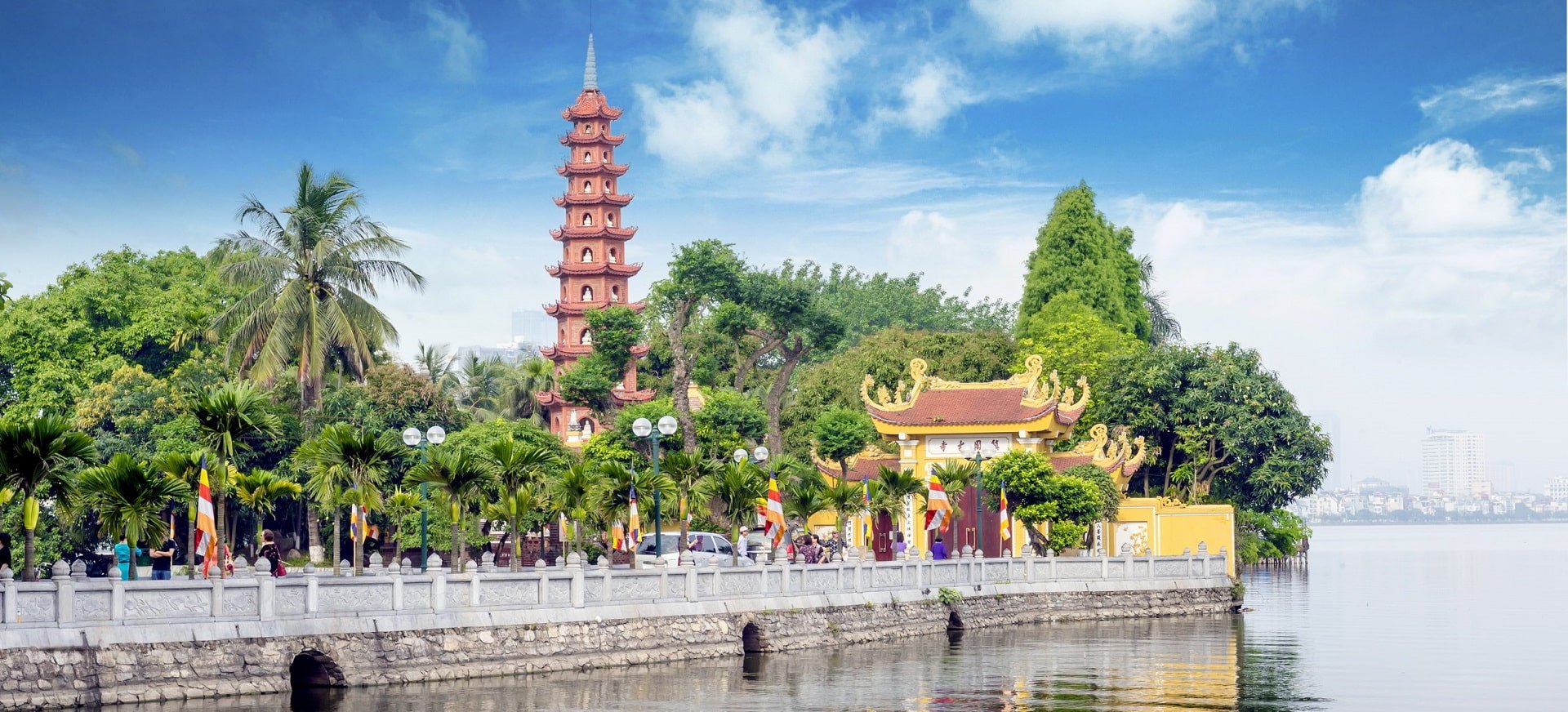
2. From Thanh Nien Road
- Shoot across lake toward pagoda island
- Capture full structure with water reflection
- Best: Calm mornings when lake is still
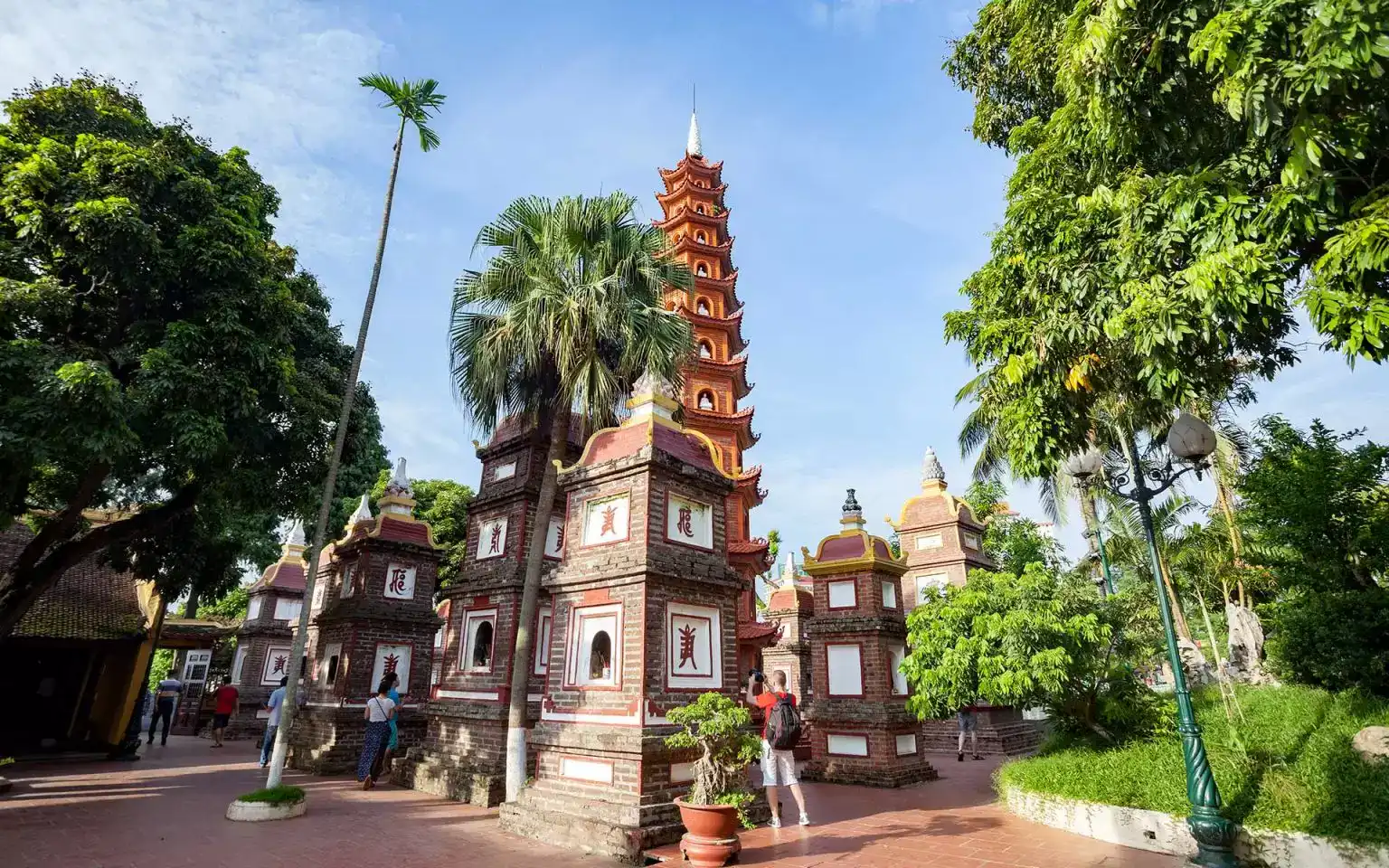
3. Stupa Close-Up
- Position from base looking up for dramatic angle
- Late afternoon side-lighting emphasizes architectural details
4. Bodhi Tree Area
- Heart-shaped leaves with filtered sunlight
- Meditative atmosphere shots
5. Courtyard & Gardens
- Bonsai trees and traditional architecture
- Works best in soft morning light
Technical Tips:
- Overcast days: Better than harsh midday sun for even lighting
- Night photography: Pagoda illuminated after dark (requires tripod, long exposure)
- Reflections: Calm water mornings for mirror-like West Lake shots
- Crowds: Wide-angle lens helps in tight spaces
What NOT to Photograph:
- Worshippers mid-prayer (disrespectful)
- Monks without permission
- Inside main shrine during active ceremonies
Realistic Visit Expectations: 30-60 Minutes
Minimum Visit: 30 minutes covers main highlights:
- Walk causeway and photograph stupa (5 min)
- Enter Front House, see Reclining Buddha (10 min)
- Visit Bodhi tree (5 min)
- Walk grounds and gardens (10 min)
Comprehensive Visit: 60 minutes includes:
- Everything above
- Read historical steles (10 min)
- Observe rituals in Incense House (5 min)
- Additional photography time (15 min)
Extended Visit: 90+ minutes if:
- Visiting during special ceremony
- Meditating under Bodhi tree
- Detailed photography session
- Combining with West Lake walk
Comparison: This is a relatively small pagoda complex. Significantly smaller than Temple of Literature or Imperial Citadel – don’t expect hours of exploration.
Nearby Attractions: Half-Day Itinerary Options
Within 1 km:
- Quan Thanh Temple (500m walk): 11th-century Taoist temple, bronze statue
- Truc Bach Lake (Adjacent): Smaller lake, John McCain monument
- West Lake promenade (0 km): Lakeside cafes and restaurants
Within 3-5 km:
- Ho Chi Minh Mausoleum (3 km): Monumental complex, Ba Dinh Square
- One Pillar Pagoda (3.5 km): Iconic Hanoi landmark
- Temple of Literature (4 km): Vietnam’s first university, excellent photography
- Presidential Palace (3 km): French colonial architecture
Suggested Half-Day Route (Morning):
- Tran Quoc Pagoda (7:30-8:30 AM) – Beat crowds
- Breakfast at West Lake cafe (8:30-9:30 AM)
- Quan Thanh Temple (9:30-10:00 AM)
- Ho Chi Minh Mausoleum complex (10:30 AM-12:00 PM)
Suggested Half-Day Route (Afternoon):
- Temple of Literature (2:00-3:30 PM)
- Tran Quoc Pagoda sunset visit (4:00-5:00 PM)
- Dinner at West Lake seafood restaurant (6:00 PM+)
Common Mistakes to Avoid
❌ Visiting at noon: Possible lunch closure + harsh photography light
❌ Going on lunar 1st/15th without checking calendar: Overwhelmed by crowds
❌ Expecting hours of exploration: It’s a 30-60 minute visit, not a full morning
❌ Wearing shorts/tank top: Turned away at entrance
❌ Not bringing cash: While entry is free, donations and nearby parking require cash
❌ Skipping early morning: Missing the best time for peaceful experience
❌ Assuming “tranquil” means quiet: Vendors outside can be pushy, crowds inside on busy days
❌ Forgetting to remove shoes: Cultural offense
❌ Photography without awareness: Disrupting worship or shooting monks without permission
Frequently Asked Questions
Q: Is there really no entrance fee?
A: Correct, entry is 100% free. Donations are accepted but never required.
Q: How long does a visit take?
A: 30-60 minutes is sufficient for most visitors to see all main features.
Q: Can I take photos inside?
A: Yes, but no flash inside halls. Be respectful of worshippers and don’t photograph people praying.
Q: What if I’m wearing shorts?
A: You will be denied entry. No exceptions to the dress code.
Q: Is it wheelchair accessible?
A: Partially. Grounds have some steps and uneven surfaces. Assistance recommended.
Q: Are there restrooms?
A: Basic facilities available but not modern tourist-grade. Consider using facilities at nearby cafes.
Q: Can I participate in Buddhist rituals?
A: Observing is welcome. Participating (lighting incense, making offerings) is allowed but understand the cultural significance first.
Q: Is there a gift shop?
A: No official gift shop. Street vendors outside sell souvenirs, incense, and turtle releases (latter is controversial).
Q: Best season to visit?
A: Spring (March-April) and autumn (September-November) have mildest weather. Avoid summer heat (June-August).
Q: Is it worth visiting if I’ve seen other pagodas?
A: Yes, if you want to see Hanoi’s oldest temple and enjoy West Lake setting. Skip if you’re “templed out” from other Vietnam destinations.
Final Verdict: Is It Worth Visiting?
YES, if you:
- Are interested in Vietnamese Buddhist architecture
- Want to see Hanoi’s oldest religious site (1,500+ years)
- Enjoy lakeside photography opportunities
- Can visit during off-peak times for peaceful experience
- Are combining with West Lake area exploration
MAYBE, if you:
- Have limited time in Hanoi (prioritize Temple of Literature instead)
- Already visited many temples in Southeast Asia
- Visiting on crowded days (lunar 1st/15th, weekends)
SKIP, if you:
- Not interested in religious/historical sites
- Looking for major temple complex with hours of exploration
- Expecting completely tranquil meditation experience
- Unable to dress modestly
Rating by Visitor Type:
- First-time Hanoi visitors: 8/10 – Essential city landmark
- Photography enthusiasts: 9/10 – Excellent sunset shots
- Buddhist pilgrims: 10/10 – Sacred site with Bodhi tree
- General tourists: 7/10 – Nice but brief visit
- Families with kids: 6/10 – Limited engagement for children
Conclusion
Tran Quoc Pagoda delivers as Hanoi’s oldest and most photogenic Buddhist temple, especially during quiet weekday mornings or golden-hour sunsets. The free admission, West Lake setting, and genuine historical significance make it worthwhile for most visitors. However, manage expectations: this is a 30-60 minute stop, not a multi-hour exploration, and crowding significantly impacts the “serene sanctuary” experience during peak times. Visit early on a weekday for the best experience, respect the dress code and etiquette rules, and combine with nearby West Lake attractions for an ideal half-day Hanoi itinerary.