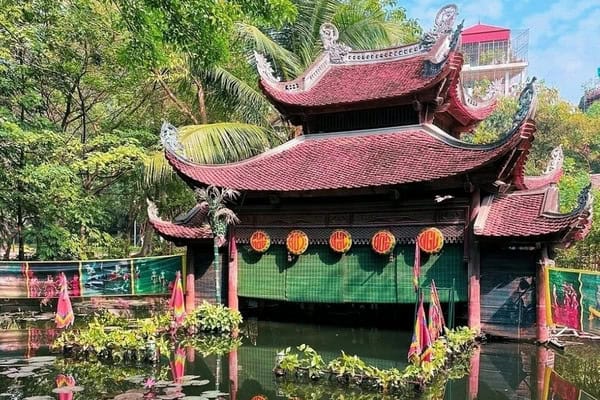
The Vietnam Museum of Ethnology in Hanoi showcases Vietnam’s 54 ethnic groups through 15,000+ artifacts across three main areas. Entry costs 40,000 VND ($1.60 USD), open Tuesday-Sunday 8:30am-5:30pm (closed Mondays). Located 8km from Old Quarter, reach it via Grab/taxi (80,000-150,000 VND, 20-30 min) or buses 07/12/14/38/39 (7,000 VND). Budget 3-4 hours minimum. Best time: weekday mornings to avoid crowds. Main attractions: Bronze Drum Building (indoor exhibits), Architectural Garden (10 traditional houses you can enter), Kite Building (Southeast Asia cultures), water puppet shows (weekends only).
Essential Visitor Information
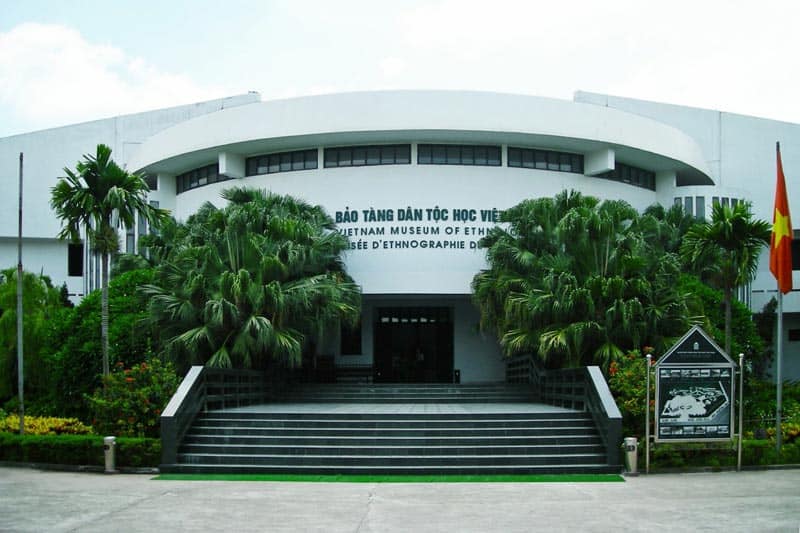
Location: 1 Nguyen Van Huyen Street, Nghia Do Ward, Cau Giay District, Hanoi
Distance from Old Quarter: 8 kilometers (approximately 20-30 minutes by vehicle)
Opening Hours:
- Tuesday to Sunday: 8:30 AM – 5:30 PM
- Ticket counter closes: 5:00 PM
- Closed: Every Monday and Vietnamese New Year (Tet) holidays
Entrance Fees (2026):
- Adults: 40,000 VND (~$1.60 USD)
- Students: 15,000 VND (~$0.60 USD) – bring student ID
- School pupils: 10,000 VND (~$0.40 USD)
- Children under 6 years: FREE
- People with severe disabilities: FREE
- 50% discount for elderly visitors and ethnic minorities
Additional Fees:
- Photography (tourist camera): 50,000 VND
- Photography (professional camera): 500,000 VND
- Vietnamese guided tour (indoor OR outdoor): 50,000 VND
- Vietnamese guided tour (full museum): 100,000 VND
- English/French guided tour: 100,000 VND
- Water puppet show: 90,000 VND adults, 70,000 VND children (weekends only)
Contact:
- Phone: +84-4-37562193
- Fax: +84-4-38360351
- Website: https://www.vme.org.vn
How to Get There
By Grab or Taxi (Recommended for First-Time Visitors)
The most convenient option. Open the Grab app (Southeast Asia’s Uber equivalent) or hail a taxi from your hotel.
- Cost: 80,000-150,000 VND ($3-6 USD) from Old Quarter
- Journey time: 20-30 minutes depending on traffic
- Advantages: Direct, air-conditioned, no navigation needed
- Tip: Use Grab for transparent pricing; show driver the museum name in Vietnamese: “Bảo tàng Dân tộc học”
By Public Bus (Budget Option)
Several bus routes stop near the museum at Nghia Do Park station, about 3 minutes walk from the entrance.
Bus routes: 07, 12, 14, 38, 39, 85, 142
- Cost: 7,000 VND (~$0.30 USD)
- Journey time: 40-60 minutes from Old Quarter
- How to use: Board at Dinh Tien Hoang Street (along Hoan Kiem Lake), ask driver for “Bảo tàng Dân tộc học” stop
- Note: Buses can be crowded during rush hours (7-9am, 5-7pm)
By Motorbike Rental
For adventurous travelers comfortable navigating Hanoi traffic.
- Rental cost: 100,000-150,000 VND per day
- Journey time: 25-30 minutes
- Parking: Available at museum entrance (free)
- Caution: Hanoi traffic is chaotic; only recommended if you have experience riding in Southeast Asian cities
By Bicycle
Possible but challenging due to distance and traffic.
- Journey time: 45-60 minutes
- Only recommended for: Experienced cyclists comfortable in heavy traffic
- Parking: Bicycle parking available at entrance
What to See: The Three Main Areas
1. Bronze Drum Building (Trong Dong Building)
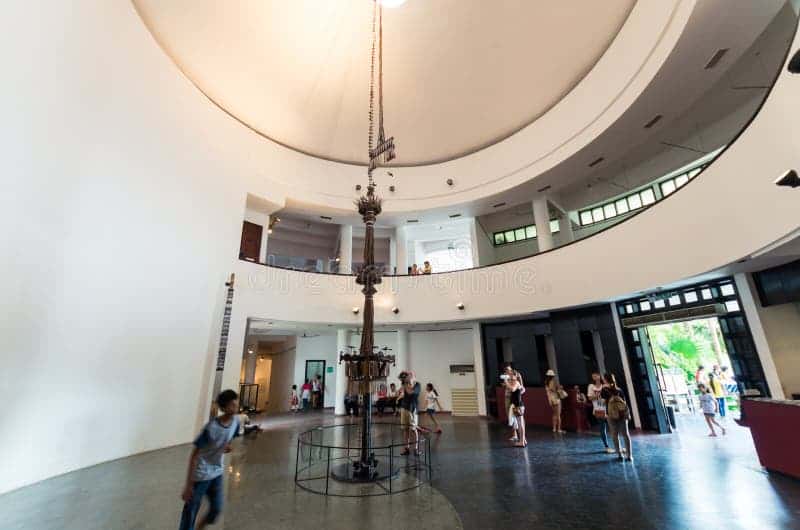
This is the main indoor exhibition building, designed by architect Ha Duc Linh (from the Tay ethnic group) and inspired by the ancient Dong Son bronze drum.
What you’ll find:
- Coverage: 2,000+ square meters across two floors
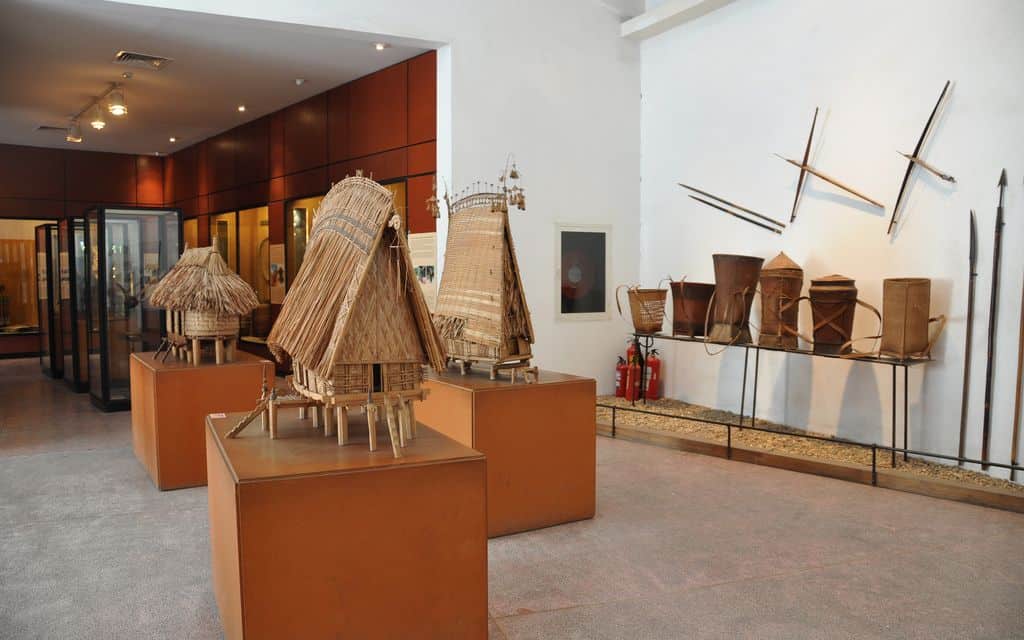
- Artifacts: Over 15,000 items including traditional costumes, jewelry, musical instruments, farming tools, weapons, and ceremonial objects
- Format: Glass display cases with informative panels in Vietnamese, English, and French
Exhibition sections:
- Introduction Hall – Overview of Vietnam’s ethnic diversity
- Viet (Kinh) Group – The majority ethnic group
- Muong, Tho, Chut ethnic groups
- Tay, Thai, Ka Dai language family groups
- Hmong, Dao, Tang, San Diu, Ngai groups
- Mon-Khmer ethnic groups
- Cham, Hoa, Khmer groups
- Religious practices and spiritual beliefs
- Cultural exchanges between ethnic groups
Highlights:
- Intricately woven textiles and traditional costumes with vibrant colors
- Ceremonial masks used in religious rituals
- Traditional musical instruments you can see demonstrated in videos
- Dioramas showing traditional house interiors and daily life scenes
- Multimedia presentations with audio and video recordings
Important notes:
- Photography inside the building is NOT allowed without paying the camera fee
- Flash photography prohibited even with camera fee
- Air-conditioned, providing relief from Hanoi’s heat
- Allow 60-90 minutes to explore thoroughly
2. Architectural Garden (Outdoor Exhibition Area)
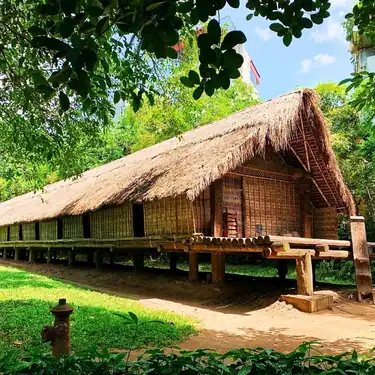
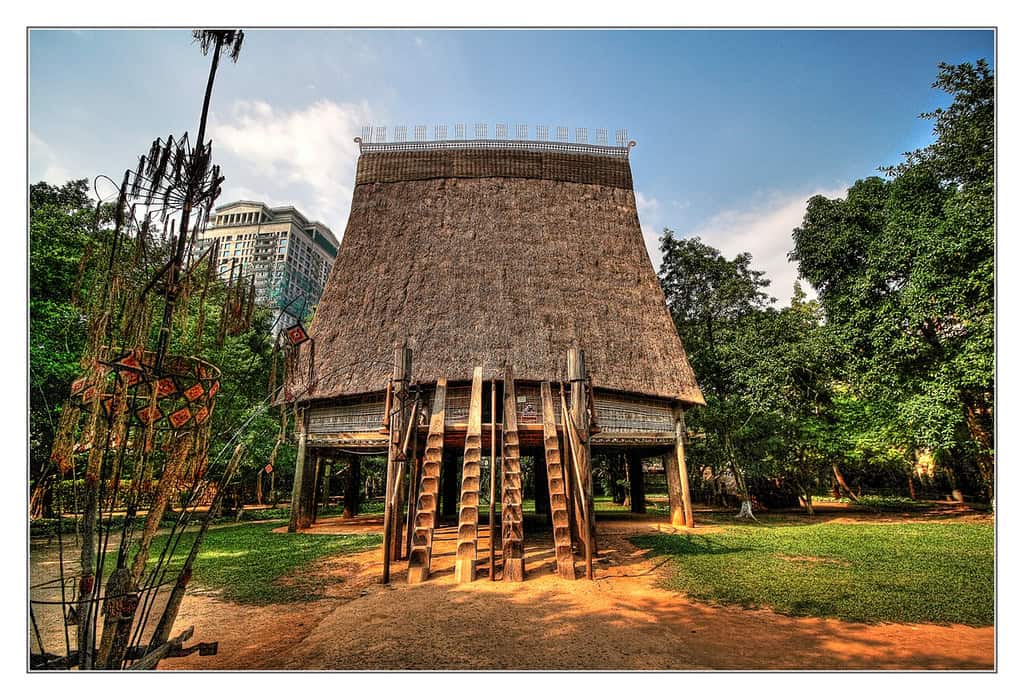
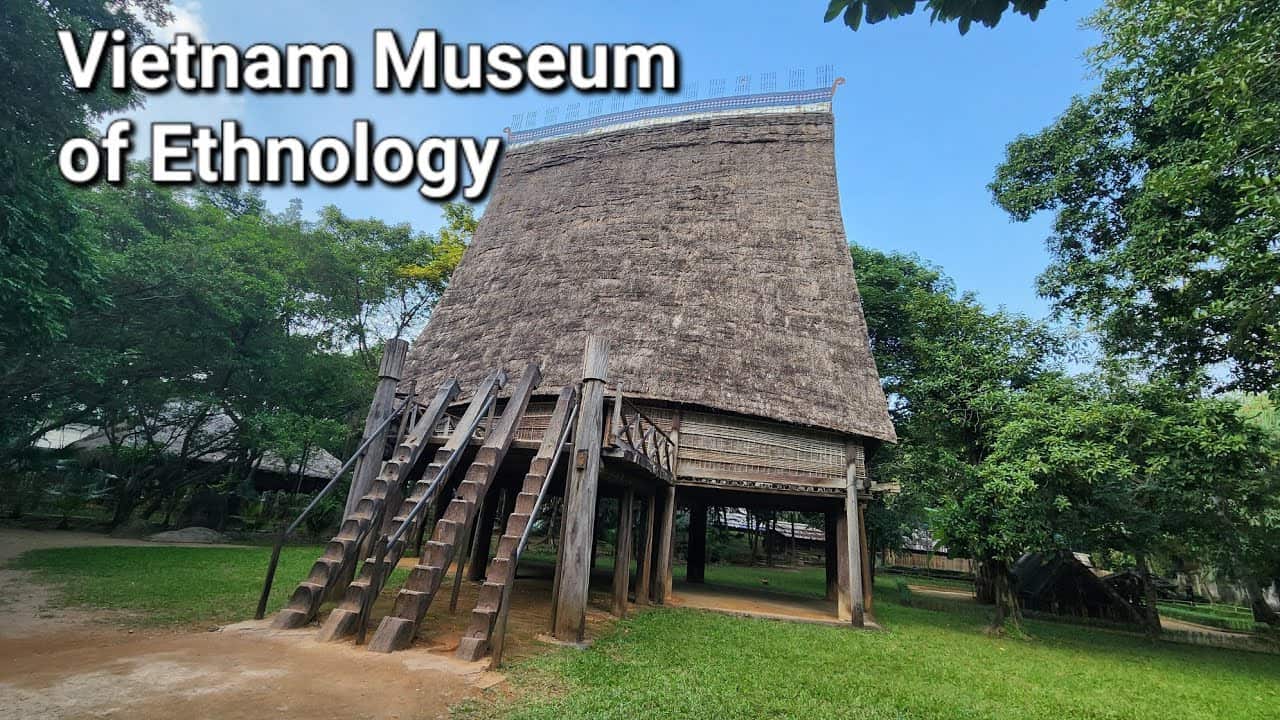
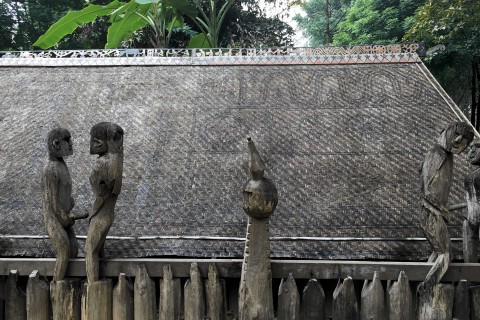
The highlight for most visitors – a 2+ hectare outdoor space featuring 10 full-scale traditional houses from different ethnic groups.
Traditional houses you can enter:
- Ede Long House – Massive communal stilt house from Central Highlands
- Tay Stilt House – Classic northern Vietnam architecture
- Yao House – Half on stilts, half on ground
- Hmong House – Roof made of Pomu wood
- Bahnar Rong House – Communal gathering house
- Viet House – Traditional tile-roof lowland house
- Giarai Tomb – Unique burial structure
- Thai House – Distinctive stilt architecture
- Cham Tower – Religious architecture
- Village Gate – Traditional entrance structure
Additional outdoor features:
- Water puppet theater (outdoor pavilion)
- Indigenous plants and vegetation representing different regions
- Stone pathways connecting the houses
- Small pond and bridges
- Communal gathering spaces
What makes it special:
- You can actually ENTER most houses (remove shoes first)
- Furniture and household items arranged authentically
- Natural setting feels like visiting actual villages
- Great for photography (outdoor photography allowed without fee)
- Children love climbing the stairs and exploring
Warnings:
- Can be extremely hot in summer months (35-40°C)
- Bring water and wear sun protection
- Slippery when wet during rain
- Mosquitoes present in shaded areas – bring repellent
- Major issue reported by visitors: People doing photoshoots block doorways and prevent others from entering houses. Be patient and polite when asking to pass through.
Time needed: 60-90 minutes minimum
3. Kite Building (Canh Dieu Building)
Opened in 2013, this four-story modern building shaped like a traditional Southeast Asian kite focuses on regional cultures beyond Vietnam.
What you’ll find:
- Southeast Asian Cultures Gallery – Artifacts from neighboring countries
- Indonesian Mirror Painting Gallery – Unique art form
- Around the World Gallery – Global cultural perspectives
- Temporary exhibition spaces – Rotating displays on various themes
Why visit:
- Provides regional context for understanding Vietnamese culture
- Less crowded than the main building
- Modern, well-lit exhibition spaces
- Educational for understanding cultural connections across Southeast Asia
Time needed: 30-45 minutes
Water Puppet Shows: Complete Guide
The museum offers traditional water puppet performances in an outdoor pavilion built in traditional style, similar to how villages performed centuries ago.
Schedule (WEEKENDS ONLY):
- Days: Saturday and Sunday only
- Times: 10:00 AM, 11:30 AM, 2:30 PM, 4:00 PM
- Duration: Approximately 30 minutes per show
Pricing:
- Adults: 90,000 VND (~$3.60 USD)
- Children: 70,000 VND (~$2.80 USD)
- Note: Some sources mention free morning shows, but official pricing is 90,000 VND. Confirm at ticket counter.
What to expect:
- Short sketches depicting rural life (farming, fishing, catching frogs)
- Folk music played on traditional instruments (drums, bamboo flutes, horns)
- Skilled puppeteers controlling lacquered wooden puppets
- English commentary explaining each performance
- Outdoor setting by a pond – authentic village atmosphere
- After show: opportunity to meet performers and see puppets up close
How it compares to city theaters:
- Thang Long Water Puppet Theater (Old Quarter): Longer shows (50 min), daily performances, indoor air-conditioned venue, more expensive (100,000-200,000 VND)
- Museum shows: Shorter, weekends only, outdoor traditional setting, more intimate, cheaper
Tips:
- Arrive 15-20 minutes early for good seating
- Morning shows (10am) less crowded than afternoon
- Bring sun protection for daytime shows
- Photography allowed but no flash
- Combines well with museum visit
Best Time to Visit
Time of Day
Optimal: Weekday mornings (8:30-10:30 AM)
- Museum just opened, fewer crowds
- Cooler temperatures for outdoor exploration
- Better lighting for photography
- Can finish before lunch rush
Avoid: Weekend afternoons
- Crowded with local families and tour groups
- Photoshoot crowds blocking outdoor houses
- Hotter temperatures (especially outdoor area)
Day of Week
Best: Tuesday, Wednesday, Thursday
- Significantly fewer visitors than weekends
- More space to explore traditional houses
- Easier to take photos without people in frame
- Less noise, more contemplative experience
Avoid: Saturday, Sunday
- 3-4x more crowded
- Long waits to enter popular houses
- Photography becomes difficult
- However, ONLY days with water puppet shows
Never visit: Monday
- Museum completely closed
- Many visitors report arriving on Monday not knowing this – check before going!
Season
Best months: February-April and September-November
- Pleasant temperatures (20-28°C)
- Lower humidity
- Less rain
- Comfortable for outdoor walking
Challenging: May-August (Summer)
- Very hot (32-40°C), especially outdoor area
- High humidity makes walking exhausting
- Sudden afternoon rain showers
- However, indoor exhibits air-conditioned
Avoid: December-January (Peak Winter)
- Can be surprisingly cold (10-15°C)
- Drizzle and gray skies common
- Outdoor houses less enjoyable
- Tet holiday closures
Common Problems & How to Avoid Them
Problem #1: Arriving on Monday
What happens: Museum completely closed, you waste taxi fare
Solution: Check calendar before visiting. Plan Tuesday-Sunday visits only.
Problem #2: Photoshoot Crowds Blocking Houses
What visitors report: “I couldn’t enter one house at all due to people doing photoshoots in doorways for 20+ minutes.”
Solutions:
- Visit weekday mornings when fewer photography groups present
- Politely ask people blocking doorways if you can pass through
- Start with less popular houses (Viet house, village gate) and save popular ones (Ede long house) for later when crowds thin
- Be patient – this is currently the museum’s biggest visitor complaint
Problem #3: Not Enough Time
What happens: Rushing through exhibits, missing outdoor area entirely
Solution: Budget MINIMUM 3 hours, ideally 4 hours. Many visitors report wishing they’d allocated more time.
Problem #4: Heat Exhaustion in Outdoor Area
What happens: Summer temperatures reach 38-40°C, outdoor area becomes unbearable
Solutions:
- Visit early morning (8:30-10:30am) before peak heat
- Bring water bottle (refill at café)
- Take breaks in shaded areas or indoor buildings
- Visit indoor exhibits during hottest part (11am-2pm)
- Wear hat and sunscreen
Problem #5: Missing Some French Translations
What visitors report: “Some descriptions lack French translation”
Reality: Most displays have Vietnamese, English, French – but not all. English speakers generally find adequate information. Consider guided tour if you want comprehensive explanations.
Problem #6: Photography Confusion
What’s confusing: Different sources say “not allowed” vs “50,000 VND fee”
Reality:
- Indoor building: Photography NOT allowed without paying 50,000 VND camera fee
- Outdoor area: Photography allowed freely without fee
- Water puppet show: Allowed without fee, no flash
- Professional cameras: 500,000 VND fee regardless of location
Practical Tips for Your Visit
What to Wear:
- Comfortable walking shoes (you’ll walk 2-4km total)
- Easy-to-remove shoes (required when entering traditional houses)
- Light, breathable clothing
- Hat and sunglasses for outdoor area
- Long pants/skirt if visiting during mosquito season
What to Bring:
- Water bottle (café on-site but more expensive)
- Sun protection (sunscreen, hat, umbrella)
- Mosquito repellent for outdoor area
- Camera (remember photography fee for indoor exhibits)
- Cash (museum doesn’t accept cards for tickets)
- Small backpack for storing shoes when entering houses
Facilities Available:
- Free cloakroom for secure storage
- Café serving drinks and light snacks
- Clean restrooms throughout complex
- Gift shop with handicrafts and souvenirs
- Wheelchair accessibility (indoor areas and some outdoor paths)
- Parking for cars and motorbikes
Food and Drinks:
- NOT allowed inside exhibition buildings
- Can consume in outdoor areas (but no littering)
- Café available but limited menu
- Better option: eat before/after visit (many restaurants on Nguyen Van Huyen Street)
Combining with Other Attractions: The museum’s location makes it easy to combine with:
- Ho Chi Minh Mausoleum (4.8km away) – visit early morning (closes 11am)
- Temple of Literature (5km away) – ancient university
- Vietnamese Women’s Museum (7km away) – excellent complement
- West Lake (3km away) – relaxing afternoon option
Recommended itinerary:
- 8:00 AM – Ho Chi Minh Mausoleum
- 10:00 AM – Museum of Ethnology
- 1:30 PM – Lunch
- 3:00 PM – Temple of Literature
Frequently Asked Questions
Q: Is the museum suitable for children?
Yes, very family-friendly. Children love climbing into traditional houses, watching water puppet shows, and interactive displays. However, kids under 10 may find indoor exhibits less engaging than outdoor area. Plan extra time for letting them explore houses.
Q: Do I need a guide or can I explore independently?
Independent exploration works well – exhibits have English labels and informative panels. However, guided tours provide deeper cultural context and stories not available in written displays. Consider guide if you want to truly understand cultural significance.
Q: How does this compare to other Hanoi museums?
Ranked 4th out of 25 best museums in Asia by TripAdvisor (2012-2014). Much more interactive than Vietnam Military History Museum or National Museum. Better outdoor component than most museums. Less crowded than Ho Chi Minh Museum.
Q: Can I buy tickets online in advance?
No, tickets must be purchased at entrance. No advance booking required or available. Lines typically short except weekend midday.
Q: Is there WiFi available?
Limited free WiFi in main buildings. Not reliable in outdoor areas. Don’t rely on it for navigation.
Q: Can I bring food into the museum?
Food not allowed inside exhibition buildings. Can eat in designated outdoor areas. Use the café or eat before/after visit.
Q: Are there luggage storage facilities?
Yes, free cloakroom service available for bags and belongings. Safe and convenient.
Q: What if it rains during my visit?
Indoor exhibits excellent option during rain. Outdoor houses have covered areas but pathways get slippery. Bring umbrella. Rain most common May-September, typically afternoon showers.
Q: How crowded does it get?
Weekdays: Moderate crowds, very manageable
Weekend mornings: Busy but acceptable
Weekend afternoons: Very crowded, especially outdoor houses
Holidays: Extremely crowded, difficult to enjoy
Q: Is photography really not allowed inside?
Correct – you must pay 50,000 VND photography fee to use camera inside buildings. Strictly enforced. Outdoor photography free.
Q: Can I use the museum’s virtual tour instead of visiting?
The museum offers 3D virtual tours on their website, excellent for previewing or if you can’t visit. However, walking through actual traditional houses and experiencing the scale cannot be replicated virtually. Physical visit strongly recommended.
Q: Do many tourists visit or is it mainly locals?
Good mix – approximately 60% international tourists, 40% Vietnamese visitors (mostly school groups and families). English widely spoken by staff.
Q: Is there a museum shop?
Yes, Craft Link store on-site selling authentic handicrafts, textiles, and souvenirs at fair prices. Good place to buy traditional items supporting ethnic artisans.
Final Verdict: Is It Worth Visiting?
Absolutely yes – if you want to understand Vietnam beyond Hanoi’s streets and war history. This museum offers unparalleled insight into Vietnam’s cultural diversity that you won’t experience elsewhere.
Skip it – if you have less than 2 days in Hanoi and prefer focusing on Old Quarter, Ha Long Bay day trips, or war history sites. Choose based on your interests.
Best for:
- Culture enthusiasts wanting deep understanding
- Families with curious children
- Photographers (outdoor areas)
- Travelers planning visits to northern ethnic regions (Sapa, Ha Giang)
- Anyone with 3+ days in Hanoi
Not ideal for:
- Rushed schedules (requires 3-4 hours minimum)
- Extreme heat sensitivity (summer outdoor areas brutal)
- Monday arrivals (museum closed)
- Those seeking solely war history (different museum needed)
Budget impact: Very affordable at 40,000 VND entry. Total cost including transport, entry, photography, and water puppet show: approximately 250,000-350,000 VND ($10-14 USD) per person.
The Vietnam Museum of Ethnology stands as one of Hanoi’s most valuable cultural resources, offering experiences unavailable anywhere else in the city. Plan your visit carefully, allow adequate time, and you’ll leave with profound appreciation for Vietnam’s remarkable ethnic diversity.