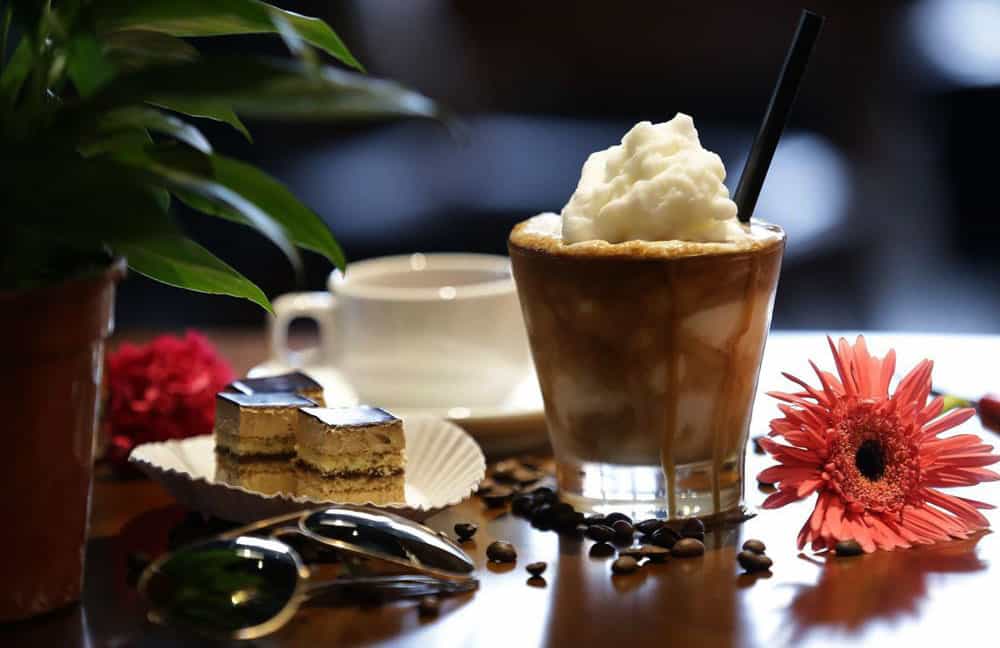
Vietnamese coconut coffee (cà phê dừa) combines bold robusta coffee with creamy coconut milk and sweetened condensed milk, creating a tropical frappuccino-style drink that’s become a must-try beverage in Vietnam. Order it at cafes like Cong Ca Phe for 35,000-70,000 VND ($1.45-$2.90), or make it at home in 15 minutes using a Vietnamese phin filter, canned coconut milk, condensed milk, and ice. The blended version features a fluffy coconut slushy topped with strong coffee, while the layered version showcases distinct cream and coffee layers.
What Makes Vietnamese Coconut Coffee Special
Vietnamese coconut coffee isn’t just another sweet coffee drink. It’s a clever fusion that balances Vietnam’s famously strong robusta coffee with the cooling properties of coconut—a pairing that makes perfect sense in Vietnam’s tropical climate.
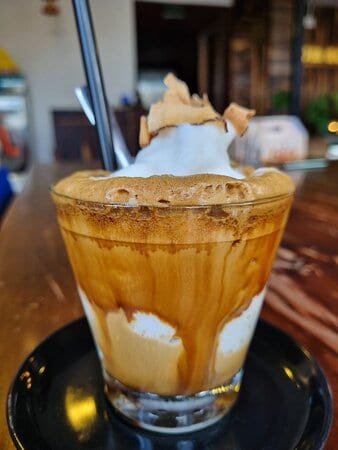
The drink typically comes in two main styles. The blended version (cà phê cốt dừa đá xay) combines coconut cream, condensed milk, and ice in a blender to create a snow-like slushy, then tops it with freshly brewed Vietnamese coffee. The layered version pours coffee over a coconut milk mixture, creating an Instagram-worthy gradient effect as the dark coffee slowly mingles with the white coconut layer.
What sets this apart from Western coconut coffee drinks is the use of sweetened condensed milk—a staple in Vietnamese coffee culture since the French colonial era when fresh dairy was scarce. This addition creates a richer, more dessert-like experience than simply adding coconut milk to coffee.
The coffee base uses robusta beans, which contain nearly double the caffeine of arabica beans and deliver that characteristic Vietnamese coffee intensity. When paired with coconut’s natural sweetness and creamy texture, you get a drink that’s simultaneously energizing and refreshing—perfect for Vietnam’s hot, humid weather.
Where to Try the Best Coconut Coffee in Vietnam

Hanoi’s Top Coconut Coffee Spots
Cong Ca Phe (multiple locations) has become synonymous with Vietnamese coconut coffee. This Northern Vietnamese chain styled after the Viet Cong era serves what many travelers call “the best coconut coffee in Hanoi.” The staff wears olive-green uniforms, vintage propaganda posters line the walls, and the coconut coffee arrives as a divine blend of strong Vietnamese coffee topped with frozen coconut cream. Expect to pay 50,000-60,000 VND ($2-$2.50) per drink.
The atmosphere at Cong Ca Phe locations feels like stepping into 1970s Hanoi, with wooden furniture, scattered books, and a military-themed aesthetic that somehow works perfectly. Find locations throughout Hanoi’s Old Quarter, near Hoan Kiem Lake, and across District 1.
Loading T (8 Chân Cầm, Hàng Trống) offers excellent coconut coffee in an air-conditioned interior hidden from busy streets. The second-floor space provides a cowork-friendly environment where you can actually taste the quality of their coconut preparation. At around 50,000 VND, their version balances coffee strength with coconut creaminess better than most.
Cafe Giang (39 Nguyễn Hữu Huân) is famous for egg coffee, but their coconut coffee deserves attention too. This historic cafe invented Hanoi’s egg coffee in 1946, and while that remains their signature, the coconut version at 35,000 VND provides a lighter alternative. The cafe itself is a piece of living history—cramped, authentic, and always packed with both locals and tourists.
Ho Chi Minh City (Saigon) Recommendations
Cong Ca Phe locations in Saigon maintain the same quality as their Hanoi counterparts. The District 1 locations stay busy with young Vietnamese students and expats, creating a lively social atmosphere. Their coconut coffee comes topped with candied coconut flakes—a nice touch that adds texture.
Okkio Caffe (122 Đường Lê Lợi, District 1) serves both coconut and egg coffee in a cute diner-style space with colorful tiled floors. While pricier than street cafes, the quality justifies the cost. Their coconut coffee uses premium ingredients and arrives beautifully presented.
Little Hanoi Egg Coffee and various local cafes throughout Districts 1, 3, and Tan Binh offer their own interpretations. Street-side cafes often charge 30,000-45,000 VND for generous portions served on those iconic tiny plastic stools.
Price Expectations Across Vietnam
Budget street cafes: 30,000-45,000 VND ($1.20-$1.80) Mid-range chains like Cong Ca Phe: 50,000-60,000 VND ($2-$2.50) Trendy specialty cafes: 65,000-80,000 VND ($2.60-$3.20) High-end locations: up to 100,000 VND ($4)
For context, a standard Vietnamese iced coffee (cà phê sữa đá) typically costs 25,000-40,000 VND, making coconut coffee about 20-40% more expensive due to the additional ingredients and preparation.
How to Make Vietnamese Coconut Coffee at Home

Essential Equipment and Ingredients
You’ll need a Vietnamese phin filter (available on Amazon for $10-15) or a French press as substitute. A high-powered blender is essential for the slushy version, though you can make a simpler layered version without one.
Coffee: Use Vietnamese robusta coffee (Trung Nguyen, Cafe Du Monde) or any dark roast espresso. You’ll need 20-25g (3-4 tablespoons) per serving. Vietnamese coffee brands work best because they’re specifically roasted to pair with condensed milk, but any strong dark roast produces good results.
Coconut element: Full-fat canned coconut milk or coconut cream—NOT the carton variety from the refrigerated section. Aroy-D brand is recommended by Vietnamese food bloggers for its pure coconut-and-water ingredient list. You’ll need 80-100ml per serving.
Sweetener: Sweetened condensed milk (20-30ml per serving). This is non-negotiable for authentic flavor—regular sugar doesn’t provide the same creamy sweetness.
Ice: Use whole ice cubes for blending (they create a fluffier texture) or crushed ice works in a pinch.
Blended Coconut Coffee Recipe (Serves 2)
Step 1: Brew the Coffee
Add 25g coffee grounds to your phin filter and tap gently to distribute evenly. Place the gravity press on top. Pour 20ml hot water (90-95°C, NOT boiling) and wait 1 minute for the coffee to bloom. Add another 80ml hot water, cover with the lid, and let it drip for 3-5 minutes. You should get about 60-80ml of concentrated coffee. Let it cool in the refrigerator for 15-30 minutes.
Alternatively, brew strong espresso (2 shots) or make concentrated French press coffee by using double the normal coffee amount and half the water.
Step 2: Make the Coconut Slushy
Add to blender:
- 100ml full-fat coconut cream
- 30ml sweetened condensed milk
- 2 cups ice cubes
Blend on high for 30-45 seconds until you achieve a snow-like, fluffy consistency. The mixture should be thick enough to hold its shape but not icy or chunky. If too thick, add 10-20ml cold water. If too thin, add more ice and blend again.
For an extra-thick consistency, transfer the blended mixture to the freezer for 15-30 minutes before serving.
Step 3: Assemble
Pour chilled coffee into two tall glasses (about 60-80ml per glass). Spoon the coconut slushy generously on top—don’t be shy, pile it high. The visual appeal comes from seeing the white coconut mountain contrasted with the dark coffee below.
Optional garnishes: toasted coconut flakes, cocoa powder, or a drizzle of condensed milk on top.
Step 4: Serve Immediately
Hand your guest a spoon and a straw. The proper way to enjoy this is to take a spoonful of the fluffy coconut cream mixed with some coffee, then follow with sips through the straw. The coconut layer melts quickly in warm weather, so drink within 10-15 minutes.
Simpler Layered Version (No Blender Required)
Mix 60ml coconut milk, 20ml condensed milk, and 20ml regular milk in a glass. Fill the glass with ice cubes. Slowly pour 60-80ml freshly brewed, cooled Vietnamese coffee over the back of a spoon so it layers on top. The gradient effect develops as you drink and stir.
Pro Tips for Success
Temperature matters: Water that’s too hot (above 96°C) burns the coffee, creating bitterness. Too cool (below 88°C) results in weak extraction. Aim for 90-95°C—just off the boil.
Coconut milk clumping: Canned coconut milk often separates. Shake the can vigorously before opening. If still lumpy, microwave for 10-20 seconds and stir until smooth, then cool completely before using.
Coffee foam technique: For cafe-quality presentation, pour brewed coffee into a jar and shake vigorously for 20-30 seconds. This creates a foamy layer that adds visual appeal and smooths the taste.
Adjust sweetness: Start with less condensed milk than recipes suggest—you can always add more, but you can’t remove it. Vietnamese cafes tend to make drinks sweeter than Western palates prefer.
Blend timing: Don’t over-blend or the ice becomes watery instead of fluffy. 30-45 seconds in a high-powered blender is usually sufficient.
Common Mistakes and How to Fix Them
Watery, thin texture: You added too much liquid or didn’t use enough ice. Coconut coffee should be thick and creamy. Solution: Add more ice and coconut cream, blend again.
Overly sweet: Vietnamese versions are quite sweet by Western standards. Solution: Reduce condensed milk to 15ml per serving, or skip it entirely and rely on coconut milk’s natural sweetness.
Weak coffee flavor: The coconut is overwhelming the coffee. Solution: Brew stronger coffee (use more grounds or less water), or reduce coconut quantities.
Separation issues: The layers separate too quickly or look messy. Solution: Chill all components before assembly. Pour coffee very slowly over a spoon for clean layering.
Icy, chunky slushy: Not blended enough or ice cubes too large. Solution: Blend longer, use smaller ice cubes, or crush ice before blending.
Nutrition and Caffeine Content
A typical serving of Vietnamese coconut coffee contains approximately 250-350 calories, with variations depending on condensed milk and coconut cream amounts. The macronutrient breakdown includes 6-13g fat (mostly saturated from coconut), 25-35g carbohydrates, and 13-25g sugar.
The caffeine content rivals or exceeds regular coffee due to robusta beans’ higher caffeine concentration. Expect 150-200mg caffeine per serving—roughly double a standard cup of arabica coffee. This explains why travelers report feeling “wired for two days straight” after their first Vietnamese coconut coffee.
Coconut milk provides medium-chain triglycerides (MCTs), which some studies suggest may support metabolism, though consuming this drink daily for weight loss purposes would backfire due to its calorie density. The saturated fat content is significant, so enjoy in moderation.
For a lighter version, use low-fat coconut milk (though this compromises authenticity), reduce condensed milk by half, and skip whipped cream garnishes. A “diet” version will land around 150-180 calories.
Coconut Coffee vs Other Vietnamese Coffee Drinks
Versus Egg Coffee (Cà Phê Trứng): Hanoi’s egg coffee uses whisked egg yolks instead of coconut, creating a drink that tastes like liquid tiramisu. Egg coffee is richer, thicker, and has a custard-like consistency. Coconut coffee is lighter, more refreshing, and better suited to hot weather.
Versus Standard Vietnamese Iced Coffee (Cà Phê Sữa Đá): The classic version uses only condensed milk and coffee over ice—simpler, less sweet, and more coffee-forward. Coconut coffee adds tropical flair and creaminess but masks some of coffee’s complexity.
Versus Salted Coffee (Cà Phê Muối): This Hue specialty tops coffee with salted cream cheese foam. It’s less sweet than coconut coffee and offers an unusual sweet-salty contrast.
Versus Western Coconut Lattes: Starbucks-style coconut milk lattes use coconut milk as a dairy alternative but lack condensed milk’s sweetness and richness. Vietnamese coconut coffee is sweeter, colder, and more dessert-like.
Vegan and Dietary Modifications
For Vegans: Replace sweetened condensed milk with coconut condensed milk (available at Asian groceries and online). The flavor profile changes slightly—becoming more coconut-forward—but remains delicious. Some recipes use date syrup or maple syrup mixed with coconut cream as alternatives, though these don’t replicate the original taste as well.
For Keto Dieters: This drink doesn’t fit traditional keto due to sugar content. However, you can make a modified version using unsweetened coconut cream, sugar-free sweetener (erythritol or monk fruit), and ensuring your coffee choice has no added sugars. The result won’t taste like authentic Vietnamese coconut coffee but provides the essential flavor profile.
For Dairy-Free: Standard Vietnamese coconut coffee is already dairy-free if you use regular condensed milk (which is cow’s milk-based) but switch to coconut condensed milk. Check labels—some condensed milk brands add butter.
Reducing Sugar: Cut condensed milk in half and rely on coconut milk’s natural sweetness. Add vanilla extract (1/4 teaspoon) to enhance perceived sweetness without calories.
The Cultural Context: Why Coconuts and Coffee?
Vietnam’s coffee culture developed under French colonial influence in the mid-1800s, but Vietnamese innovation truly made it unique. When fresh dairy remained scarce during and after the Vietnam War, condensed milk became the standard sweetener—a practice that continues today despite fresh milk’s ready availability.
Coconut naturally complements this tradition. Vietnam produces over 1.4 million tons of coconuts annually, making coconut milk readily available and affordable. The pairing makes geographic sense too—coastal cities like Hai Phong, where some claim coconut coffee originated, have abundant coconut supplies and hot weather that demands refreshing beverages.
The drink’s rise in popularity accelerated in the 2010s as Instagram-worthy cafes emerged across Vietnam’s cities. Chains like Cong Ca Phe standardized the recipe and aesthetic, making coconut coffee as recognizable as egg coffee or traditional cà phê sữa đá.
Interestingly, there’s debate about whether coconut coffee is “authentic” Vietnamese or primarily a tourist drink. Conversations with locals reveal that many Vietnamese do enjoy coconut coffee, but it’s viewed as a treat rather than a daily ritual—the equivalent of ordering a frappuccino instead of drip coffee.
Where to Buy Vietnamese Coffee and Equipment

Online Options:
- Nguyen Coffee Supply: Vietnamese-American company offering authentic robusta and arabica from Vietnam, plus phin filters and ready-to-drink coconut coffee cans
- Amazon: Carries Trung Nguyen, Cafe Du Monde, and inexpensive phin filters ($10-20)
- Cafely: Vietnamese coffee company with instant coconut coffee sachets perfect for travel
Physical Stores:
- Asian grocery stores (H Mart, 99 Ranch, local Vietnamese markets): Best selection of Vietnamese coffee brands, phin filters, and coconut products
- Costco: Carries Lee’s Coffee Concentrate (a beloved shortcut) and sometimes Trung Nguyen products
- Whole Foods, Target: Stock Cafe Du Monde and basic phin filters in some locations
What to Buy:
- Coffee: Trung Nguyen Creative 3 or G7 instant, Cafe Du Monde (chicory blend), or any Vietnamese robusta
- Phin filter: Stainless steel, 4-8oz capacity ($12-18 on Amazon)
- Coconut milk: Aroy-D, Chaokoh, or Thai Kitchen brands in cans (NOT cartons)
- Condensed milk: Any brand works; Longevity Brand is traditional Vietnamese choice
Final Thoughts: Is It Worth the Hype?
Vietnamese coconut coffee delivers exactly what it promises: a sweet, creamy, tropical coffee experience that’s part beverage, part dessert. It won’t replace your daily morning coffee—it’s too indulgent for that—but as an occasional treat or afternoon pick-me-up, it’s genuinely delightful.
For travelers in Vietnam, ordering coconut coffee at least once is non-negotiable. It encapsulates the Vietnamese coffee culture’s creativity and willingness to experiment with flavors while honoring tradition. The experience of sitting in a vintage-styled Cong Ca Phe, watching street life pass by while sipping coconut coffee from a tall glass, is quintessentially Vietnamese.
For home brewers, the recipe is forgiving and customizable. Once you invest in a phin filter (a worthwhile purchase for any coffee enthusiast), you can experiment with ratios until you find your perfect balance. The drink impresses guests, photographs beautifully, and provides that vacation energy even when you’re stuck at home.
The bottom line: Vietnamese coconut coffee is exactly as good as travelers claim. Sweet, creamy, refreshing, and with enough caffeine to power through a Hanoi afternoon—what’s not to love?