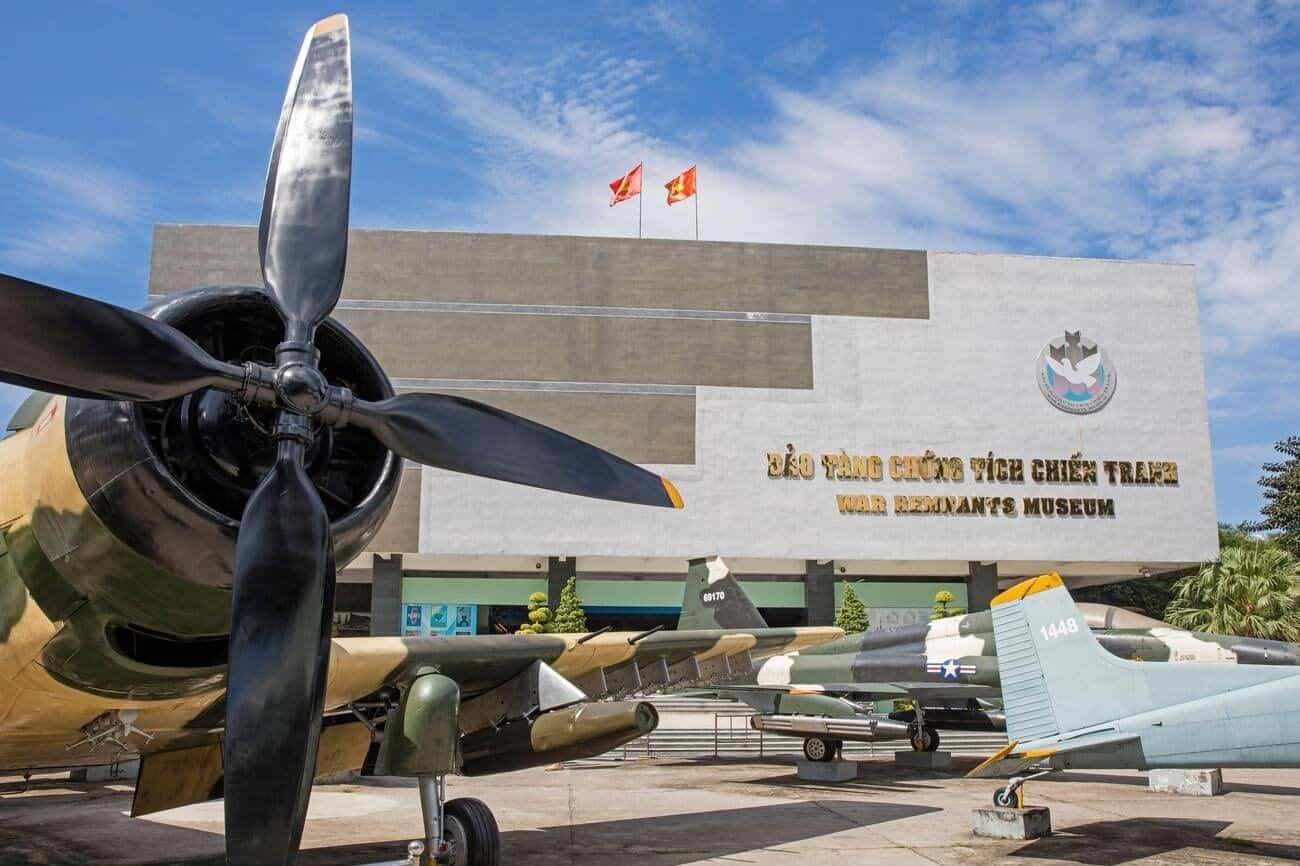
The War Remnants Museum (28 Vo Van Tan, District 3) is Ho Chi Minh City’s most visited war museum, attracting 500,000-1 million visitors annually. The museum opens daily 7:30 AM-5:30 PM with tickets at 40,000 VND (adults), 20,000 VND (ages 6-16), and free for under 6. Plan 1.5-2 hours for a standard visit or 3-4 hours for comprehensive exploration.
The museum presents Vietnam’s perspective on the wars with France and America through 8 themed exhibitions across 3 floors plus outdoor military equipment displays. Content includes graphic war photography, Agent Orange effects, tiger cage prison replicas, and the Requiem photojournalist exhibition.
Important: Exhibits contain disturbing imagery not suitable for children under 10. The museum presents the Vietnamese perspective rather than a balanced historical account. Photography allowed in most areas (no flash). Best visited early morning (7:30-9 AM) or late afternoon (after 3 PM) to avoid crowds.
Essential Information
Hours & Ticket Prices
| Category | Price | Notes |
|---|---|---|
| Adults | 40,000 VND (~$1.60 USD) | Standard admission |
| Children 6-16 | 20,000 VND | 50% discount |
| Children under 6 | Free | No ticket required |
| Opening Hours | 7:30 AM – 5:30 PM | Every day including holidays |
| Ticket Counter | Closes 5:00 PM | 30 minutes before museum closes |
The museum remains open on weekends, public holidays, and during Tet (Vietnamese New Year). Cash payment recommended though some credit cards accepted.
Location & How to Get There

Address: 28 Vo Van Tan Street, Xuan Hoa Ward (formerly District 3), Ho Chi Minh City
From District 1 hotels: 10-15 minute walk or 5 minute Grab ride
From Tan Son Nhat Airport: 7 km distance (15-20 minutes by taxi/Grab)
Public Transport:
- Bus routes 14 and 28 stop directly at the museum
- Grab taxi: Most convenient option (download app for best rates)
- Walking: Easily walkable from Independence Palace (10 minutes) or Notre Dame Cathedral (15 minutes)
The museum sits on the corner of Vo Van Tan and Le Quy Don streets in a very walkable central area.
Time Needed
Quick visit (1.5 hours): Outdoor exhibits + main indoor highlights Standard visit (2 hours): All major exhibitions with moderate reading Comprehensive visit (3-4 hours): Read all descriptions, view all photographs, process exhibitions fully
Most visitors spend 1.5-2 hours. History enthusiasts often stay 3+ hours to absorb complete exhibits.
What to Expect: 8 Main Exhibitions
Outdoor Military Equipment Display
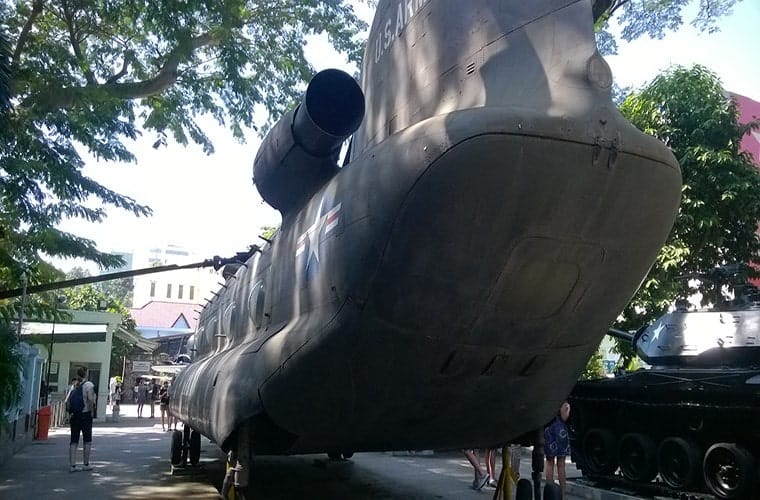
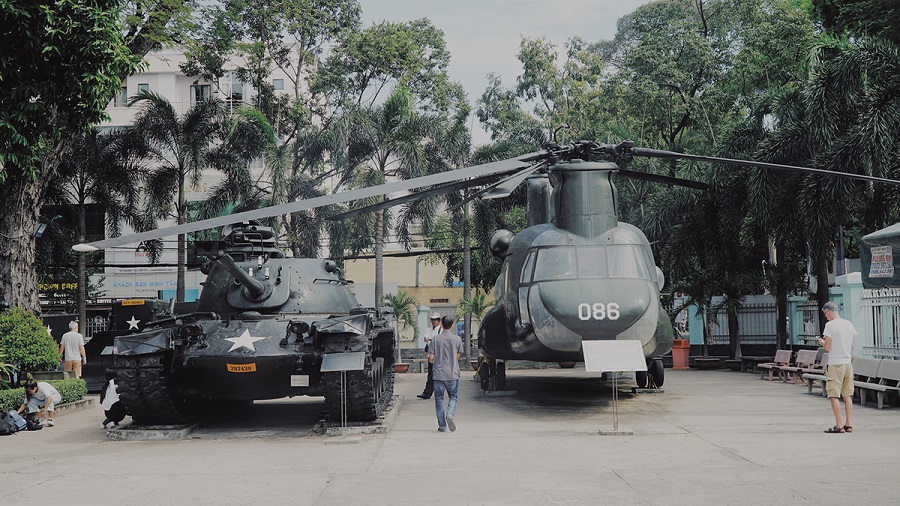
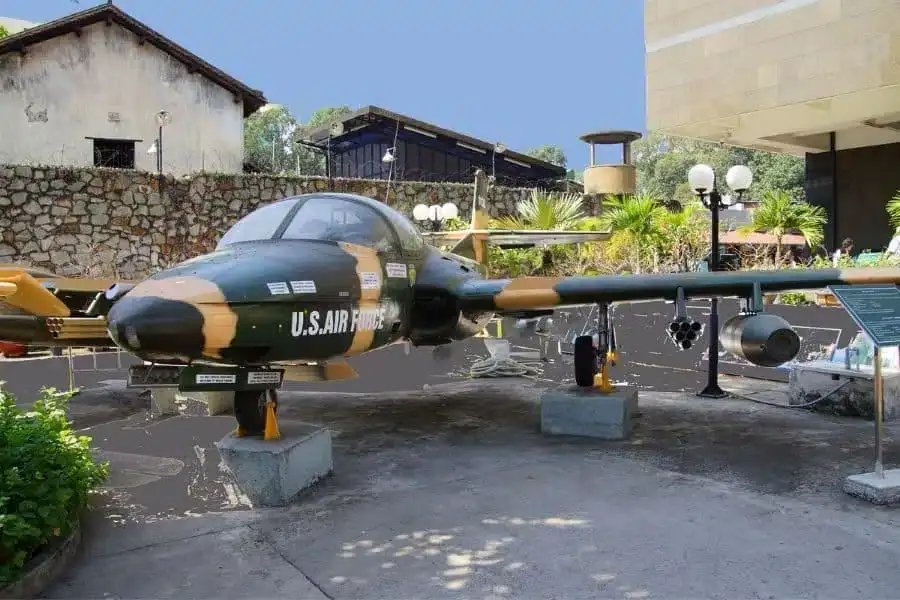
Your visit begins in the museum courtyard featuring captured American military equipment. This outdoor area showcases:
- Bell UH-1 “Huey” helicopters (iconic Vietnam War aircraft)
- Northrop F-5A fighter jets
- Douglas A-1 Skyraider attack bombers
- Cessna A-37 Dragonfly aircraft
- M48 Patton tanks
- M41 Walker Bulldog tanks
- Artillery pieces and bombs (detonators removed)
- BLU-82 “Daisy Cutter” bombs
This section works well for all ages as it features tangible military equipment without graphic imagery. The courtyard also contains a coffee shop and restroom facilities.
Tiger Cages Prison Recreation
Located in a separate area of the courtyard, this exhibit recreates the notorious “tiger cages” – small barbed-wire cells used at Con Dao Prison to detain political prisoners. The cramped spaces (barely larger than one meter) show the brutal conditions prisoners endured. This exhibit can be disturbing but isn’t graphically violent.
Ground Floor: World Support for Vietnam’s Resistance
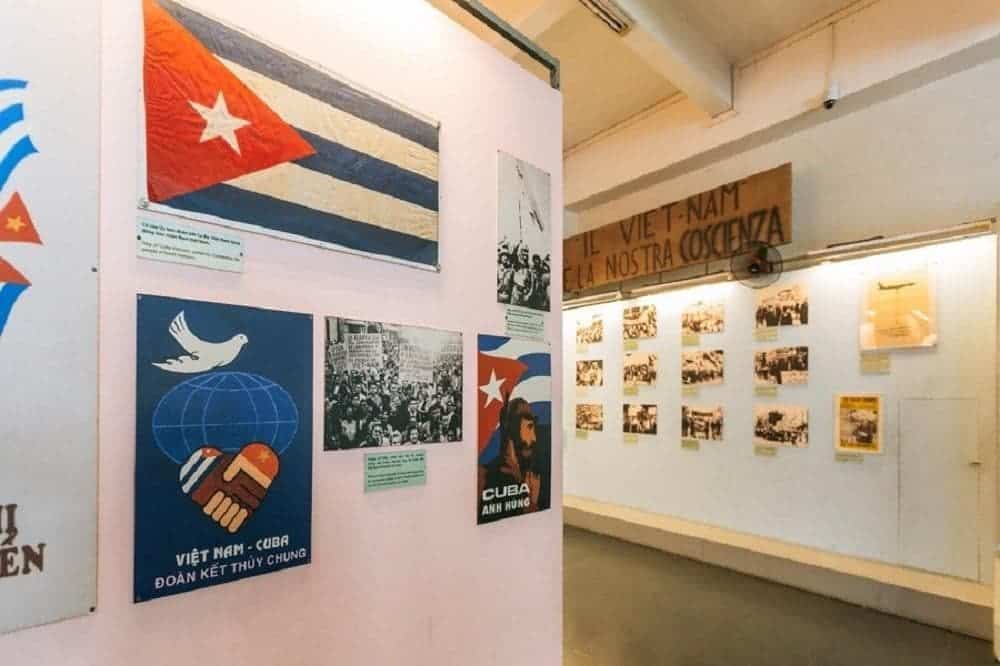
The ground floor features “The World Supports Vietnam in the Resistance Against the US” exhibition spanning 1954-1975. This section displays:
- 100+ photographs of international anti-war protests
- 145 artifacts from organizations worldwide
- Propaganda posters, banners, and flags
- Documentation of global anti-war movements
- Personal items donated by former American soldiers expressing regret
This more upbeat exhibition provides context for international perspectives on the war. Temporary exhibits often rotate on this floor as well.
First Floor: War Crimes & Agent Orange Effects
The first floor contains the museum’s most disturbing content:
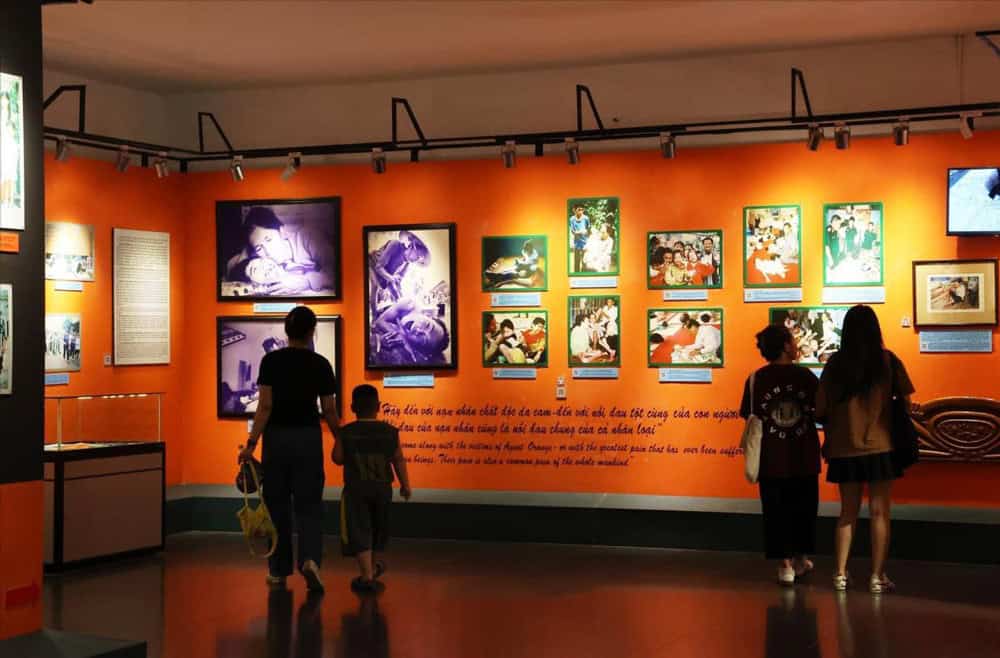
War Crimes Exhibition: 125 photographs, 22 documents, and 243 artifacts documenting military actions against civilians. Includes graphic images of the My Lai massacre where 504 unarmed civilians were killed. Photography includes the iconic “Napalm Girl” image.
Agent Orange Effects Exhibition: Documents the devastating impact of chemical warfare through photographs of birth defects, preserved specimens showing dioxin effects, and ongoing health consequences affecting multiple generations.
Warning: This floor contains graphic medical imagery and disturbing photographs of civilian casualties. Not appropriate for children under 10 and potentially distressing for sensitive visitors.
Second Floor: Historical Documentation & Photojournalism
The top floor presents broader historical narratives:
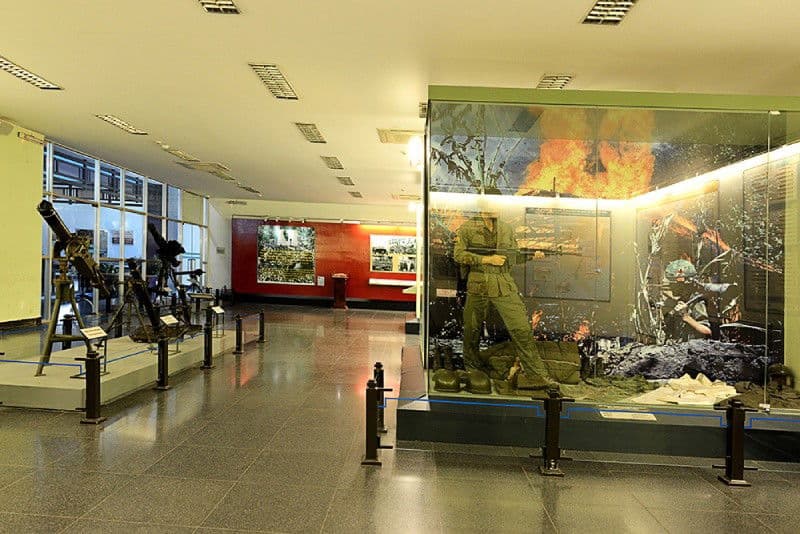
Historical Truths Exhibition: 66 photographs, 20 documents, and 153 artifacts covering French colonialism and American intervention from 1946-1975.
Requiem Exhibition: Powerful collection compiled by war photographer Tim Page documenting work of photojournalists killed during the conflict (both sides). Features work by Larry Burrows, Robert Capa, and Bunyo Ishikawa.
Vietnam War and Peace: 123 photographs by Japanese photographer Ishikawa Bunyo showing civilian life during wartime.
Agent Orange During the Vietnam War: Additional documentation of chemical warfare’s long-term impacts.
The second floor generally contains better air conditioning and less graphic content than the first floor, making it a good starting point if visiting with older children.
Additional Exhibits
Prison System During the Second Indochina War: Details about French and South Vietnamese detention facilities including guillotines used for executions (last used 1960).
Temporary Exhibitions: The museum rotates special exhibits featuring contemporary perspectives, survivor stories, and international contributions.
Visitor Experience: What You Need to Know
Understanding the Vietnamese Perspective
The museum opened in September 1975 (five months after war’s end) originally named “Exhibition House for US and Puppet Crimes.” The name changed to “War Remnants Museum” in 1995 after US-Vietnam diplomatic normalization.
What this means for visitors:
The museum presents the Vietnamese experience of the wars with France and America, not a neutral academic analysis. Most photographs come from US and international sources (not Vietnamese propaganda), but the context and framing emphasize Vietnamese suffering and foreign intervention impacts.
The museum doesn’t cover North Vietnamese or Viet Cong actions against civilians or prisoners. This one-sided approach receives criticism from some visitors who expect balanced historical treatment. However, the museum’s purpose is memorial and educational from the Vietnamese national perspective, not comprehensive conflict documentation.
Many visitors find this valuable for understanding how Vietnamese people remember and process these conflicts, especially if their primary exposure has been Western narratives.
Graphic Content Warnings
Be prepared for emotionally intense and disturbing content:
Most graphic sections:
- War Crimes exhibit (First floor)
- Agent Orange Effects exhibit (First floor)
- Preserved specimens showing birth defects
- Photographs of civilian casualties
- Images of torture and execution
Less graphic sections:
- Outdoor military equipment
- International support exhibition
- Historical documentation photographs
- Requiem photojournalist exhibition
Many visitors report needing breaks between exhibits to process the emotional weight. Tissues recommended. The experience commonly brings visitors to tears.
Photography Rules
- Allowed: Most areas of the museum
- No flash photography: Prohibited throughout
- Restricted areas: Agent Orange section and areas with prohibition signs
- Prohibited items: Tripods, selfie sticks, large bags
Approach photography respectfully given the serious subject matter. Avoid selfies or inappropriate poses with exhibits.
Facilities & Comfort
Available amenities:
- Elevators to all floors (wheelchair accessible)
- Bathrooms on each of the three floors
- Coffee shop in courtyard
- Cold drink vending machines inside
- Luggage storage at reception (large bags not allowed in exhibits)
- Audio guides available for rent (multiple languages)
Climate control: Partial air conditioning with fans. Some areas can be warm, especially midday. Bring water bottle.
Age Appropriateness & Family Considerations
Children Under 10: Not Recommended
The museum contains graphic medical imagery, photographs of dead bodies, preserved specimens of deformed fetuses, and detailed torture documentation. This content is:
- Too disturbing for most young children
- Difficult to contextualize appropriately
- Potentially traumatic without proper mental preparation
If you must bring young children, limit visit to outdoor military equipment only.
Ages 10-15: Parent Discretion Required
Older children and teenagers can gain educational value, but preparation is essential:
Pre-visit preparation:
- Discuss what war museums show and why
- Explain they’ll see upsetting images
- Give permission to skip exhibits or leave if overwhelmed
- Provide historical context appropriate to their age
During visit strategy:
- Start on second floor (less graphic)
- Parent previews exhibits before child enters
- Skip or quickly pass War Crimes and Agent Orange sections
- Focus on outdoor equipment and photojournalism exhibits
Parents report 12+ is typically appropriate with preparation. Some family travel blogs note visiting with 10-11 year olds successfully using careful section selection.
Adults: Emotional Preparation Advised
Even adults find the museum emotionally challenging. Visitors consistently describe leaving feeling:
- Deeply moved or upset
- Angry about war’s human costs
- Reflective about conflict and peace
- Confronted by graphic realities
Plan something peaceful afterward like visiting nearby Tao Dan Park or having coffee in a quiet café to decompress.
Best Time to Visit & Planning Tips
Optimal Visiting Times
Best times to avoid crowds:
- Early morning: 7:30-9:00 AM (opens at 7:30 AM)
- Late afternoon: After 3:00 PM
Busiest times to avoid:
- Late morning: 10 AM-12 PM
- Weekends and Vietnamese holidays
- Late afternoon: 4-5 PM (when Cu Chi Tunnels tours arrive)
Weekdays are generally quieter than weekends.
Best Season
Ideal months: December-April (dry season)
- Pleasant weather for walking
- Less rain and humidity
- Comfortable outdoor exploration
December-January: Particularly nice with cooler temperatures and festive atmosphere in the city.
What to Bring
Essential items:
- Cash for tickets (40,000 VND)
- Water bottle (can get warm)
- Tissues (emotional exhibits)
- Comfortable walking shoes
- Light layers (air conditioning varies)
Leave behind:
- Large bags (must be stored)
- Food and drinks
- Tripods and selfie sticks
Visiting Strategy
Recommended approach:
- Start on second floor (Level 2) – better air conditioning and less graphic content
- Work your way down to increasingly intense exhibits
- Take breaks – use bathrooms, step outside, sit in courtyard
- Allow processing time – don’t rush through exhibits
- Visit outdoor exhibits last – lighter note after heavy indoor content
Start with top floor going down helps manage emotional intensity and takes advantage of better cooling on upper levels.
Getting There: Transportation Guide
From District 1 & District 3 Hotels
Walking: If staying in District 1 or District 3, the museum is 10-20 minutes walk from most central hotels. The area is very walkable and safe.
Grab Taxi: Download Grab app (Southeast Asia’s Uber). Rides from District 1 cost 20,000-40,000 VND (under $2 USD). Pay with cash or card in app.
Traditional Taxi: Available everywhere but meter scams are common. Grab app is more reliable for fair pricing.
From Tan Son Nhat Airport
Distance: 7 kilometers (15-20 minutes)
Best options:
- Grab taxi: 80,000-120,000 VND
- Airport taxi: Negotiate price beforehand or insist on meter
- Route: Phan Thuc Duyen → Nguyen Van Troi → cross Cong Ly Bridge → Nam Ky Khoi Nghia → turn right onto Vo Van Tan
Public Transportation
Bus routes: Routes 14 and 28 stop at “War Remnants Museum” stop directly in front. Cost: Minimal (5,000-7,000 VND) Best for: Budget travelers comfortable navigating local transport
Parking
Limited parking available for those driving motorbikes or cars. Most visitors use Grab or public transport.
Nearby Attractions & Where to Stay
Combine Your Visit
The museum’s central location makes it easy to visit multiple attractions in one day:
Independence Palace (Reunification Palace): 10 minute walk
- Historic presidential palace
- Famous for 1975 North Vietnamese tank entrance
- Lighter experience than War Remnants Museum
- Recommended to visit before museum for historical context
Notre Dame Cathedral & Central Post Office: 15 minute walk
- Beautiful French colonial architecture
- Good for photographs
- Quick visits (30 minutes each)
Ben Thanh Market: 10 minute Grab ride
- Famous local market
- Shopping and street food
- Good for lunch or post-museum relaxation
Tao Dan Park: 5 minute walk
- Peaceful green space
- Good for decompressing after museum
- Shaded walking paths
Where to Stay
Hotels within 5-10 minutes walk:
Budget options:
- Victory Hotel Saigon (2 minutes walk)
- Aristo Saigon (5 minutes)
- A25 Hotel Truong Dinh
Mid-range options:
- Mai House Saigon (5 minutes) – highly recommended
- Silverland hotels (District 3 locations)
Luxury options:
- Hotel des Arts Saigon (10 minutes)
- Park Hyatt Saigon (15 minutes)
- InterContinental Saigon
Staying in District 3 near the museum puts you within walking distance while being slightly quieter than busy District 1.
Frequently Asked Questions
How long does it take to visit the War Remnants Museum? Most visitors spend 1.5-2 hours. Quick visits take 1.5 hours while comprehensive exploration requires 3-4 hours to read all descriptions and view all exhibits.
Is the War Remnants Museum suitable for children? Not recommended for children under 10 due to graphic medical imagery, war crime photographs, and disturbing content. Ages 10-15 require parent discretion with preparation and selective exhibit viewing.
What time does the War Remnants Museum open? Opens daily at 7:30 AM and closes at 5:30 PM (ticket counter closes 5:00 PM). Open every day including weekends and holidays.
How much are War Remnants Museum tickets? Adults: 40,000 VND (~$1.60 USD), Children 6-16: 20,000 VND, Under 6: Free.
Can you take photos in the War Remnants Museum? Photography allowed in most areas without flash. Prohibited in Agent Orange section and areas with specific signage. No tripods or selfie sticks.
Is the War Remnants Museum biased? Yes – it presents the Vietnamese perspective on the wars, not a balanced academic account. Most photographs come from US/international sources, but framing emphasizes Vietnamese suffering and foreign intervention impacts. North Vietnamese/Viet Cong actions aren’t covered.
What is the most disturbing exhibit? The Agent Orange Effects exhibition (first floor) showing birth defects and ongoing health impacts, and the War Crimes exhibition with graphic photographs of civilian casualties. Both can be emotionally overwhelming.
Do I need a guide for the War Remnants Museum? Not required – all exhibits have English descriptions. However, guides provide historical context that helps understanding. Many visitors prefer exploring at their own pace for emotional processing.
What should I wear to the War Remnants Museum? No strict dress code but modest clothing recommended out of respect. Comfortable walking shoes essential. Bring light layers as air conditioning varies.
How do I get to the War Remnants Museum? Located at 28 Vo Van Tan, District 3. Walk from District 1/3 hotels (10-20 minutes), take Grab taxi (easiest), or use bus routes 14 or 28. 7 km from airport (15-20 minutes).
Can I bring food and drinks inside? No food or drinks allowed inside exhibits. Water bottle recommended but consume in courtyard. Coffee shop available in courtyard.
Is the War Remnants Museum wheelchair accessible? Yes – elevators provide access to all three floors. Bathrooms on each level. Outdoor courtyard is ground level.
What’s near the War Remnants Museum? Independence Palace (10 min walk), Notre Dame Cathedral (15 min), Central Post Office (15 min), Ben Thanh Market (10 min ride), Tao Dan Park (5 min walk).
When is the best time to visit to avoid crowds? Early morning (7:30-9 AM) or late afternoon (after 3 PM). Avoid late morning, weekends, holidays, and 4-5 PM when Cu Chi Tunnels tours arrive.
How much does the audio guide cost? Audio guides available for rent at museum entrance. Prices vary but typically 40,000-60,000 VND. Available in multiple languages.
Are there lockers or luggage storage? Yes – leave large bags at reception. Storage typically free or minimal cost. Large bags not allowed in exhibits.
Should Americans visit the War Remnants Museum? Yes – many American visitors find it valuable for understanding Vietnamese perspectives, though content can be confronting. Museum isn’t anti-American people despite focusing on US military actions.
Can I visit the War Remnants Museum and Cu Chi Tunnels in one day? Yes – common combination. War Remnants Museum in morning (2 hours), Cu Chi Tunnels afternoon tour (half day). Many tour companies offer combined packages.
Is the War Remnants Museum worth visiting? For most visitors yes – it’s ranked #1 of 449 Ho Chi Minh City attractions on TripAdvisor. Provides essential historical context for understanding modern Vietnam. Not suitable if you avoid graphic war content.
What exhibits should I not miss? Requiem photojournalist exhibition (second floor), outdoor military equipment, international support exhibition, and tiger cages. Skip graphic exhibits if sensitive.
Before You Go: Final Considerations
Cultural Sensitivity
The War Remnants Museum documents real trauma experienced by Vietnamese people within living memory. Approach with:
- Respectful demeanor and quiet voices
- Appropriate photography (no selfies with tragic content)
- Understanding that exhibits represent genuine suffering
- Recognition that many older Vietnamese lived through these events
Emotional Preparation
This museum is designed to be confronting. It will likely:
- Show you disturbing images you cannot unsee
- Challenge perspectives you may hold about the war
- Create strong emotional reactions
- Stay with you long after your visit
This intensity is intentional – the museum aims to convey war’s human costs viscerally, not academically.
Post-Visit Processing
Many visitors report needing time to process the experience:
- Plan something peaceful afterward (park, quiet café, gentle activity)
- Allow yourself to feel emotional reactions
- Discuss the experience with travel companions
- Consider the museum’s perspective as one part of complex history
- Reflect on how the visit changes your understanding
Worth the Visit?
Despite – or because of – its difficult content, the War Remnants Museum ranks as one of Ho Chi Minh City’s most valuable attractions. It provides:
- Essential context for understanding modern Vietnam
- Vietnamese perspective often absent from Western education
- Powerful reminder of war’s lasting human costs
- Appreciation for peace and reconciliation
The museum isn’t enjoyable, but it is important. Visitors consistently describe it as sobering, educational, and necessary for truly understanding Vietnam beyond its beaches and street food.
The War Remnants Museum offers an unforgettable journey into Vietnam’s difficult past. With proper preparation and understanding of what you’ll encounter, your visit can be a meaningful part of understanding this resilient country and its people.